Why Custom LCD Displays Make Sense for Your Project
Shenzhen TopAdkiosk Display Technology Co., Ltd.
Add.: 2F, Bldg 10, Changfeng Industrial Park, Dongkeng, Fenghuang, Guangming, Shenzhen, China 518132
Mobile/WHATSAPP: 86-138 25769658
Email: marketing@topadkiosk.com topadkiosk@gmail.com
Skype: pghenry1
Wechat: adkioskhenry
English Web.: http://www.topadkiosk.com/
https://www.topkioskdisplay.com/
http://www.ad-kiosk.com/
https://www.toplcddisplay.com/
http://www.multitouchdigitalsignage.com/
https://www.youtube.com/channel/UCYVYNJHxLVEcQD8fuUxXNTA/videos?view_as=subscriber
https://www.facebook.com/TOPADKIOSKSHENZHEN/?ref=bookmarks
You want your project to stand out and work perfectly. A custom lcd display can help you reach that goal. You get only the features you need, which keeps your costs low and avoids wasted space. Custom displays fit right into your product, making assembly smoother and faster. You also enjoy better performance, like sharper images or wider viewing angles, because the display matches your exact needs. Think about how these benefits could make your next project stronger and more efficient.
Key Takeaways
Custom LCD displays help you save money. They only have the features you need. This means you do not pay for extra things. You also do not waste space. These displays fit your product very well. This makes it faster to put together. It also lowers the chance of making mistakes. Custom displays work better because they have special features. These can be things like brightness or being tough. This helps your product work well in hard places. Picking a custom LCD display lets you have a special design. This can make your product easier to use. It can also help people remember your brand. Working with skilled makers makes designing easier. It also means you get help for a long time with your display.
Benefits of Custom LCD Display
Cost Efficiency
You want your project to stay within your budget. Picking a custom lcd display helps you avoid extra costs. Standard displays often have features you do not need. This means you might waste money and space. With a custom display, you only pay for what your product needs. This way, you do not have extra connectors or unused parts. You also save money because the display fits your design from the start.
Here is a simple table to show how custom lcd displays can help you save money:
Aspect | Custom LCD Displays | Standard LCD Solutions |
|---|---|---|
Design Optimization | Tailored for specific applications | Generic design |
Integration | Better integration with end products | May require additional components |
Redundancies | Reduced redundancies like connectors | Often includes unnecessary components |
Production Cost | Similar after initial tooling | Pre-tooled, but may not be optimized |
Volume Cost Efficiency | Cheaper in mid-range volumes (5,000-100,000) | Higher costs in similar volumes |
If you plan to make your product in mid-range amounts, custom lcd displays give you the best value. This keeps your project simple and saves money.
Seamless Integration
You want your product to work well and look nice. A custom display fits your device perfectly, inside and outside. You do not need to change your hardware or add extra parts to use a standard display. This makes assembly faster and lowers the chance of mistakes.
Many industries use custom lcd displays for this reason. In healthcare, displays must resist water and temperature changes. In cars, touch screens need to last a long time. In airplanes, displays must handle shaking and high places. Here is a table that shows how different industries use custom displays:
Industry | Specific Needs |
|---|---|
Aerospace | Rugged designs for high-performance displays |
Transportation | Sunlight-readable screens for better visibility |
Medical | High-performance displays for various applications |
Automotive | Displays designed to resist environmental factors |
Industrial | Durable solutions for demanding environments |
Custom displays help solve special problems in each industry. This makes your product stand out from others.
Optimized Performance
You want your product to work its best. A custom lcd display lets you pick the features you need, like brightness, viewing angle, and strength. You can ask for displays that work in very hot or cold places or that keep out water and dust. This control means your product will not break in tough spots.
Custom lcd displays make important things better:
Performance Metric | Description |
|---|---|
Designed to withstand extreme conditions, ensuring longevity in military use | |
Readability | High luminance levels improve visibility even in direct sunlight |
EMI Resistance | Engineered to function in high electromagnetic environments, minimizing interference |
Operational Reliability | Ensures functionality under extreme temperatures, moisture, and shock conditions |
Custom displays are very important in healthcare, airplanes, and the military. These fields need displays that always work, even in hard places. Rugged custom lcd displays have strong frames, weatherproofing, and keep out dust and water. You can trust your product to work well anywhere.
Tip: If you pick a custom lcd display, you can design every detail for your project. This gives you better results and makes your customers happy.
Custom LCD Display Applications
Unique Product Designs
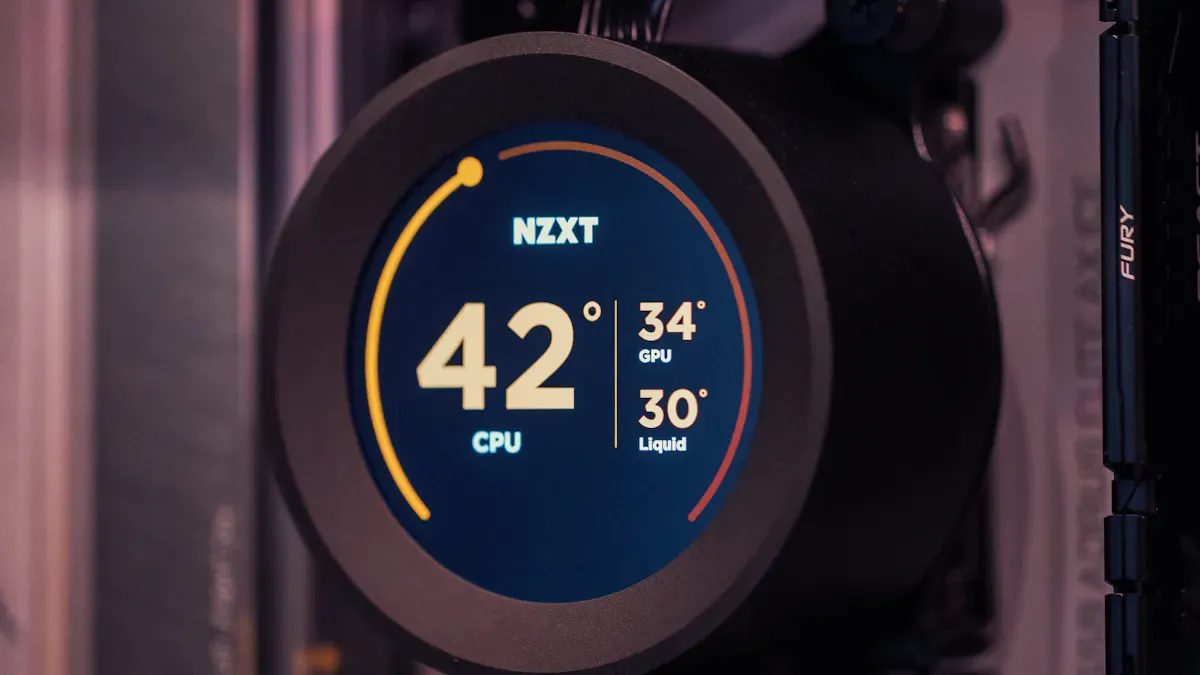
You want your product to be special. A custom lcd display lets you pick shapes and sizes that fit your idea. Many industries use this flexibility. Digital signage uses custom displays for kiosks and screens on walls. Healthcare devices need accurate readings, so they use custom displays in machines. Automotive dashboards and navigation systems also need special displays.
Industry | Description |
|---|---|
Digital Signage | Custom displays for kiosks, floor-standing, and wall-mounted screens |
Healthcare | Used in diagnostic machines and patient monitoring systems |
Automotive | Provides clear displays for navigation and dashboards |
Industrial | Tailored solutions for industrial applications |
You can add icons, symbols, or your logo right into the display glass. Some displays show certain segments even when turned off, which helps with branding. This customization makes the user experience better and helps your product stand out.
Harsh Environments
Your product may need to work in tough places. A custom lcd display can handle extreme temperatures, high humidity, and lots of vibration. Standard displays often break in these conditions. Custom displays use strong materials and special parts to keep working.
Environmental Factor | Impact on Standard Displays |
|---|---|
Temperature Fluctuations | Affects response times and image quality; may cause failure |
High Humidity | Risks moisture damage to internal components |
Continuous Vibration | Requires robust designs to maintain structural integrity |
Long-term Operation | Needs stability and reliability over time |
Custom displays go through hard tests, like 1000 cycles from -40°C to +90°C and 8 hours of 5G vibration. They keep working in sunlight, heat, and humidity. You can trust your product to work anywhere.
Long-Term Supply Needs
You want your product to stay available for years. A custom lcd display helps you avoid supply problems. Manufacturers use partnerships and stocking deals to make sure you get the same display for a long time. They manage changes in design and parts, so you do not face sudden issues.
Strategy | Description |
|---|---|
Secure component availability | |
Stocking agreements | Long-term deals with minimum order commitments |
Proactive change management | Avoids disruptions by managing design and component changes |
Manufacturers often work with several certified suppliers. This keeps your supply chain strong and reliable. You can feel good knowing your product will always have the display it needs.
Tip: Pick a custom lcd display to meet your special needs, survive tough places, and make sure you have supply for a long time. You get benefits that standard displays cannot give.
Custom LCD Display Process
Define Requirements
You begin by setting clear goals for your custom lcd display. You need to know what your product will do and where it will be used. Make a list of what you want the display to do. Think about how bright it should be and what size fits best. Decide if you need touch or a special interface. Think about the environment. Will your product face heat, cold, or vibration? Write down your must-haves and things that would be nice.
Here is a simple table to help you organize your custom design process:
Phase | Description |
|---|---|
1 | Requirements Analysis and Specification |
2 | Critical Specification Parameters |
3 | Requirements Prioritization Framework |
You can use this checklist:
Environmental requirements
Optical requirements
Mechanical requirements
Electrical and interface requirements
Rank your needs:
Must-Have: Needed for success
High-Value: Makes your product better
Nice-to-Have: Good, but not critical
Future Consideration: Add later if needed
Partner with Experts
You do not have to do this by yourself. Find a partner who knows custom lcd design well. Look for a company with a good history and quality certifications. Make sure they can help you from start to finish. The right partner gives more than just displays. They help with design, testing, and support.
Here are important things to look for:
Long-term product availability
Customization options like touch screens and special coatings
Quality assurance and industry certifications
Lifecycle support and warranty
Fast lead times for prototypes and production
Proven experience in your industry
A good partner makes the process easy and helps you avoid mistakes.
Tip: Pick a partner who offers design help, prototyping, and support. This will make your project easier and faster.
Addressing Concerns
You might worry about cost, lead time, or complexity. Custom lcd design does not have to be hard or expensive. Small changes to a display often cost little or nothing. Bigger changes depend on what you need. For example, a custom monochrome display may cost $4,500 to $6,500 for tooling. A color TFT display can cost more. Ask your partner about options that fit your budget and volume.
Here is a quick look at typical costs:
Customization Type | |
|---|---|
Custom monochrome displays | $4,500 – $6,500 |
Minor changes | Generally at no cost |
PCB changes | $500 – $1,500 |
Touch panels (resistive) | $2,500 |
Pick a manufacturer who matches your production needs. Many offer semi-custom solutions to keep costs low. The right partner will guide you, manage risks, and make sure your custom lcd design works as planned.
Note: Experienced partners know the challenges. They help you avoid delays, control costs, and deliver a display that fits your vision.
Choosing a custom LCD display gives your project a big boost. Custom displays fit your product just right. They help your device work better and save you money. These displays last a long time and are tough. Standard displays do not have these strong features. Custom designs let you make special products. They also make using your product easier and more fun. Here are some reasons to pick a custom display:
Works the way you want
Stays strong and easy to get
Advantage | Benefit |
|---|---|
Custom integration | Fits well and is simple to build |
Custom performance | Works best for your product |
Supply stability | Fewer problems and long support |
Think about what your project needs. A custom display can help you get the best results.
The Core Benefits of Going Custom
Design Your Display – Get exact dimensions for a perfect fit, unique sizes (like ultra-wide or bar-type) that standard monitors don't offer, and low-profile housings or custom cover glass.
Unmatched Visual Performance – Spec precise brightness (e.g., 1000+ nits) for outdoor readability, special optical bonding to reduce glare, ultra-wide viewing angles, and high contrast.
Built for Rugged Reliability – Engineer displays to withstand extreme temperatures (-30°C to +85°C), vibrations, shock, dust/moisture (IP ratings), and long-term wear.
Advance Your Product's Interactivity – Integrate specific touch technologies (PCAP, resistive) with custom controllers, and design custom interface boards with your choice of connectors (LVDS, HDMI, RGB, etc.).
Simplify Your Supply Chain – Ensure a guaranteed long lifecycle (5-10+ years) to avoid costly redesigns, and reduce assembly time with display modules that drop right into your housing.
📊 The Strategic Choice: Standard vs. Custom
Deciding between a standard, semi-custom, and fully custom LCD is a strategic one. The table below breaks down the typical differences to help you gauge where your project might fit.
Feature | Off-the-Shelf | Semi-Custom | Fully Custom |
|---|---|---|---|
Best For | Prototypes, low-volume, tight budgets, standard sizes | Medium-volume, unique sizes/interfaces without new cells | High-volume production, unique form factors |
NRE Cost | $0 | 5,000–5,000–20,000 | $50,000+ |
Lead Time | 4 – 6 weeks | 8 – 12 weeks | 16 – 24 weeks |
MOQ | Low (samples available) | Flexible | High (1,000+ units) |
Key Pros | Quick, no engineering fees | Moderate investment for custom fit, avoids costly retooling | Ultimate flexibility, optimized BOM, brand distinction |
Key Cons | Compromises on size, performance | Best ROI from 5,000+ units | High upfront cost, long lead time |
Data is based on typical industry standards and examples from CDTech.
💰 The Investment: Understanding the True Cost
When considering a custom display, it's crucial to look beyond the initial price tag. A custom solution often lowers the total cost of ownership over your product's lifespan.
Lowering Your Total BOM: A perfectly fitted display can reduce surrounding costs by streamlining assembly, eliminating bezel workarounds, and simplifying enclosures. This can lead to a 15–25% reduction in your overall bill of materials (BOM).
The NRE Fee: The Non-Recurring Engineering (NRE) fee is the one-time upfront cost for design and tooling. For a simple monochrome segment LCD, the glass tooling NRE can be as low as 4,500–4,500–6,500. For full-color TFT displays, NRE's can range from 20,000–20,000–50,000 or more for complex automotive-grade panels.
Technology's Role in Reducing NRE: New technologies, such as CDTech's patented "2nd Cutting" process, can reduce NRE fees by up to 80% by cutting unique sizes from pre-processed mother glass, thus avoiding the cost of new glass molds.
🌍 Real-World Impact
There's no better proof than seeing these displays in action.
An Outdoor Kiosk Manufacturer needed to retrofit two new TFT LCDs into an existing outdoor kiosk without changing its external structure. A custom solution provided optically bonded PCAP touch screens with ultra-high brightness (up to 1600 cd/m²) and a wide -30°C to +85°C temperature range. The result was a seamless, drop-in solution that functioned reliably in all weather conditions and has a guaranteed lifecycle of at least 10 years.
The North Dakota Aviation Museum needed to deploy interactive kiosks across multiple locations quickly. The goal was to create an engaging visitor experience, with content that could be updated remotely. The custom-tailored solution including purpose-built hardware and a hardened OS went from vendor selection to operational in under 30 days, dramatically accelerating their rollout from an originally estimated timeline of one year.
🤝 Choosing Your Manufacturing Partner
Choosing a provider is a critical partnership. Your supplier should be more than just a vendor.
Prioritize Quality and Reliability: Ensure your partner has the right certifications (ISO9001, IATF16949 for automotive, ISO13485 for medical), years of experience, and a proven track record.
Look for a Technical Partner: Your ideal partner will work with you early in the development phase. They should help with everything from PCB layout and driver IC selection to firmware integration and environmental testing.
Ask the Right Questions: Before committing, ask about their extended lifecycle support (aim for 5-7+ years), customization capabilities (optical bonding, high-brightness backlights), lead times for prototypes, warranty terms, and references from your industry.
Think Long-Term: The cheapest quote may not be the best value. Partner with a supplier that protects your product roadmap with long-term availability, transparent pricing, and a commitment to your success.
The choice to go custom often comes down to a simple question: Can off-the-shelf solve my problem perfectly? If the answer is no, the initial investment in a custom LCD is a strategic move to achieve a superior product, a stronger brand, and greater long-term success.
If you'd like to share more about your intended application, I can offer some more tailored advice.
FAQ
What makes a custom LCD display better than a standard one?
You get a display that fits your product perfectly. Custom LCD displays match your size, shape, and feature needs. This gives you better performance and a unique look.
How long does it take to develop a custom LCD display?
You can expect a timeline of 8 to 16 weeks for most projects. Your partner will guide you through design, prototyping, and production. Fast support keeps your project on track.
Is a custom LCD display more expensive?
You save money in the long run. You avoid paying for features you do not need. Custom displays lower assembly costs and reduce waste. You get the best value for your project.
Can I get custom features like touch or sunlight readability?
Yes! You can add touch panels, special coatings, or high brightness. Custom LCD displays let you pick the features that matter most for your product.
See Also
Selecting the Ideal LCD Round Display for Your 2025 Project
Finding the Perfect LCD Digital Signage for Your 2026 Business
Top LCD Display Kiosks for Retail Spaces in 2026
