What is a TFT LCD Display Module and How Does It Work
Shenzhen TopAdkiosk Display Technology Co., Ltd.
Add.: 2F, Bldg 10, Changfeng Industrial Park, Dongkeng, Fenghuang, Guangming, Shenzhen, China 518132
Mobile/WHATSAPP: 86-138 25769658
Email: marketing@topadkiosk.com topadkiosk@gmail.com
Skype: pghenry1
Wechat: adkioskhenry
English Web.: https://www.topkioskdisplay.com/
http://www.ad-kiosk.com/
https://www.toplcddisplay.com/
http://www.multitouchdigitalsignage.com/
https://www.youtube.com/channel/UCYVYNJHxLVEcQD8fuUxXNTA/videos?view_as=subscriber
https://www.facebook.com/TOPADKIOSKSHENZHEN/?ref=bookmarks
I
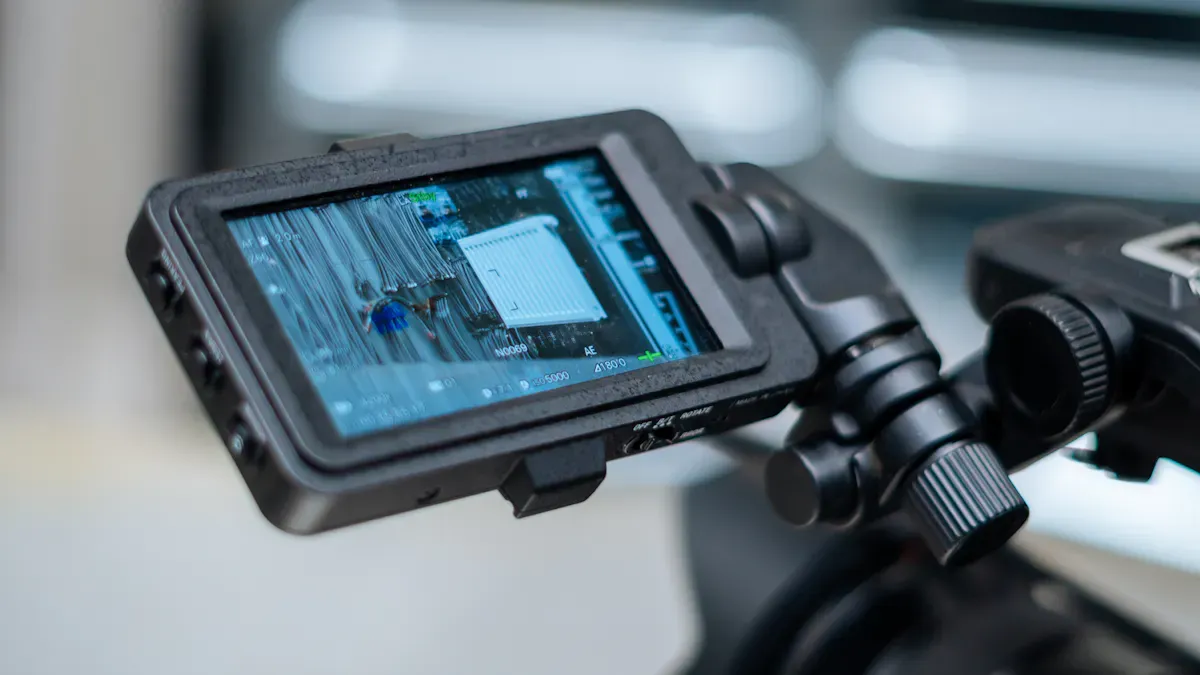
A tft lcd display module is a screen. It uses thin-film transistors to control each pixel. This makes images clear and bright. You can find these displays in smartphones and tablets. They are also in industrial equipment. If you want sharp visuals, you need to know about this technology. It gives fast image changes and steady pictures. The global market for these panels was $187.1 billion in 2025. It may reach $265.0 billion by 2034.
This growth shows tft lcd display modules are very important in modern electronics.
Key Takeaways
TFT LCD displays have thin-film transistors for each pixel. This helps make pictures look sharp and colors bright.
Many people use these displays in phones, tablets, and machines. They are popular because they work fast and show clear images.
When you pick a TFT LCD display, think about things like how clear it looks, how bright it is, and if it has touch features. This helps you get what you need.
TFT displays need a backlight to work. The backlight changes how bright the screen is and how much power it uses. LED backlights are the most common and save energy.
Knowing the good and bad things about TFT displays helps you choose the right one for different uses.
What is a TFT LCD Display Module
TFT LCD Display Module Definition
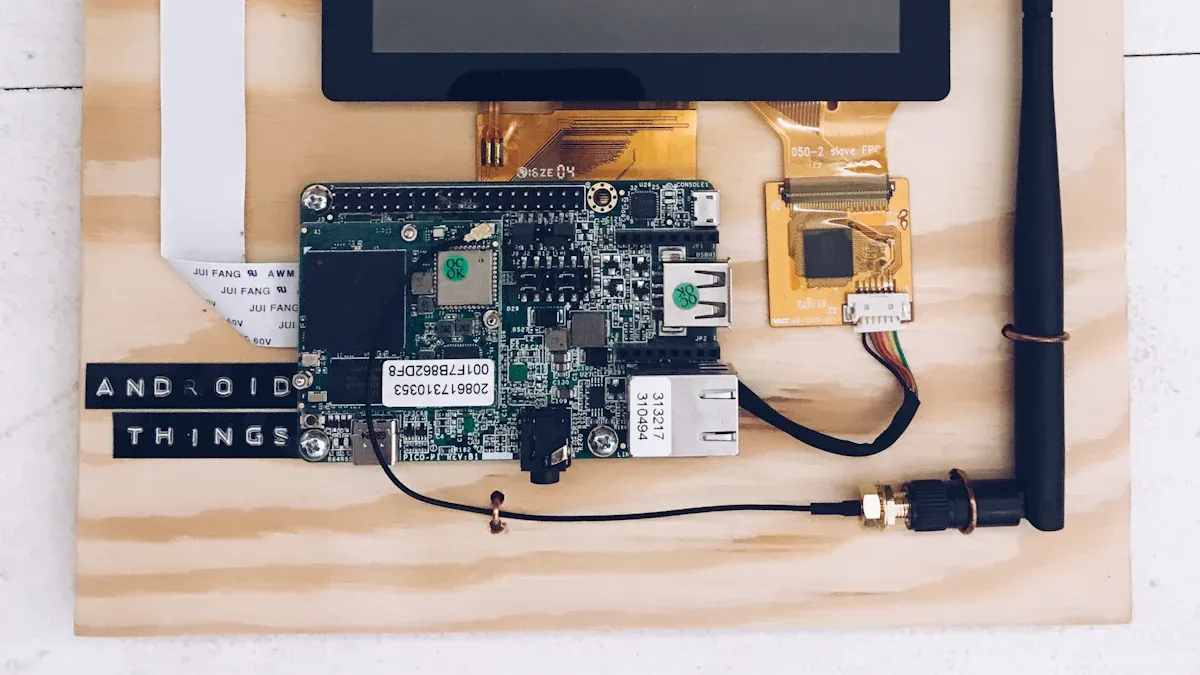
A tft lcd display module shows clear and colorful images. It uses tft technology. Each pixel has a tiny switch called a thin-film transistor. These switches let you control every pixel. This makes pictures sharp and changes happen fast. The module works as an active matrix display. It uses a grid of transistors to manage pixels. You see these displays in phones and tablets. They are also in other devices. The module gives bright colors and smooth motion. It works well for simple and complex images.
Basic Components of TFT LCD
A tft lcd display module has many important parts. Each part helps make the images you see. Here is a table that lists the main parts and what they do:
Component | Description |
|---|---|
Substrate Materials | Glass or plastic holds all the layers. It keeps the display stable and clear. |
Liquid Crystals | These control how light goes through the display. They change direction when electricity is used. |
Thin-Film Transistors | Tiny switches control each pixel. They help show colors and details. |
Color Filters | Filters make red, green, and blue colors. They help images look real. |
Backlight Unit | This part lights up the display from behind. It uses LEDs or other lights. |
Polarizers | These control how light moves through the display. They help liquid crystals work better. |
All these parts are needed for a tft lcd display module to work. The tft technology lets you see bright and sharp images. Each part has a special job in the display.
TFT vs Other Display Technologies
You may wonder how a tft lcd display module is different from other screens. The main difference is how you control the pixels. In a tft display, each pixel has its own transistor. This gives better image quality and faster response. Other displays, like passive matrix lcds, use a simple grid. They do not control each pixel directly. Images look less sharp.
Here is a table that shows the differences between passive matrix lcd and tft lcd display module:
Feature | Passive Matrix LCD | TFT LCD Display Module |
|---|---|---|
Control Elements | Simple grid of row and column electrodes | Individual TFTs for each pixel |
Pixel Activation | Voltage at intersection points | Per-pixel switching via TFTs |
Complexity | Less complex structure | More complex with dedicated control |
Image Quality | Lower because control is shared | Higher because each pixel is controlled |
Tft lcd display modules are also compared to OLED displays. OLED screens use a different method. Each pixel in an OLED display makes its own light. In a tft display, you need a backlight. Here is a table that shows how tft, lcd, and OLED displays compare:
Display Type | Image Quality | Response Time | Power Consumption | Notes |
|---|---|---|---|---|
LCD | Moderate | Moderate | Very Low | Needs a backlight, uses passive tech |
TFT | High | Short | Higher than LCD | Needs more light for color filters |
OLED | Very High | Very Short | Variable | Each pixel makes its own light |
Tft lcd display modules give good image quality and speed compared to passive matrix lcds. OLED displays can look even better. Tft lcd display modules offer a good balance of cost, quality, and durability. You see tft displays in many devices because they work well for most uses.
How TFT Displays Work
Thin-Film Transistor Technology
You can understand how tft displays work by looking at the role of thin-film transistors. Each pixel on a tft display has its own transistor. This transistor acts like a tiny switch. It lets you control the pixel directly. When you send a signal, the transistor manages the electric current that reaches the pixel. This setup gives you fast and accurate control over the display.
A matrix of thin-film transistors sits on the glass layer of the display.
Each transistor connects to a single pixel.
The transistor controls the voltage sent to the liquid crystals at that pixel.
When voltage is applied, the liquid crystals change direction. This change lets light pass through or blocks it, creating colors and images.
You also find capacitors next to each transistor. The liquid crystal capacitor moves the liquid crystals when voltage is applied. The storage capacitor holds the charge. This keeps the image steady until the next refresh. You get stable and clear visuals because of this design.
Pixel Control and Image Quality
Precise pixel control is the main reason why tft displays show sharp and colorful images. Each pixel gets its own transistor and capacitor. This means you can turn each pixel on or off quickly. You see less motion blur and more detail in every image.
Here is a table that shows how pixel control improves your viewing experience:
Feature | Benefit |
|---|---|
Precise pixel control | Enhances image quality and color accuracy |
Faster response times | Reduces motion blur, improving clarity |
Higher resolutions | Allows for sharper images with more detail |
Color filters also play a big part in how tft displays work. Each pixel has red, green, and blue filters. These filters use organic compounds to absorb certain wavelengths. The arrangement of these filters lets you see a full range of colors. Some tft displays use IPS technology. This keeps the liquid crystals lined up, so colors stay the same even if you look from the side.
You may notice that standard tft displays can show color fading when viewed from an angle. IPS technology helps fix this problem. You get better color consistency and more accurate images.
Backlighting in TFT LCDs
Tft displays do not make their own light. They need a backlight to show images. The backlight sits behind the liquid crystal display and shines through the layers. The type of backlight you use affects the brightness, color, and energy use of the display.
Common types of backlighting include:
LED (Light Emitting Diode): Most modern tft displays use LED backlights. LEDs give high brightness and last a long time. They also use less power.
CCFL (Cold Cathode Fluorescent Lamp): Older tft displays used CCFLs. These lights are bright but bulky and use more energy.
EL (Electroluminescent): EL backlights are thin and light. They work well in portable devices but are not as bright and do not last as long.
The quality of the backlight changes how bright your display looks. LED backlights can last from 25,000 to 50,000 hours. CCFL and EL backlights last about 10,000 to 15,000 hours. If you want to save energy, you can use transflective tft displays. These let you turn off the backlight in bright places, like outdoors, to save power.
Tip: The backlight is key for both brightness and energy use. Good backlight management helps you get a bright screen without wasting power.
You now know how tft displays work. Thin-film transistors, precise pixel control, and the right backlighting all come together to give you sharper images and vibrant colors. This technology makes tft displays a top choice for many devices, from smartphones to industrial screens.
TFT LCD Display Module Features
Resolution and Color Accuracy
A tft lcd display can show very clear images. This happens because each pixel is controlled exactly. The resolution tells you how sharp the picture looks. Higher resolution means you see more details and clearer images. Here is a table that shows the usual resolution ranges for different displays:
Display Type | Resolution Range |
|---|---|
128x128 to 1920x1080 | |
7-inch TFT | 800x480 to 1024x600 |
800x480 to 1920x1080 |
You get great visuals when the display uses many transistors. Each pixel has smaller parts for red, green, and blue. Color filters help make the colors look better. This gives you over 16 million color choices. IPS technology helps keep colors bright and even. You can see good colors even if you look from the side. This keeps the liquid crystals lined up. You see the same color and contrast all over the screen.
Tip: For the best image quality, pick a display with high resolution and IPS panels. These give you better color accuracy.
Response Time and Refresh Rate
Response time shows how fast the display changes pictures. Fast response time means smooth motion and less blur. TFT LCD modules usually have quick response times in normal use. Here is a table that shows the usual response times for different LCD types:
Type of LCD | Response Time (ms) at +70°C | Response Time (ms) at +25°C | Response Time (ms) at 0°C | Response Time (ms) at -20°C | Response Time (ms) at -30°C | Response Time (ms) at -40°C |
|---|---|---|---|---|---|---|
Normal TN | 25 | 35 | 100 | 250 | 800 | 5000 |
Normal STN | 200 | 250 | 450 | 1000 | 8000 | ~60,000 |
Refresh rate tells you how often the display updates the picture. A higher refresh rate makes moving images look smoother. You see less lag and better tracking with a higher refresh rate. Here is a table that shows how refresh rate changes your viewing:
Refresh Rate | Motion Clarity Impact | Input Lag | Perceived Blur Reduction |
|---|---|---|---|
60Hz | Good for still images, not as good for fast action | N/A | 15% more blur in scrolling text, 25% more motion smear in action games |
144Hz | Less ghosting by half, tracking is better by 30% | 6.0ms | N/A |
240Hz | Great for fast games, input lag drops to 4.2ms | 4.2ms | N/A |
Lifespan and Durability
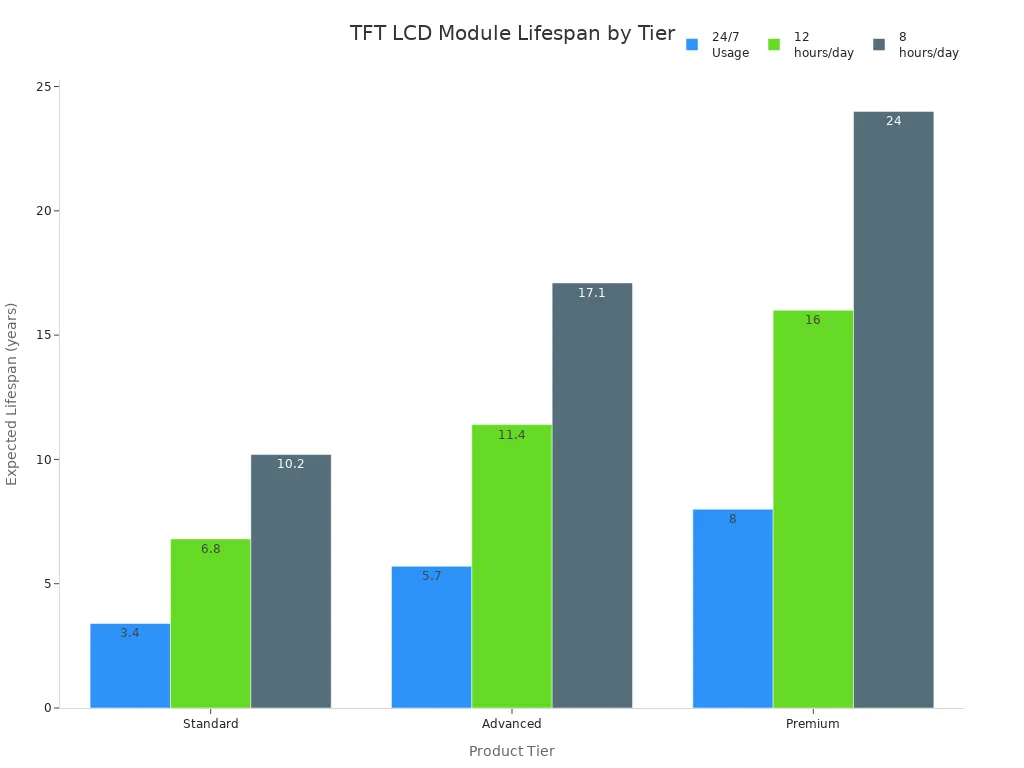
You want your display to last a long time. TFT LCD modules are made to be strong and last for years. How long they last depends on the quality and how much you use them. Here is a table that shows how long different tiers last:
Tier | MTBF (hours) | 24/7 Usage (years) | 12 hours/day (years) | 8 hours/day (years) |
|---|---|---|---|---|
Standard | 30,000 | 3.4 | 6.8 | 10.2 |
Advanced | 50,000 | 5.7 | 11.4 | 17.1 |
Premium | 70,000 | 8 | 16 | 24 |
The environment can change how long your display lasts. High humidity can cause rust and problems. Cold weather makes the liquid crystals move slower. This lowers the contrast and brightness. Hot weather can mess up the liquid crystals. This can make the picture look strange and age the display faster. You should keep your display in a steady place. This helps keep the picture bright and clear for a long time.
Note: If you take care of your display and keep it in good conditions, it will stay bright, clear, and colorful for many years.
TFT Display Advantages and Disadvantages
Main Advantages of TFT Displays
There are many good reasons to pick a TFT display. These screens show sharp pictures and bright colors. Each pixel has its own transistor. This helps you see clear details and smooth movement. Watching videos or playing games feels better. You can use these screens in phones and big machines.
Here is a table that lists the main advantages:
Advantage | Description |
|---|---|
High Resolution | You see sharp images and detailed visuals. |
Color Accuracy | Colors look true-to-life and vibrant. |
Fast Response | Motion blur is low, so fast scenes look smooth. |
Low Power Consumption | These screens use less energy than older types, saving you money. |
Wide Viewing Angle | You can see the screen clearly from different angles. |
High Reliability | These displays last a long time and work well in many settings. |
Tip: A TFT display gives you clear pictures and good colors. The fast response time helps stop motion blur.
TFT displays are also cheaper to make now. This means more people can buy them. They are strong and work well for many things.
Common Disadvantages
TFT displays have some problems too. The contrast is not as strong as OLED screens. Black parts may look gray, not deep black. The viewing angle can be a problem. If you look from the side, colors and contrast can change.
Here is a list of common disadvantages:
The display needs a backlight for brightness, which can hurt black levels.
Viewing angles are not as wide as OLED, so colors may change from the side.
Contrast is weaker, so dark scenes may not look as deep.
Some models cost more than basic lcd screens.
Color saturation may not be as strong as other technologies.
Disadvantage | Description |
|---|---|
Weak contrast | Black performance is not as strong as OLED. |
Viewing angle dependence | Colors and contrast shift when viewed from side. |
Reliance on backlighting | Needs a backlight, which affects true black. |
You should know that IPS technology helps with viewing angles. But some TFT displays still show color changes from the side. OLED screens keep colors and contrast steady, even if you look from the side.
Note: If you want the deepest blacks and widest viewing angles, you should compare TFT displays with OLED screens.
Applications and Choosing a TFT LCD Display Module
Common Uses of TFT LCDs
You can find TFT LCD modules in many places. These screens show clear pictures in lots of settings. Here are some common ways people use them:
Medical devices use TFT LCDs in patient monitors and imaging tools. They also use them in surgical displays. You get sharp images and strong contrast for reading results.
Cars use TFT LCDs in infotainment systems and dashboards. They are also in rearview cameras and control panels. You can see important info fast while driving.
Gaming consoles and handheld games use TFT LCDs for sharp graphics. They also give smooth motion. You get better pictures and quick response when you play.
Factories use these screens in machines for watching and controlling things. You can see data right away and manage work easily.
TFT LCD modules are also in smart home gadgets, portable electronics, and outdoor gear. You get strong screens and clear images in many places.
How to Choose the Right TFT LCD Display Module
You need to choose the best display for your needs. First, think about where you will use the screen. Decide what features are most important. Look at these key things:
Factor | Description |
|---|---|
Battery life and life expectancy | Make sure the display lasts long and works well for years. |
Touch accuracy and technology | Pick touch features that match what you need, especially outside. |
Response time | Choose a display that changes pictures fast for smooth images. |
Image clarity | Find screens that look good in dark or bright places. |
Environment | Pick displays that can handle dust, water, and sunlight. |
Brightness and resolution are also important. You want a screen that is bright enough outside. Most screens are 250 to 350 nits bright. Some are 800 to 1,000 nits for high brightness. The brightest ones are over 1,500 nits. Pick the right resolution for your use. OCIF (144x176) is good for small devices. WOVGA (240x400) is for medium detail. HD (1280x720) is for very clear pictures.
Tip: Check what kind of connection the screen uses. Fast connections like MIPI DSI and LVDS help you get smooth video and sharp images. Make sure your device works with the connection you pick.
You can get the best TFT LCD module by looking at these features. This helps you get good performance and a screen that lasts.
You have learned that a TFT LCD display module uses thin-film transistors for each pixel. This makes pictures look sharp and colors bright. The screen also changes images quickly. Many devices use these displays because they work well and are simple to use. When picking a module, check the resolution, how bright it is, and if it has touch features. Knowing these things helps you choose the best display for what you need.
Feature | Why It Matters |
|---|---|
Clear Images | Sharp visuals for any application |
Easy Integration | Simple connection to your device |
High Resolution | Detailed pictures and smooth motion |
A TFT LCD display module shows great pictures by using transistors and liquid crystals with a backlight. You can count on this technology for clear, fast, and colorful images.
What Is a TFT LCD Display Module and How Does It Work?
A TFT LCD display module is a complete, ready‑to‑use display unit that integrates a TFT (Thin‑Film Transistor) LCD panel with driver circuits, a backlight, and often a touch panel. It is the most common type of colour display found in everything from smartphones and tablets to industrial equipment, medical devices, and automotive dashboards.
The term “TFT LCD” refers to the underlying technology: TFT is the active‑matrix addressing method, and LCD is the liquid crystal display technology that modulates light to create images.
1. What Does TFT LCD Mean?
TFT – Thin‑Film Transistor
A layer of tiny transistors (one per sub‑pixel) deposited directly onto the glass substrate.
Each transistor acts as a switch that controls the voltage applied to its corresponding pixel.
This active‑matrix design allows very fast, precise control of each pixel without “crosstalk” between neighbours – resulting in sharp, flicker‑free images.
LCD – Liquid Crystal Display
Liquid crystals are organic molecules that can twist when an electric voltage is applied.
They do not emit light themselves; they modulate (block or pass) light from a backlight.
Thus, a TFT LCD is an active‑matrix liquid crystal display where each sub‑pixel is driven by its own thin‑film transistor.
2. Anatomy of a TFT LCD Display Module
A typical TFT LCD module consists of several layers:
Layer | Function |
|---|---|
Backlight | Usually white LEDs; provides the light source behind the panel. |
Rear polariser | Polarises light in one direction. |
TFT glass substrate | Contains the transistor array and pixel electrodes. |
Liquid crystal layer | Twists in response to applied voltage, rotating the polarisation of light. |
Colour filter glass | Has red, green, and blue (RGB) sub‑pixel patterns. |
Front polariser | Placed at 90° to the rear polariser. |
Driver ICs | Row and column drivers that send voltages to each TFT. |
Controller board | Converts incoming video signals (LVDS, MIPI, RGB, SPI) into the format needed by the panel. |
Backlight driver | Regulates LED current and brightness. |
Touch panel (optional) | Capacitive or resistive layer on top for user interaction. |
All these are enclosed in a metal or plastic frame with a flexible flat cable (FFC) or connector interface.
3. How a TFT LCD Works – Step by Step
Backlight illuminates – The white LED backlight turns on, shining light through the rear polariser.
Light becomes polarised – The rear polariser converts the unpolarised backlight into light vibrating in a single plane.
Voltage is applied to selected pixels – The driver ICs send precise voltages to the TFT gates. Each TFT acts as a switch, allowing voltage to reach the liquid crystal cell at that sub‑pixel.
Liquid crystals twist – The applied voltage determines how much the liquid crystal molecules twist. More twist changes the polarisation angle of the transmitted light.
Light passes through the colour filter – After passing through the liquid crystal layer, the light reaches the colour filter. Each sub‑pixel is either red, green, or blue.
Second polariser blocks or passes light – The front polariser (crossed at 90° to the rear) will only transmit light whose polarisation angle has been correctly rotated by the liquid crystals.
Colour mixing creates the image – By controlling the intensity of red, green, and blue sub‑pixels independently, the human eye perceives a full‑colour image.
Key point: TFTs are active components – they hold the voltage on each pixel between refresh cycles, preventing flicker and allowing high‑resolution, fast‑moving images.
4. Types of TFT LCD Panels (by alignment)
Panel Type | Strengths | Weaknesses | Common Use |
|---|---|---|---|
TN | Fast response, low cost | Narrow viewing angles, poor colour | Budget monitors, simple displays |
IPS | Wide viewing angles (178°), excellent colour | Slightly slower response, higher cost | Smartphones, tablets, high‑end monitors |
VA | High contrast (deep blacks) | Colour shift at angles | Televisions, gaming monitors |
Most TFT LCD modules today use IPS technology for better colour and viewing angles.
5. Interfaces for TFT LCD Modules
TFT LCD modules communicate with a host microcontroller or processor through various interfaces:
Interface | Pins | Speed | Typical Resolution | Use Case |
|---|---|---|---|---|
SPI | 4‑5 | Low | ≤320×240 | Small displays, low‑cost MCUs |
8/16‑bit parallel (8080/6800) | 12‑20 | Medium | ≤800×480 | Arduino, STM32, embedded systems |
RGB | 24+ | High | ≤1024×768 | Direct drive from MPU with built‑in LCD controller |
LVDS | 4‑6 pairs | Very high | ≥1024×768 | Laptops, industrial monitors |
MIPI DSI | 2‑4 lanes | Very high | ≥1080p | Smartphones, tablets, Raspberry Pi |
For hobbyist projects, SPI and parallel interfaces are most common.
6. TFT LCD vs. OLED – Quick Comparison
Feature | TFT LCD | OLED |
|---|---|---|
Light source | Backlight (LED) | Self‑emissive (each pixel) |
Black level | Greyish (light leakage) | True black (pixel off) |
Contrast ratio | 1000:1 – 5000:1 | >1,000,000:1 |
Power consumption | Constant (backlight always on) | Varies – low for dark content |
Viewing angle | Good (IPS) to poor (TN) | Excellent (>170°) |
Lifespan | Very long (50,000+ hours) | Moderate (organic degradation) |
Cost | Lower for same size | Higher |
7. Common Applications of TFT LCD Modules
Smartphones & tablets – High‑resolution IPS panels.
Laptops & monitors – Large‑format TFT LCDs.
Industrial control – Rugged, long‑life displays for factories.
Medical devices – Patient monitors, ultrasound screens.
Automotive – Dashboards, infotainment systems.
Consumer electronics – Digital cameras, GPS units, smart home panels.
Arduino & Raspberry Pi projects – Small 1.8″ to 7″ TFT modules for hobbyists.
8. Summary
A TFT LCD display module is a complete display system built around a Thin‑Film Transistor Liquid Crystal Display panel. It works by:
Using a backlight to provide illumination.
Controlling liquid crystal molecules with an array of thin‑film transistors (one per sub‑pixel).
Modulating the polarisation of light to determine how much passes through RGB colour filters.
Combining red, green, and blue sub‑pixels to form a full‑colour image.
The TFT active‑matrix design enables fast, flicker‑free, high‑resolution colour images – making it the dominant display technology in virtually every electronic device with a colour screen
FAQ
What does TFT mean in a display module?
TFT stands for Thin-Film Transistor. You find one transistor for each pixel. This setup lets you see sharp images and fast screen changes.
How do you clean a TFT LCD display?
Use a soft, dry cloth. Gently wipe the screen. Do not use water or harsh chemicals. You keep your display clear and safe this way.
Can you use a TFT LCD outdoors?
Yes, you can use it outdoors. Choose a module with high brightness. Look for at least 800 nits. This helps you see the screen in sunlight.
Why does my TFT LCD look faded from the side?
Standard TFT LCDs can lose color and contrast at angles. IPS technology fixes this. You get better colors when you view from any direction.
How long does a TFT LCD display last?
Most TFT LCDs last from 30,000 to 70,000 hours. If you use your display every day, it can work for many years.
See Also
Understanding LCD Displays: Functionality and Operation Explained
Exploring OLED Displays: Their Functionality and Mechanism
The Basics of OLED Displays: How They Operate
Transparent OLED Displays: What They Are and How They Function
Stretched LCD Screens: Understanding Their Design and Function
