What Is a 3D Holographic Player and How Does It Work
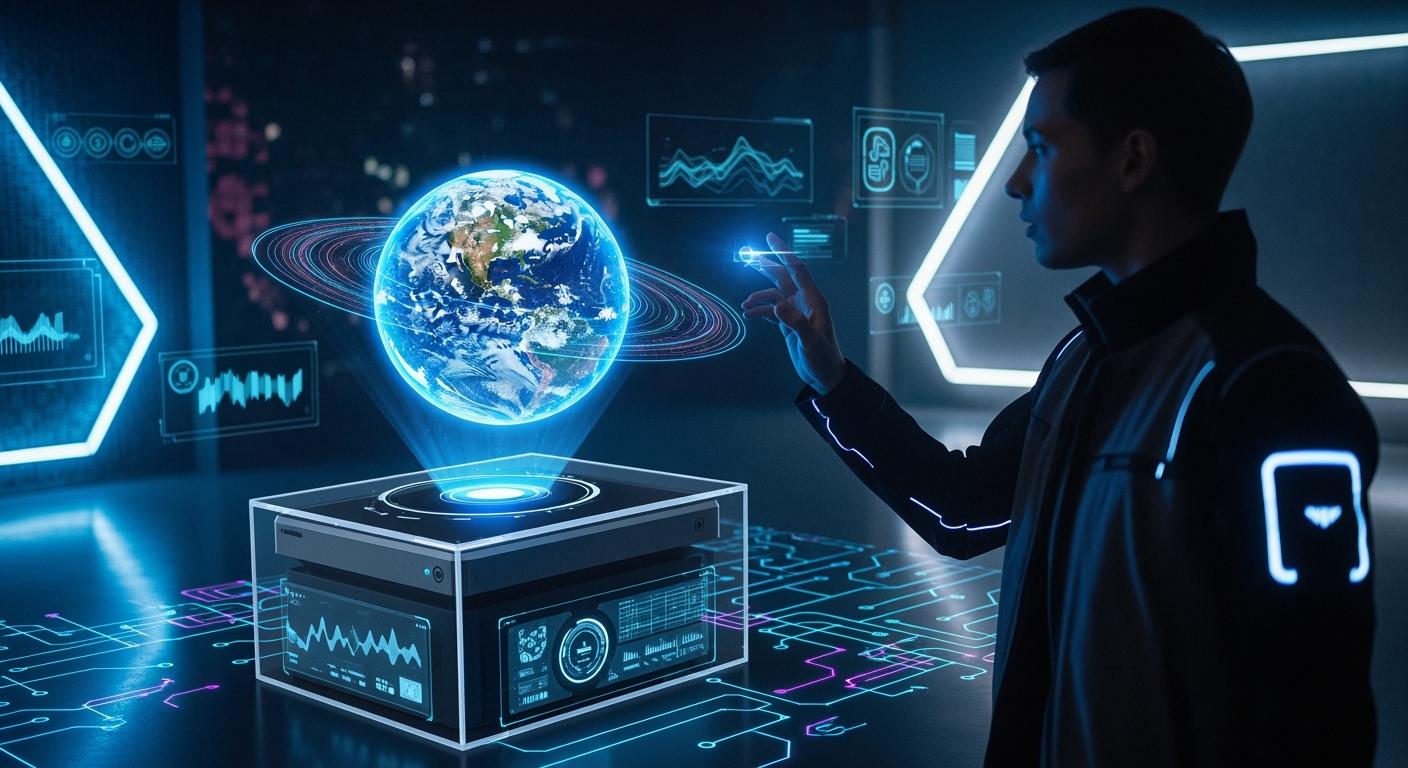
A 3D holographic player uses holographic fan technology or a holographic projector. It creates holography that lets you see a hologram display floating in the air. Spinning LED blades and computer-made holograms form a holographic image and 3D object. You do not need glasses to see them. You experience holographic projection and 3D visualization. This grabs attention much more than regular screens. Holographic visual walls and holography help people interact more and remember better, as shown in the table below:
Metric | 3D Holographic Players | Traditional 2D Displays |
|---|---|---|
2000% | N/A | |
Message Retention Increase | 300% | N/A |
Sales Conversion Increase | 180% | N/A |
The global market size for 3D holographic display technology was USD 2.85 billion in 2023. You can watch how this works at https://www.youtube.com/watch?v=ak5uPLxso5A.
Add.: 2F, Bldg 10, Changfeng Industrial Park, Dongkeng, Fenghuang, Guangming, Shenzhen, China 518132
Mobile/WHATSAPP: 86-138 25769658
Email: marketing@topadkiosk.com topadkiosk@gmail.com
Skype: pghenry1
Wechat: adkioskhenry
English Web.: https://www.topkioskdisplay.com/
http://www.ad-kiosk.com/
https://www.toplcddisplay.com/
http://www.multitouchdigitalsignage.com/
https://www.youtube.com/channel/UCYVYNJHxLVEcQD8fuUxXNTA/videos?view_as=subscriber
https://www.facebook.com/TOPADKIOSKSHENZHEN/?ref=bookmarks
As long as we have the blueprints, Shenzhen TopAdkiosk Display Technology Co., Ltd no worse than anyone else.
please contact Shenzhen TopAdkiosk Display Technology Co.
Key Takeaways
3D holographic players use spinning LED blades. These blades make floating images you can see without glasses. The images look cool and are fun to interact with.
Holographic displays can make shoppers pay more attention. They can increase shopper attention by 2000%. People also remember messages 300% better. This makes them great for advertising.
These displays work best when the lights are dim. Bright light can make the images hard to see.
Holographic fans do not use much energy. They use 60-80% less power than regular LED screens. This helps save money.
Businesses can use holographic technology in many places. They can use it in stores and at events. This helps get customers interested and can help sell more.
What Are Holographic Fans
3D Holographic Player Basics
Have you ever seen pictures that look like they float in the air? Holographic fans can do this cool trick. They have spinning blades with bright LEDs on them. When the blades spin fast, they make moving lights. Your eyes mix these lights together. This makes a 3D image seem to float in space. This is called persistence of vision.
A 3D holographic player has many important parts:
Laser source: It gives a strong and steady light.
Beam splitter: It splits the laser into two beams.
Spatial light modulator: It changes the light to make moving holograms.
Holographic medium: This is where the light patterns show up.
Projector or diffuser: It helps you see the 3D image.
Computational unit: This computer does fast math for real-time images.
You do not need special glasses to see these 3D holographic displays. The images look real and you can see them from many angles. This is very different from flat screens.
Key Features of Holographic Displays
Holographic fans are special because they show bright and clear images. You can see them even in busy places. Most 3D holographic displays are brighter than 6000 cd/m². This means you can see the images well in bright stores or restaurants.
Holographic fans come in many sizes and resolutions. Here is a table with some common choices:
Resolution Level | Pixel Value | LED Count | Best Viewing Distance | Typical Application |
|---|---|---|---|---|
Low Resolution | 450×224, 512×234 | 128–256 LEDs | 2–4 meters | Personal use, static logos, QR codes |
Mid-Range | 800×480, 1024×768 | 512–1024 LEDs | 1.5–3 meters | Retail signage, product demos |
High-Definition | 1920×1080 (1080P) | 1024–1536 LEDs | < 2 meters | Commercial displays, detailed videos |
Ultra-Premium | 2048×2048, 2048×2512 | 1536+ LEDs | < 1.5 meters | High-end exhibitions, premium retail |
Many companies make holographic fans. Some well-known brands are Missyou, LUMINA, GIWOX, and HYPERVSN. Each brand has different features for homes, businesses, or big events.
Holographic displays let you see 3D images in a new way. They do not just show flat pictures. Instead, you can see objects as if they are floating in real life. This helps holographic fans get attention and share information.
How Holographic Fans Create 3D Holograms
Spinning LED Blades and Persistence of Vision
Have you ever wondered how holographic fans make pictures float? The trick is spinning LED blades and something called persistence of vision. When you look at a holographic fan, the blades spin very fast. Each blade has lots of tiny LEDs. These LEDs blink in a special order as the blades spin. Your eyes cannot see every blink because the blades move so quickly. Your brain keeps each blink for a short time. This is called persistence of vision.
Holographic fans use this to make a steady 3D image. The LEDs blink faster than your eyes can notice. Your brain mixes the blinks together. You see one solid hologram floating in the air. Most holographic fans spin between 300 and 600 RPM. Some can even spin up to 1,000 RPM. This fast spinning makes the hologram look smooth and real.
Tip: You do not need special glasses to see these 3D images. The holographic projection appears right in front of you. You can see it from many sides.
Light Diffraction and Image Formation
Holography is not just about spinning lights. It also uses light diffraction. When you see a hologram, you are looking at shaped light waves. These waves copy a real object. Holographic fans use this to make 3D images that look real from different sides.
Holograms use light diffraction to make a copy of an object.
Holograms show parallax, so you see new views as you move.
This lets you see a full 3D object, making it look real.
Holographic fans use science to build these images. Here is a table that explains the main ideas:
Principle | Description |
|---|---|
Interference Patterns | Holography mixes light waves to record and rebuild 3D objects. |
Spatial Light Modulators | These change the light to show moving 3D scenes. |
Computer-Generated Holograms | Special computer programs make patterns for virtual 3D scenes. |
Coherent Light Sources | Lasers or similar lights give control for clear holography. |
You can see how holography works with holographic fans. The technology lets you see 3D objects without extra gear. Holographic displays use fast LEDs and science to make floating images. This makes holographic fans great for getting attention and sharing information in a new way.
Components and Content for Holographic Players
Hardware Overview
You need a few main parts to make a 3D holographic player work. Each part helps make the floating hologram you see. The most important hardware pieces are:
Component | Description |
|---|---|
HoloNet | A see-through mesh screen that shows holographic images. |
Projector | Sends bright pictures onto the HoloNet for clear holography. |
Black Background | Makes the hologram look stronger by adding contrast. |
Spinning LED blades are also needed. They use brushless motors. These motors make less noise and heat. They last longer and help the holography work well. You should put the fan high enough to be safe. Leave space around it. Clear guards stop you from touching the fast blades. HDFocus uses strong resin to keep the LED chips safe and stop pieces from flying off. Good instructions show you how to put up the fan and plug it in right. If you take care of your 3D holographic fan, it can last for years.
Safety Tip: Always unplug the fan before you clean it. This stops shocks and keeps you safe.
Software and Content Creation
You can make cool 3D holographic content with special software. People use different tricks to make holography look real and fun. The software lets you build moving pictures and objects that float. Here are some common ways:
Technique | Description |
|---|---|
Perspective Rendering | Adds shadows and highlights to make things look 3D. |
Layering and Transparency | Uses see-through layers to make the hologram look deeper. |
Animation and Rotation | Rotates objects to make them look like they move in 3D. |
Viewer Perspective | Lets you see the hologram from different sides for a better 3D effect. |
Layering and transparency make objects look like they have more depth. Animation and rotation make the hologram move and feel alive. Viewer perspective lets you see the display from many angles. This makes it feel more real. You do not need special glasses to see these holographic displays. The software helps you make content that stands out and shares ideas in a new way.
User Experience with 3D Holograms
Viewing and Interacting with Holographic Displays
When you stand near a holographic display, you see a 3d object floating. It looks magical and grabs your attention. You do not need glasses or any special tools. Holography lets you walk around the image. You can see it from different sides. This makes the 3d holograms look real and exciting.
Some holographic displays let you interact in new ways. Many systems have:
Gesture control: You wave your hand to move or spin the 3d object.
Haptic feedback: Some displays let you feel a vibration or touch when you interact with the hologram.
These features make holography more fun and engaging. You feel like you are inside the scene. The technology uses spinning LED blades and light patterns to make the 3d effect. Holography brings digital content into your real world.
Note: Holography does not just show a picture. It creates a 3d hologram that you can view and sometimes even touch.
Real-World Applications
You see holographic fans and 3d holograms in many places today. Businesses use them to grab attention and share information in a new way. Here are some common uses:
Product displays in stores: Hologram fans show shoes or perfumes floating in the air.
Restaurant menus and food showcases: Restaurants use 3d holograms to show dishes and attract customers.
Events, trade shows, and exhibitions: Brands use holography to stand out with rotating logos or 3d models.
Shopping mall advertisements: Holographic fans promote sales and offers in busy malls.
Launch events and product reveals: Companies create excitement with floating 3d objects during new product launches.
Small business promotions: Even small shops use holography to show offers and catch the eye.
You can see the impact of holography in real case studies:
Case Study | Impact on Customer Engagement and Sales |
|---|---|
Antetokounbros | More people stop and look. Customers spend more time and buy more because holograms are exciting. |
Nike | Shoppers buy more because they see and feel products better. |
Hologram Fan Advertising | People remember ads longer (20-30%) than regular ads. This leads to more sales and lasting impressions. |
Holography changes how you see and interact with digital content. Holographic displays make 3d objects come alive. This helps brands connect with you in new ways.
Advantages and Drawbacks of Holographic Technology
Benefits of Holographic Fans
Holographic fans can make a 3d object look like it floats in the air. These fans use spinning LED lights to show pictures and videos that look real. When you walk past a holographic display, you notice it fast. The bright and moving images catch your eye and make you want to look closer. This is why holographic fans are good for ads and sharing messages.
You get many good things when you use holographic fans for your store or event:
Holographic fans pull people in and keep them watching.
The 3d images help people remember what they see.
These displays do not cost a lot and work for many ads.
Holographic fans use less power than regular LED screens, so you save money.
You can use them for interactive displays to get people involved.
Here is a simple chart about energy use:
Technology Type | Power Consumption |
|---|---|
Holographic Fans | 60-80% less than LED |
Traditional LED Screens | Standard consumption |
You can put holographic fans in stores, malls, or at events. The clear images help you show your brand or product in a cool way. You do not need special glasses to see the 3d object, so it is easy and fun for everyone.
Limitations and Challenges
Holographic technology also has some problems you should know about. The 3d effect works best inside or when the lights are low. If it is very bright outside, the images are hard to see. The picture gets blurry if you stand too far away or move to the side. The fan can be loud, which might bother people in quiet places.
Here are some common problems:
Limitation | Description |
|---|---|
Poor Visibility in Bright Lighting | Hard to see the holographic display in strong light. |
Resolution Drops With Viewing Distance | Images lose detail as you move farther away. |
Limited Viewing Angles Kill the 3D Effect | The 3d object looks best from the front; side views may distort the image. |
Fan Noise Disrupts Quiet Environments | The spinning fan can be noisy. |
Shorter Lifespan Due to Moving Parts | Moving parts wear out faster than static displays. |
Doesn’t Support Real-Time Content | Most fans show pre-made content, not live updates. |
Custom Content Creation Adds to Cost | Making special content for holographic fans can be expensive. |
You also need to think about safety. Always put holographic fans high up and make sure they are tight. Keep wires neat and check the fan often to stop problems. Big fans need strong mounts to stay safe. Clean the fan often so it lasts longer.
Holographic fans work best inside, where you can control the lights. They let you show a 3d object in a way that stands out, but you need to know their limits. If you use holographic displays outside, the images may not look as bright or clear.
See Holographic Fans in Action: https://www.youtube.com/watch?v=ak5uplxso5a
Video Demonstrations of 3D Holograms
You can watch videos at https://www.youtube.com/watch?v=ak5uplxso5a. These videos show how holographic fans work. The spinning LED blades make a 3D image float in the air. You do not need special glasses to see it. The hologram display grabs your attention fast.
When you watch https://www.youtube.com/watch?v=ak5uplxso5a, you see products look cool and exciting. The 3D visuals stand out in stores, malls, and events. You see shoes, logos, or food items floating and moving. This makes you want to learn more about what you see.
Watching https://www.youtube.com/watch?v=ak5uplxso5a helps you see why holographic fans are hard to miss. The bright and moving images make you remember the brand. You feel more loyal to it.
Here are some ways video demonstrations at https://www.youtube.com/watch?v=ak5uplxso5a affect you:
You see product features in a new way.
You feel excited to try or buy the product.
You remember the brand longer.
You enjoy a fun and interesting experience.
Benefit of Video Demo | How It Helps You |
|---|---|
Attracts your attention | You notice the display right away |
Shows product features | You see what makes it special |
Promotes brand loyalty | You remember and trust the brand |
Boosts sales | You feel inspired to buy something |
You can find more examples at https://www.youtube.com/watch?v=ak5uplxso5a. These videos show how hologram displays work in real life. You see how 3D holographic players change how you look at and use products.
You learned how holographic fans make 3D images float. These displays use spinning LED blades and light patterns. This makes holographic objects look real. Holographic fans give you a cool experience without glasses. The technology keeps getting better. You will see clearer pictures and wider viewing angles. Holographic interfaces will be in cars and offices. Personal devices will show 3D holographic content in your space.
Nanotechnology will make displays thinner and use less energy.
Artificial intelligence will help make holograms faster.
Holographic communication and gaming will be normal.
FAQ
What is a hologram display?
A hologram display shows 3D images that seem to float in the air. You see objects from different angles. The display uses light and special technology to create this effect. You do not need glasses to view the hologram.
How does a 3D holographic player work?
A 3D holographic player uses spinning LED blades and computer programs. The LEDs flash quickly to form images. Your eyes blend the lights together. This creates a 3D object that looks real and floats in space.
Do I need special glasses to see the hologram?
No, you do not need special glasses. You can see the 3D hologram with your own eyes. The display works in open air. You can walk around and view the image from different sides.
Where can you use holographic fans?
You can use holographic fans in stores, malls, restaurants, and events. They help you show products, ads, or menus in a new way. Many businesses use them to grab attention and share information.
Are holographic fans safe to use?
Yes, holographic fans are safe if you follow the instructions. You should keep them out of reach and use guards. Always unplug the fan before cleaning. This helps prevent accidents and keeps you safe.
See Also
Understanding Hologram Boxes: Functionality and Purpose Explained
The Magic of 3D LED Fans for Holographic Displays
Exploring the Functionality of Hologram Fans in 2026
