Smallest OLED Display Showdown Which One Fits Your Project Best
Shenzhen TopAdkiosk Display Technology Co., Ltd.
Add.: 2F, Bldg 10, Changfeng Industrial Park, Dongkeng, Fenghuang, Guangming, Shenzhen, China 518132
Mobile/WHATSAPP: 86-138 25769658
Email: marketing@topadkiosk.com topadkiosk@gmail.com
Skype: pghenry1
Wechat: adkioskhenry
English Web.: https://www.topkioskdisplay.com/
http://www.ad-kiosk.com/
https://www.toplcddisplay.com/
http://www.multitouchdigitalsignage.com/
https://www.youtube.com/channel/UCYVYNJHxLVEcQD8fuUxXNTA/videos?view_as=subscriber
https://www.facebook.com/TOPADKIOSKSHENZHEN/?ref=bookmarks
You can use the 0.96-inch OLED display in many projects. This display shows clear images for small parts. It works well with I2C connections. Micro OLED displays are made for tiny designs, like wearable sensors. Many devices use the smallest OLED display technology. These include smartphones and smartwatches. They use it because colors look good and it saves energy. You should check size, resolution, interface, and power before picking a display.
Display Size | Resolution | Typical Applications |
|---|---|---|
0.96" | 128 × 64 pixels | Small electronics, subsystems, I2C use |
Key Takeaways
Pick the right OLED display size for your project. Small displays like the 0.32-inch micro OLED fit in tight spots. The 0.96-inch OLED works well for DIY projects.
Think about resolution and interface when you choose a display. Higher resolution gives clearer pictures. Interfaces like I2C are simple to connect.
Micro OLED displays are good for wearables and small devices. They use little power and show sharp images.
The 0.96-inch OLED display is great for beginners. It is easy to find and simple to use. It also has good help for programming.
Always check if your display works with your microcontroller. Make sure the display fits your needs for size, power, and features.
Smallest OLED Display Comparison
Quick Specs Table
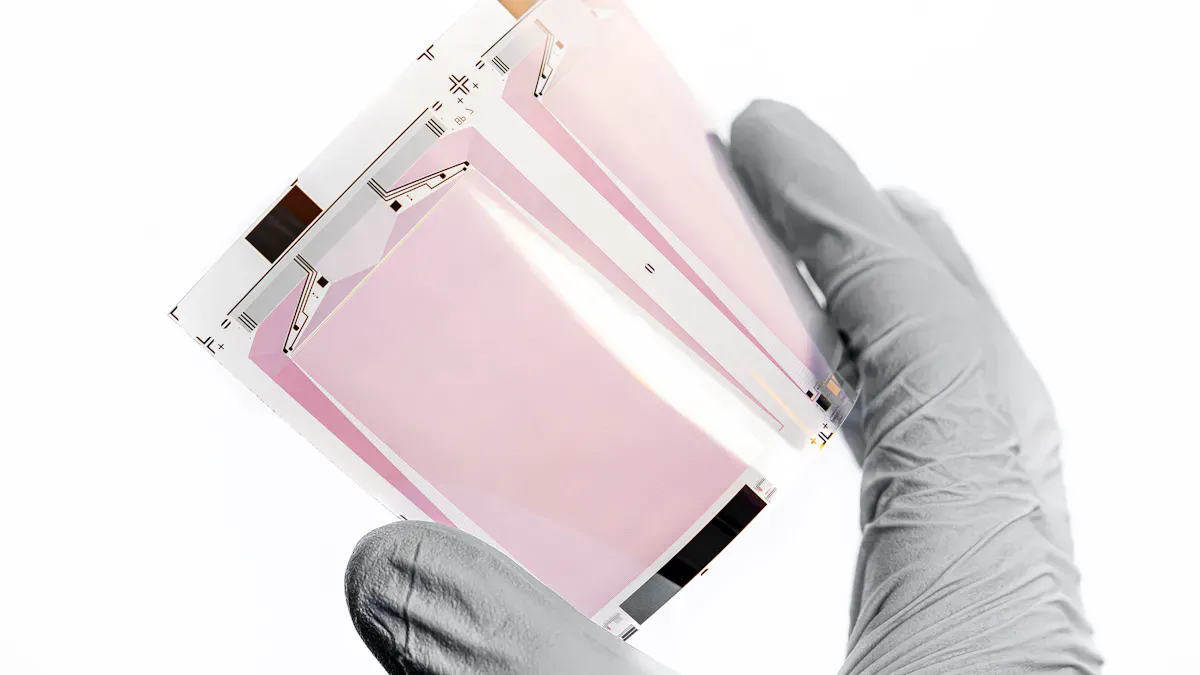
There are many OLED displays you can use for projects. The smallest OLED display in 2026 is the 0.32-inch OLED microdisplay. It is only 11.5mm by 11.5mm in size. This display has a resolution of 60x32 pixels. It fits well in very small designs. It also uses less power and looks clear. Micro OLED displays like this are great for wearable devices and tiny sensors.
Below is a table that compares the smallest OLED displays. It shows both micro OLED and standard sizes:
Display Size | Resolution | Interface | Driver | Dimension (mm×mm) | Best Use Case |
|---|---|---|---|---|---|
0.32 inch | 60×32 | I2C/SPI | Custom | 11.5×11.5×2.4 | Wearable sensors, jewelry |
0.49 inch | 64×32 | I2C | SSD1315 | 15.5×13.0 | Compact IoT, mini gadgets |
0.66 inch | 64×48 | I2C/SPI | SSD1306 | 18.5×17.8 | Portable instruments |
0.91 inch | 128×32 | I2C | 1306 | 36×12.5 | Smartwatches, displays |
0.96 inch | 128×64 | I2C/SPI | SSD1306 | 27×27 | DIY electronics, subsystems |
1.3 inch | 64×128 | 4-wire SPI, I2C | SH1107 | 30×39.5 | Mini gaming consoles |
Tip: Micro OLED displays are best when you have little space. You can use them in wearable art, jewelry, or tiny sensors.
Best-Use Cases
Pick an OLED display that matches your project’s needs. Micro OLED and microdisplay models are best for very small designs. You can use them in wearable devices, jewelry, or small sensors. The 0.49-inch OLED display is good for mini IoT gadgets and portable tools. The 0.66-inch OLED display works for portable instruments and small games. The 0.91-inch OLED display is used in smartwatches and fitness trackers. The 0.96-inch OLED display is great for DIY electronics and subsystems. The 1.3-inch OLED display is good for mini gaming consoles and advanced portable devices.
Micro OLED and microdisplay: Wearable sensors, jewelry, art
0.49 inch OLED: IoT devices, mini gadgets
0.66 inch OLED: Portable instruments, small displays
0.91 inch OLED: Smartwatches, fitness trackers
0.96 inch OLED: DIY electronics, subsystems
1.3 inch OLED: Mini gaming consoles, advanced portable devices
To pick the smallest OLED display, check the size, resolution, and interface. Micro OLED displays are best for very small projects. Standard OLED displays give you more choices for regular electronics.
Display Types Overview
Micro OLED: The Smallest Option
You can use micro oled displays when you need the smallest size. The smallest oled display in 2026 is a 0.32-inch microdisplay. This micro oled fits inside devices like smart glasses, wearable sensors, and jewelry. Micro oled gives you high resolution and sharp images. You see true blacks and bright colors. Micro oled also uses less power and responds quickly. You get smooth visuals for AR and VR. Micro oled uses a fast MIPI interface, so you can connect it to mobile devices easily.
Advantage | What It Means for You |
|---|---|
High Resolution | Sharp images, even on tiny screens |
High Brightness | Easy to see in sunlight |
Fast Response | No motion blur, smooth visuals |
High Contrast | Realistic colors and deep blacks |
Compact Size | Fits in small spaces |
MIPI Interface | Fast connection, low power use |
Note: Micro oled and microdisplay are best for projects where space is limited and you need clear visuals.
0.49 Inch OLED
You can use a 0.49 inch oled display for mini gadgets and compact IoT devices. This oled display gives you basic resolution and fits in small tools. You get simple images and text. The oled display uses I2C for easy connection. You can add this oled display to portable instruments or tiny screens.
0.66 Inch OLED
A 0.66 inch oled display works well for portable instruments. You see more detail than smaller displays. This oled display uses I2C or SPI, so you can connect it to many controllers. You can use this oled display in small games or measurement tools.
0.91 Inch OLED
You can use a 0.91 inch oled display in smartwatches and fitness trackers. This oled display gives you a wide screen and clear text. You see more information at once. The oled display uses I2C, so you can connect it to microcontrollers. You can use this oled display for notifications and simple graphics.
0.96 Inch OLED
A 0.96 inch oled display is popular for DIY electronics. You get high resolution and a square shape. This oled display fits in subsystems and small projects. You can use I2C or SPI to connect the oled display. You see sharp images and clear text. Many makers use this oled display for prototypes and learning.
Tip: Micro oled and microdisplay give you the smallest size and best image quality. Standard oled displays like 0.96 inch are easier to find and use in most projects.
Feature Comparison
Size & Form Factor
Oled displays come in many sizes. The smallest one in 2026 is a 0.32-inch micro oled microdisplay. It fits in spaces as tiny as 11.5 mm by 11.5 mm. You can also pick other small sizes like 0.49 inch, 0.66 inch, 0.91 inch, and 0.96 inch. These displays have different shapes. Some are square, some are rectangle, and some are circle. Most oled displays are very thin, usually less than 1 mm thick. This makes them great for slim gadgets and wearables. Micro oled or microdisplay is good when you need a small, bright screen for jewelry, sensors, or smart glasses.
Attribute | Details |
|---|---|
Size Range | 0.32 inch (micro oled) to 1.3 inch (standard) |
Shape Options | Square, rectangular, circular, custom |
Thickness | Less than 1 mm (ultra-thin) |
Best For | Wearables, compact gadgets, art, sensors |
Tip: Pick a micro oled microdisplay if you want the smallest size and a bright screen with high-luminance micro oled technology.
Resolution & Quality
Each oled display gives you a different picture quality. Micro oled and microdisplay models show sharp images, even when small. The 0.32-inch micro oled has 60x32 pixels. The 0.96-inch oled display has 128x64 pixels, which is good for words and simple pictures. Some micro oled displays can show up to 4K resolution for special uses. All oled displays use self-emissive technology, so you see deep blacks and bright colors. They also have high contrast and lots of colors. This makes pictures look clear and bright, even on tiny screens.
Micro oled and microdisplay: Best for sharp images and high contrast
0.49 inch and 0.66 inch: Good for simple graphics and text
0.91 inch and 0.96 inch: Great for clear text and basic visuals
Note: Self-emissive display technology gives you deep blacks and bright colors, even in small displays.
Interface (I2C/SPI)
You can connect oled displays to your project with I2C or SPI. I2C is easy and uses fewer wires. This is good for small gadgets. SPI is faster and helps when you need quick screen changes. Some micro oled and microdisplay models use MIPI for fast data. Most regular oled displays work with both I2C and SPI. You can choose the one that fits your microcontroller.
Display Model | Interface Options | Resolution |
|---|---|---|
Micro oled/microdisplay | I2C, SPI, MIPI | 60x32 to 4K+ |
0.49 inch oled | I2C | 64x32 |
0.66 inch oled | I2C, SPI | 64x48 |
0.91 inch oled | I2C | 128x32 |
0.96 inch oled | I2C, SPI | 128x64 |
You can use I2C for simple wiring and SPI for faster screen updates. Self-emissive displays with MIPI work best for high-speed needs.
Power Use
Oled displays use less power than most other screens. Micro oled and microdisplay models use very little energy. This helps batteries last longer in wearables and portable gadgets. Regular oled displays also save power because they are self-emissive. You do not need a backlight, so you use less energy. Some micro oled displays can get very bright but still use little power.
Micro oled/microdisplay: Very low power, best for sensors and wearables
0.49 inch to 0.96 inch oled: Low power, good for DIY and IoT gadgets
Tip: Pick a self-emissive display if you want to save the most energy in your project.
Cost & Availability
You can buy oled displays from many places. Micro oled and microdisplay models are made by companies like SONY, BOE, KOPIN, and eMagin. These are used in fancy cameras, AR/VR, and military gear. Regular oled displays like 0.96 inch are easy to find in electronics stores. Prices for small oled displays go from $3.90 to $12.54. Micro oled and high-luminance micro oled models cost more because they use special technology.
Manufacturer | Display Type | Size Range | Applications |
|---|---|---|---|
SONY | Micro oled | 0.39–1.3" | Cameras, optics, AR/VR |
BOE | Micro oled | 0.39–1.3" | AR/VR, industrial |
KOPIN | Microdisplay | 0.39–1.3" | Military, AR headsets |
eMagin | Micro oled | 0.39–1.3" | Medical, defense, industry |
Micro oled/microdisplay: Higher cost, less common for hobbyists
0.49–0.96 inch oled: Lower cost, easy to find for DIY projects
Integration Ease
Most oled displays can connect to Arduino or Raspberry Pi with simple wires. For I2C, you connect VCC, GND, SDA, and SCL. For SPI, you add extra pins for data and clock. You can use libraries like Adafruit_SSD1306 to program your screen. Micro oled and microdisplay models might need special drivers or MIPI. Regular oled displays are easier for beginners to set up.
Step | Description |
|---|---|
Wiring | Connect power, ground, and data pins to your board |
Programming | Use ready-made libraries for fast setup |
Micro oled/microdisplay: May need advanced setup, best for experts
0.49–0.96 inch oled: Easy for beginners, lots of guides available
Note: Self-emissive display technology makes oled displays simple to use and easy to add to many projects.
Best Fit by Project Type
Wearables
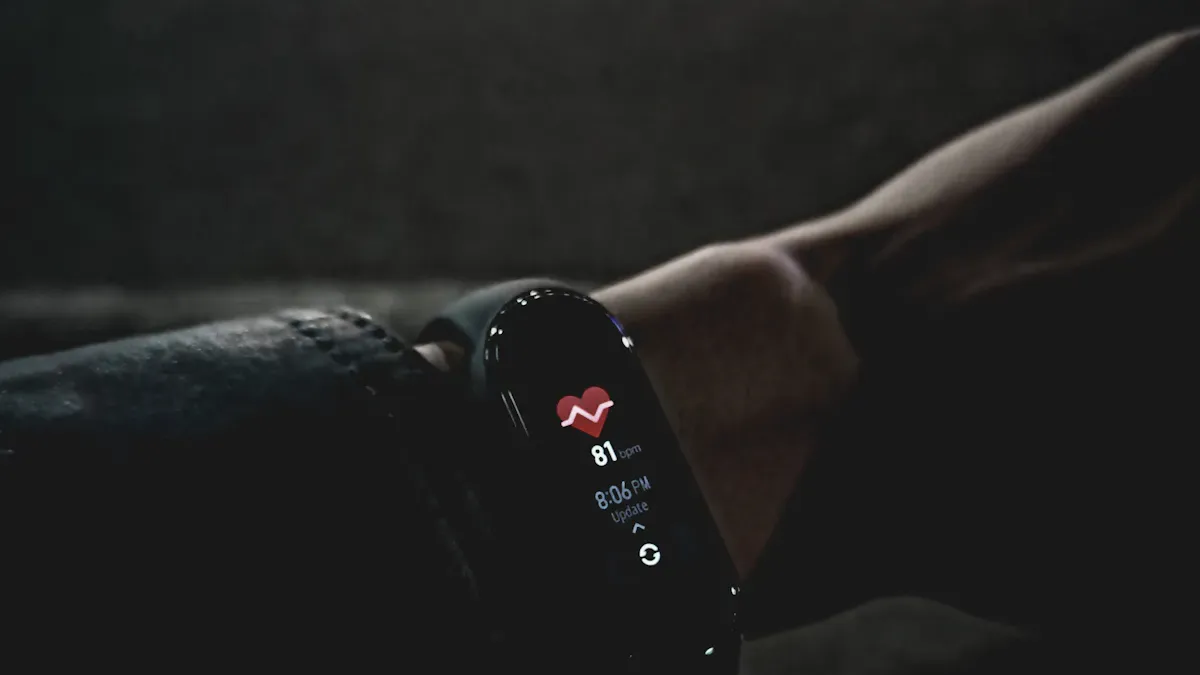
If you make wearable tech, you need a small screen. The display should be light and not use much power. Micro OLED displays are best for these jobs. These screens are less than 1 inch wide. They fit inside smartwatches, fitness bands, and ar glasses. Micro OLED and microdisplay screens show clear pictures and save energy. They last longer because their pixels make deep blacks and strong contrast. You can use them in ar and vr headsets near your eyes. Their small size and strength make them great for wearables.
Micro OLED and microdisplay: Best for smartwatches, ar glasses, fitness trackers, and jewelry
High resolution and low power use
Durable and lightweight for long-term wear
Tip: Pick micro OLED if you want the smallest oled display for your wearable. You get clear images and your battery lasts longer.
Sensors & Compact Devices
You need a tiny screen for sensors or small gadgets. The smallest oled display, like the 0.32-inch microdisplay, fits well here. When you pick a display for a sensor, check the size, resolution, interface, power use, and viewing angle. For simple lights, a 128x32 screen works. If you want menus or more info, a 128x64 display is better. Micro OLED and microdisplay screens are good for small sensors, medical tools, and mobile displays.
Decide how much info you want to show.
Pick a screen size that fits your gadget.
Make sure the interface works with your controller.
Check that the display uses little power.
Look for a wide viewing angle so it is easy to read.
Note: Micro OLED and microdisplay models are best for small sensors and ar or vr headsets.
DIY Gadgets
If you like making DIY gadgets, you want a screen that is easy and cheap. The 0.96-inch oled display is the top pick for hobbyists. You can buy it at many electronics stores. It connects easily to Arduino and Raspberry Pi. This display shows sharp text and simple pictures. You also get lots of help online for programming. The 1.3-inch oled display is good if you want a bigger screen. Both are great for clocks, meters, and small games.
0.96-inch oled: Best for most DIY projects
1.3-inch oled: Good for larger gadgets
Easy to program and integrate
Tip: Try a 0.96-inch oled display for your first DIY project. There are many guides and libraries to help you.
Prototyping
When you make prototypes, you need a screen that is flexible and clear. Micro OLED and 0.96-inch oled displays both work well for this. Micro OLED gives you lots of pixels, which is good for ar and vr headsets. You see sharp details and fast changes on the screen. The 0.96-inch oled display is easy to connect and program. You can test ideas quickly with it.
Advantage | Micro OLED / Microdisplay | 0.96-inch OLED |
|---|---|---|
High Pixel Density | Yes (over 4,000 PPI) | No |
Superior Contrast | Yes | Yes |
Fast Response Times | Yes | Yes |
Low Power Consumption | Yes | Yes |
Easy Integration | Needs advanced setup | Yes, beginner-friendly |
Note: Use micro OLED or microdisplay for advanced prototypes, like ar and vr headsets. Pick 0.96-inch oled for quick and easy prototyping.
Education
You can find the smallest oled display in many school kits. The Grove Beginner Kit for Arduino has an oled display for learning. These screens let you show words, numbers, and simple pictures. Students use them to make clocks, counters, and games. The 0.96-inch oled display is common in STEM classes because it is easy and works well. You can also use micro OLED and microdisplay screens for harder lessons about ar, vr, and near-eye displays.
0.96-inch oled: Best for beginners and classroom projects
Micro OLED and microdisplay: Good for advanced STEM and near-eye display lessons
Tip: Use a 0.96-inch oled display to teach basic coding and electronics. Try micro OLED for lessons about ar, vr, and small mobile displays.
Pros & Cons Summary
Micro OLED
A micro oled is the smallest display you can get. It fits in very tiny places and works well for wearables. The images look bright and it saves battery power. You might have to pay more for this display. It can also be hard to find in stores. The table below shows the main points:
Advantage/Disadvantage | What It Means for You |
|---|---|
Compact Size | Fits in smart glasses, jewelry, and sensors |
High Brightness | Easy to read in sunlight, clear visuals |
Low Power Use | Longer battery life for your device |
Higher Cost | More expensive than other displays |
Limited Availability | Harder to buy for hobby projects |
Note: Micro oled and microdisplay are best for very small projects.
0.49 Inch OLED
A 0.49 inch oled display is good for small gadgets. It shows simple pictures and uses little energy. The screen does not show a lot of detail. It is easy to connect with I2C. It may not look bright outside in sunlight.
Very small and light
Uses little battery power
Simple to connect with I2C
Not good for detailed graphics
Not as bright as bigger screens
0.66 Inch OLED
The 0.66 inch oled display is a good middle choice. You see clear words and sharp pictures. It works well in portable tools. It can be hard to see if you are outside on a sunny day.
Feature | Benefit or Limitation |
|---|---|
Balanced Size | Fits many compact devices |
Good Contrast | Sharp visuals, easy to read |
Low Power Use | Saves battery life |
Outdoor Use | May be less visible in sunlight |
0.91 Inch OLED
The 0.91 inch oled is thin and light. It can bend and lasts in small devices. You see bright colors and save energy. It costs more than old screens. The screen may not last as long and can get burn-in.
Very thin and flexible for small devices
Shows bright colors and high contrast
Saves energy for longer use
Costs more than older screens
May not last as long and can get burn-in
0.96 Inch OLED
The 0.96 inch oled display is great for DIY and learning. You see bright pictures and clear words. It is easy to use and does not weigh much. You need to keep it dry, and it may not last forever.
Benefit or Limitation | Description |
|---|---|
Easy to read, sharp images | |
Lightweight | Good for portable projects |
Fast Response | Smooth animations |
Power Use | Changes with image brightness |
Lifespan | May wear out over time |
Environmental Sensitivity | Needs protection from moisture |
Tip: Pick the 0.96 inch oled display for most DIY projects. It gives you good quality, size, and is easy to use.
You can pick the 0.96-inch OLED display for most projects. It shows clear pictures and is easy to see from many angles. This display works well and is dependable. If your design is very tiny, use the 0.32-inch microdisplay. Here is a checklist to help you choose:
Decide what you want your display to do.
Make sure it works with your microcontroller.
Pick the right size and resolution.
Check if the voltage matches your project.
See if there is good software support.
Make sure it fits in your device.
Look at how good the supplier is.
Be careful of any warning signs.
Choose a display that fits what your project needs. You can find guides like the Qwiic Micro OLED Hookup Guide or Arduino code examples to help you set it up easily.
What Is the Smallest OLED Display Available in 2026?
To be honest, pinpointing the absolute "smallest" OLED display in 2026 is a bit complex. The answer can be approached from two angles: commercially available products and laboratory breakthroughs that represent future directions.
However, a widely accepted smallest available size is 0.15 inches (about 3.8 mm) – smaller than a grain of rice.
📏 What Is the Smallest OLED We Can Actually Buy in 2026?
Size | Resolution | Technology / Application | Notes |
|---|---|---|---|
0.15″ | 720×256 | Experimental micro‑display | Only 3.8 mm; pixel density >5000 PPI. Used in cutting‑edge research and prototyping. |
0.16″ | 304×128 | Experimental micro‑display | ~4.1 mm; for high‑precision near‑eye display research. |
0.19″ | 304×256 | Experimental micro‑display | ~4.8 mm; combines small size with relatively high resolution. |
0.32″ | 60×32 | Directly purchasable micro OLED | 11.5 mm × 11.5 mm; ultra‑low power (~1.1 mW); I2C interface. |
0.39″ | 1024×768 | uNEEDXR technology (NEIV) | Pixel density 3386 PPI; excellent colour and brightness. |
0.5″ | 1600×1200 (UXGA) | Sony ECX339A (AR/VR viewfinders) | World’s smallest pixel pitch 6.3 μm; supports 240 fps; superb colour/contrast. |
0.84″ | 96×16 | Widely available commercial micro OLED | Ultra‑thin (1.3 mm); built‑in SSD1306B controller; I2C/SPI interface. |
1.07″ | 2048×2048 (2K) | Fraunhofer IPMS prototype | Very high resolution; still far from practical commercialisation. |
1.4″ | ~5000 PPI | Samsung OLEDoS (for Vision Pro‑class headsets) | Represents current mass‑production peak pixel density; nearly 4K per eye. |
1.3″ round | – | Samsung AI OLED Remote (concept) | For future AI home control centres – a concept of small round OLED application. |
1.4″ round | – | Samsung AI OLED Pendant (concept) | For necklace‑type wearable AI devices; displays visual information. |
Note about LED alternatives: For extreme small size and low power, some applications may use micro‑LED, which uses inorganic materials for longer lifetime and higher brightness. However, mass‑production costs and full‑colour processes remain challenging.
🧪 Pushing the Limit: Future Display Technologies in the Lab
At the forefront of academic and R&D efforts, scientists are continuously pushing the physical limits of how small a display can be, paving the way for future applications:
Fraunhofer Dresden has developed a micro‑display with a diagonal of only 2.7 cm yet packing about 4 million pixels (roughly twice that of a conventional 1080p display), supporting 120 Hz refresh rate and LVDS high‑speed interfaces.
ETH Zurich has scaled a single pixel down to 100 nanometres – about one fiftieth the size of current commercial OLED pixels. This breakthrough is significant for future ultra‑high‑PPI devices like smart glasses.
🧠 Technical Breakdown: How Do They Get So Small?
Achieving such tiny OLED screens relies on the convergence of several advanced technologies:
OLED on Silicon (OLEDoS) – OLED materials are deposited directly onto a silicon substrate, enabling extremely small pixel sizes and very high PPI micro‑displays, mainly for head‑mounted devices.
Native RGB pixel arrangement – High‑end micro‑displays use independent red, green, and blue emitters without colour filters, resulting in higher light efficiency and purer colours.
Ultra‑miniature passive components – Paired with tiny capacitors and resistors (0201 size: 0.2 mm × 0.1 mm), these components are even smaller than a sesame seed.
💡 Tiny Screens, Huge Potential
Although small in size, these micro OLED displays play critical roles in cutting‑edge fields:
AR/VR headsets – VR optical systems demand micro‑displays with very high PPI, directly affecting sharpness and immersion. Major players like Samsung have locked in micro‑display strategies.
Wearable devices – From smart rings and fitness trackers to conceptual AI OLED smart pendants, these miniature components are essential.
Novel human‑machine interfaces – Industrial controllers, portable medical diagnostic devices, and IoT micro information displays all have growing demand.
Camera electronic viewfinders (EVFs) – The Sony ECX339A, with its ultra‑fine pixel pitch and high frame rate, targets professional camera EVFs to deliver more realistic and precise images.
Wearable AI devices – Samsung’s 1.4‑inch round OLED pendant and 1.3‑inch round remote control concepts reveal the design trend of mini screens as efficient information output windows in the AI era.
Specialised equipment – Military helmet‑mounted sights, inspection instrument data modules – all require tiny yet clear display solutions.
💎 Summary
The quest for the “smallest” OLED screen is being run on two tracks simultaneously: one in laboratories constantly pushing physical limits, and the other in commercial micro‑display products that bring sizes like 0.15 inches to our real‑world applications.
FAQ
What is the smallest OLED display available in 2026?
You can find a 0.32-inch micro OLED display as the smallest option in 2026. This display measures only 11.5 mm by 11.5 mm. It works well for wearable sensors, smart jewelry, and tiny gadgets.
Can you use a 0.96-inch OLED display with Arduino?
Yes, you can connect a 0.96-inch OLED display to Arduino. You only need a few wires. Many libraries, like Adafruit_SSD1306, help you show text and graphics easily.
Which OLED display is best for battery-powered projects?
You should pick a micro OLED or a 0.96-inch OLED display. Both use very little power. These displays help your battery last longer in wearables or portable devices.
How do you connect an OLED display to your project?
You can use I2C or SPI connections. I2C uses fewer wires and is simple. SPI is faster for quick updates. Most microcontrollers support both.
Are micro OLED displays easy to buy?
Micro OLED displays can be hard to find in regular stores. You may need to order them from special suppliers. Standard sizes like 0.96-inch are easier to buy online.
See Also
Evaluating Top Transparent OLED Displays for 2025 Innovations
Essential Tips for Enhancing Your OLED Display Projects
Selecting the Ideal LCD Round Display for 2025 Projects
