Emerging Trends Shaping Restaurant Digital Signage in 2026
Add.: 2F, Bldg 10, Changfeng Industrial Park, Dongkeng, Fenghuanhttps://www.youtube.com/watch?v=9Y5jYpeT8rsg, Guangming, Shenzhen, China 518132
Mobile/WHATSAPP: 86-138 25769658
Email: marketing@topadkiosk.com topadkiosk@gmail.com
Skype: pghenry1
Wechat: adkioskhenry
English Web.: https://www.topkioskdisplay.com/
http://www.ad-kiosk.com/
https://www.toplcddisplay.com/
http://www.multitouchdigitalsignage.com/
https://www.youtube.com/channel/UCYVYNJHxLVEcQD8fuUxXNTA/videos?view_as=subscriber
https://www.facebook.com/TOPADKIOSKSHENZHEN/?ref=bookmarks
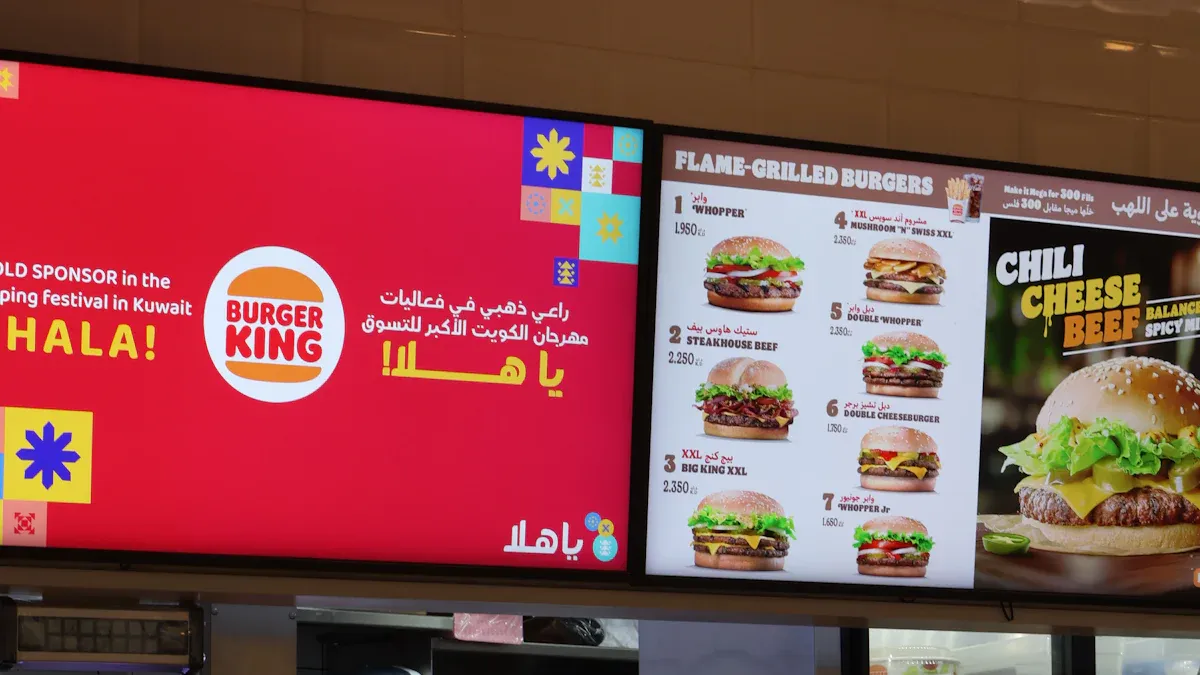
What new trends are changing restaurant digital signage in 2026? You must keep up in a market that changes fast. Restaurants that use digital signage trends get clear benefits. For example, LED displays now make up 67.2% of the market in restaurants. Sales can go up by as much as 30% with digital signage. Recent studies show 61.6% of people choose based on digital displays. If you want better results, go to https://www.topkioskdisplay.com/ for new ideas. These steps help your business stay strong in the future.
Metric | Value |
|---|---|
Market share of LED displays | 67.2% |
Sales uplift from digital signage | Up to 30% |
Consumers influenced by digital displays | 61.6% |
Key Takeaways
Digital signage can help restaurants sell more food. Sales can go up by 30%. Use screens to show menus and deals in a clear way.
AI-driven content personalization makes customers happier. Connect your menu to an AI system for better suggestions.
Smart menus can change fast and fix mistakes. This helps workers do their jobs better. You can change prices and items without printing new menus.
Interactive ordering systems use touch or voice to order food. These systems make ordering faster and more correct.
Sustainable signage solutions save money and help nature. Pick strong, energy-saving materials for your screens.
AI-Driven Digital Signage Trends
AI Content Personalization
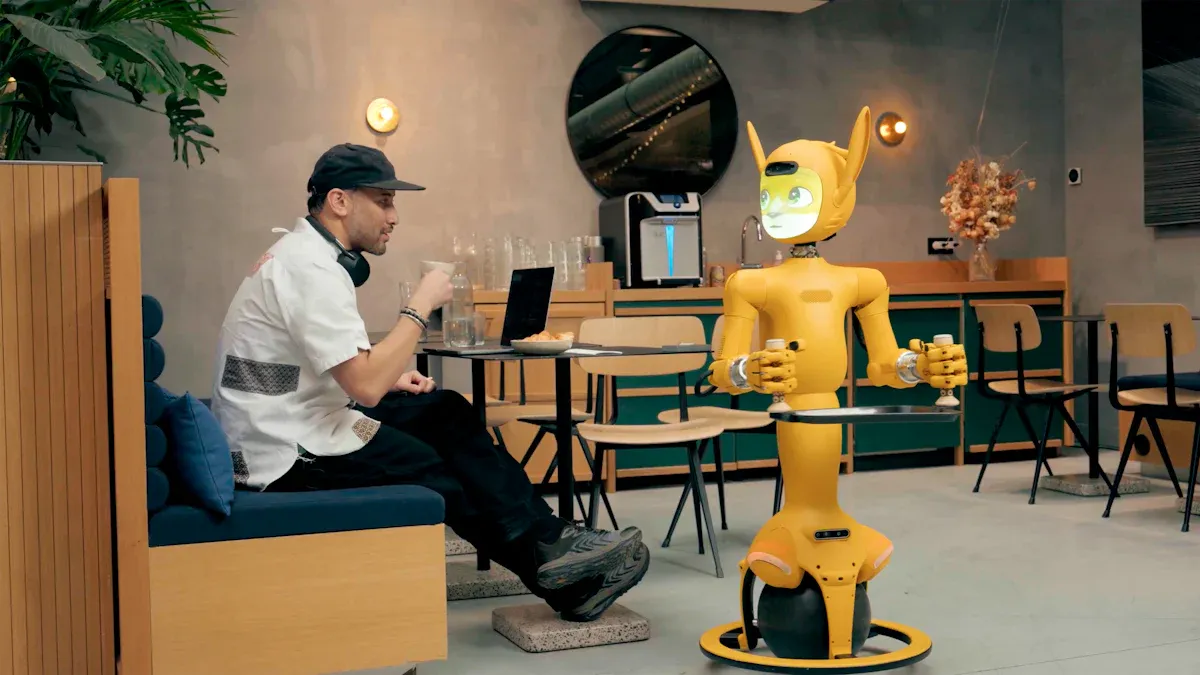
AI can help make digital signs smarter and more fun. Many restaurants use screens to say hello or show daily specials. This makes people feel welcome and important. For example, McDonald's uses smart menu boards in many stores. These boards suggest food based on the weather, time, and what you ordered before. This helps people buy more and feel happy.
Platforms like Mandoe Media let you change menus fast. You can show breakfast in the morning and lunch later. This keeps the menu new and exciting. When you use digital signs to show the best food at the best time, you sell more and people want to come back.
Tip: Connect your menu to an AI system. Try different messages and see which ones work best.
Dynamic Promotions and Targeting
AI helps you show the best deals to each person. It looks at what people like and gives them offers they want. This makes your deals special and works better. You can use AI for loyalty programs that reward people who come back. Many restaurants get 30% more return visits and 25% bigger orders with these programs.
Here are some ways AI digital signs and kiosks help:
Suggest food based on what you ordered before.
Show deals when the restaurant is slow.
Change prices or deals right away.
Make rewards easy to use.
You can see how this works in real life:
Case Study | Description | Impact |
|---|---|---|
Boosting Restaurant Sales | AI-driven digital menu boards | More sales and happier customers |
Drive-thru Technology by SoundHound | AI voice ordering for drive-thrus | Shorter waits, better orders |
Menu Board Integration by Palmer Digital | Digital signs linked with POS systems | Easier training, quick updates |
When you use digital signs as a big part of your restaurant, you make things better for customers and workers. Kiosks with AI make ordering fast and correct. This keeps lines short and customers happy.
Smart Menus and Real-Time Updates
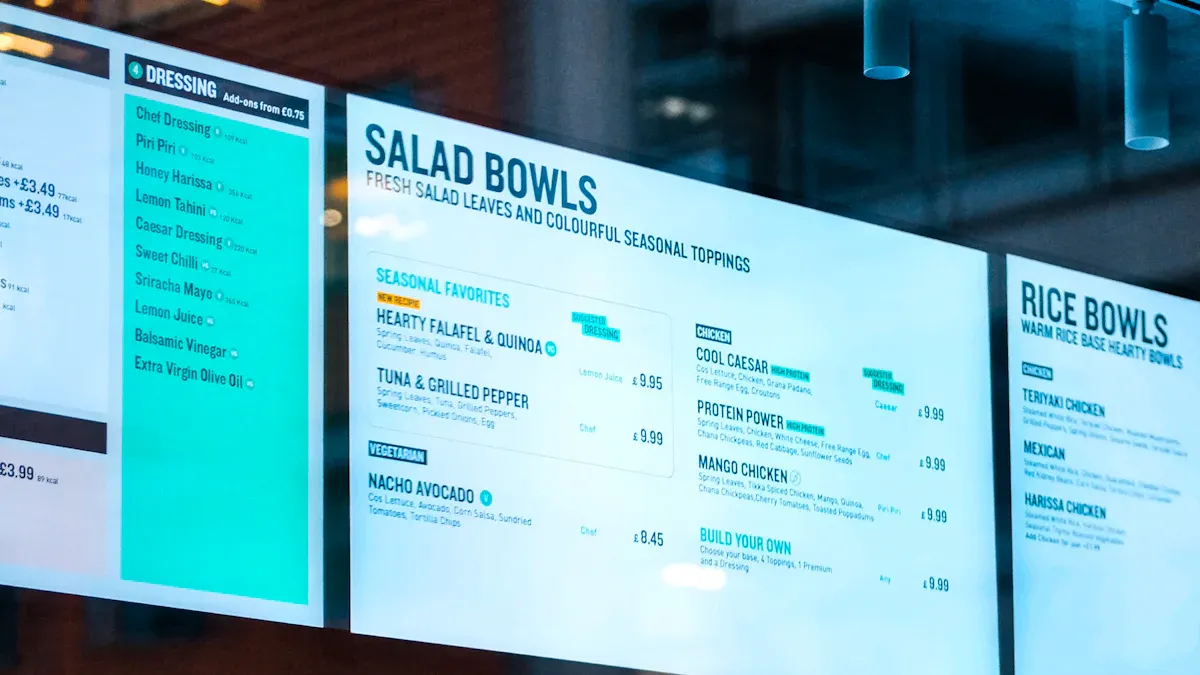
Smart menus use screens to show food, prices, and deals. You can change these menus fast from one computer. This means customers always see the newest choices and prices. Real-time smart menus save time and help stop mistakes. You do not need to print new menus when things change. Using less paper is also good for the planet.
Here are some main benefits of smart menus for your restaurant:
Benefit | Description |
|---|---|
Improved Efficiency | Smart menus make work easier and faster for your team. |
Reduced Errors | Real-time updates help stop mistakes with orders and stock. |
Enhanced Customer Experience | Special deals and clear messages make customers happier. |
Better Data-Driven Decisions | Real-time data helps you pick better prices and menu items. |
You will notice these changes at work every day: Digital menus help you spend less on printing and waste. You can change prices and food items right away. Staff and kitchen talk better, so there are fewer mistakes.
Dynamic Pricing Features
Dynamic menu boards let you change prices when you need to. You can make prices higher when it is busy or lower when it is slow. This helps you earn more money and keep up with other restaurants. Customers see the newest prices, so they trust you more and feel good about eating there. AI-driven menus can also show food people like, so they want to come back.
Real-time price changes help your restaurant stay strong.
You can change prices fast if food costs go up or down.
Special food ideas make customers happy and help you sell more.
Inventory-Based Menu Changes
Inventory-based menu changes use cloud-based inventory and cloud-based pos systems to keep menus right. If you run out of a food, the menu changes right away. This stops people from ordering food you do not have. You can also check recipes and costs better. When your POS and inventory work together, you can control everything from one place.
Best Practice | Description |
|---|---|
POS-Inventory Integration | Link your POS with inventory software for real-time updates. |
Automated Menu Updates | Use systems that change menu items and prices when stock changes. |
Recipe and Cost Tracking | Use good data to check recipe costs and plan menus. |
With these tools, you always give guests the right info. You also make smarter choices for your business.
Interactive Ordering Experiences
Touch and Voice Interfaces
Touch and voice interfaces are changing how you order food. You can use a screen to pick what you want to eat. You can also say your order out loud. This makes ordering food faster and easier for everyone. Many restaurants now let you order without touching anything. This helps you skip long lines and get your food sooner. Voice recognition lets you order by talking. This is good if you want your food fast or if you have trouble using screens.
These systems help restaurants in many ways:
Benefit | Description |
|---|---|
Digital screens make you want to try new things, so sales go up. | |
Accessibility | Kiosks have many languages, so all guests can order easily. |
Reduced Staff Pressure | Workers can spend more time making food and serving people. |
Improved Order Accuracy | Orders go right to the kitchen, so there are fewer mistakes. |
Faster Table Turnover | Fast ordering means you get your food quickly and tables open up faster. |
You get to choose your food the way you like. Restaurants can help you better with these tools. These features also help restaurants stay ahead with new technology.
Immersive Customer Engagement
Interactive digital signage makes ordering more fun and interesting. You can see clear pictures of food and learn about new menu items. You might even get special deals just for you. When you use interactive ordering, you spend more time looking at the menu. You feel more connected to the restaurant.
Evidence Type | Details |
|---|---|
Engagement Increase | You spend more time with interactive signs and learn more about the menu. |
Consumer Preference | 91% of people like brands that know them and give them good deals. |
Sales Impact | Restaurants can sell almost 30% more with digital signage. |
Influence on Decisions | 70% of customers say digital signs help them pick what to order. |
You can join loyalty programs easily, so you want to come back. Restaurants use what you pick to make better deals for you. They also use this to make your visit better. If you want to add these features, start with easy kiosks and clear steps. Teach your workers to help customers and fix problems fast. Make sure your systems work together so updates happen right away.
Tip: Keep your interactive features easy and fun. This helps everyone feel good and enjoy their time.
Simpler and Cleaner Display Designs
User-Friendly Interfaces
You want every customer to have a good time at your restaurant. Using simple digital signage helps you do this. Minimalist designs make screens easy to read. Big fonts and just a few colors help messages stand out. This stops the screen from looking messy or confusing. Your brand looks modern and honest. Young people like clear and simple screens.
A user-friendly interface uses empty space to show the main message. This helps people see what is most important. They can make choices faster and easier. Fewer mistakes happen because people see what they need.
Minimalist signage makes things clear and simple.
Big, easy-to-read fonts help people see from far away.
Using only a few colors keeps the screen calm.
Empty space helps your message stand out.
Visual hierarchy shows what matters most first.
Enhancing Readability and Engagement
You can make your digital signage better with some easy design tips. These tips help everyone enjoy their visit to your restaurant.
Tip | Description |
|---|---|
Optimize for Different Screen Sizes | Change your content so it looks good on any screen. |
Employ Engaging Motion | Use simple animations or short videos to get attention, but not too many. |
Put information in sections so it is not too much at once. | |
Use Call-to-Actions (CTAs) | Put clear CTAs where people can see and use them easily. |
A good layout helps people see the most important things first. Use high-contrast colors for words and backgrounds. This makes menus easy to read. Keep your brand’s colors and fonts the same on all screens. Add space between items so nothing feels crowded.
Change your menu boards often to keep info new and build trust with guests. This makes people want to come back and have a good time.
Simple and clean designs help people order right and wait less. Customers get faster service and better visits. When you make things clear, everyone has a smoother time.
Durable and Sustainable Signage Solutions
Long-Lasting Hardware
You want your restaurant’s digital signage to work for many years. Picking strong hardware helps you save money and avoid trouble. Tough screens and mounts can handle busy kitchens and spills. They also stand up to lots of use. You do not need to buy new ones often, so you spend less over time.
Here are some main benefits of using long-lasting digital signage:
Benefit | Description |
|---|---|
Increased Sales | Owners say they break even in three months because people order more. |
Customer Engagement | Good layouts keep guests entertained and help sell more food. |
Operational Efficiency | Digital signage cuts printing costs and makes work easier. |
You also get other good things:
Digital signage makes the customer experience better with menu boards and real-time deals.
It helps guests feel like they wait less time.
Digital menus make ordering faster and help stop mistakes.
You get helpful data from analytics to make your menu better.
When you use hardware that lasts, you fix and replace things less. The first cost may be more, but you save on power and repairs. Your staff can work faster and make fewer mistakes.
Eco-Friendly Materials
You can help the planet by picking eco-friendly digital signage. Many new screens use less energy and last longer. This means you use less power and throw away fewer old screens.
Here are some ways green signage saves money and helps the earth:
Digital displays mean you do not need to update signs by hand, so you save time and money.
You do not have to print menus or posters, which saves paper and cash.
Energy-saving screens lower your power bills.
Systems that last longer mean you buy new stuff less often.
Less paper and waste means you pay less to throw things away.
You can start by choosing energy-saving screens and recycled materials for your signs. Set your screens to turn off when you are not using them. Work with vendors who care about the earth. These steps help you save money and show customers you care about the planet.
Tip: Check your signs now and see if you can switch to greener, longer-lasting options. Small changes can save you money and make your restaurant look better.
Integration with Restaurant Technology Trends
Seamless POS and IT Integration
Digital signage is changing how restaurants use technology. Now, restaurants want all their systems to work together. When you connect digital menu boards to your POS and IT systems, you can change menus and prices right away. This stops mistakes and helps your team know what is new. Many restaurants use iot-enabled experiences to watch inventory and sales. You can see what sells best and change your menu fast.
Here is how digital signage fits with other restaurant technology trends:
Evidence Type | Description |
|---|---|
Sales Increase | Restaurants with digital menu boards sell 3%-5% more by upselling and showing deals. |
Consumer Preference | 73% of people care about a restaurant’s sustainability when they pick where to eat. |
Material Shift | Many restaurants now use digital menu boards made from recyclable materials to be greener. |
AI in food service is growing quickly. Personalization and customer experience are big reasons for this.
44% of diners want to see info about sustainability on menu displays.
You may have problems when you try to connect digital signage with other systems. Sometimes, online ordering does not work well with old POS systems. Using many software tools can slow things down and cause mistakes. Training workers and buying new hardware costs money too. You need to plan for these problems to get the best results.
Streamlining Operations with Digital Signage
Digital signage helps you run your restaurant better. You can change menus and deals right away. This makes customers happy and helps orders be correct. Iot-enabled experiences let you handle inventory and orders without paper. Staff work faster and make fewer mistakes.
Digital signage helps staff work 30% better.
Order times and costs go down by 25% when you use data analytics.
QSRs get better menu choices and real-time updates.
In fast food places, digital signage shows wait times as they happen. Staff can handle orders and busy times better. Customers wait less and have a better visit. Restaurant technology trends push you to use digital signage for smoother work and happier customers.
Tip: Connect your digital signage to your POS and inventory systems. This keeps menus up to date and helps your restaurant work better.
Future Outlook: 2026 Trends and Beyond
Evolving Customer Expectations
By 2026, customers will want new things. People want technology to make eating out better. They like digital menu boards that change fast and show choices they like. Most guests look for fun and cool screens when they eat out. Personalization is now something everyone expects, not just a nice extra.
Here is how what customers want will change digital signage:
Aspect | Detail |
|---|---|
Customer Preference | Guests want interactive, visually engaging experiences. |
Technology Benefits | Digital signage allows for easy updates and better engagement. |
Market Growth Factor | More people want better engagement and faster service in quick-service restaurants. |
You need to follow these 2026 trends to stay ahead. Customers want menus that fit them and change fast. Over 90% of people say they like brands that know what they want.
Staying Ahead in Restaurant Digital Signage
You can get ready for the future with smart steps. Start using AI to make your menus fit each person. Connect your digital signs to your business systems. This lets you change menus and prices fast. Use cloud-based tools to control screens in all your restaurants. This keeps your brand looking the same everywhere.
Here are some ways to stay ahead:
Show clear pictures so people see food before they order.
Change your digital menu for new specials or updates.
Make sure your brand looks the same in every place.
Pick eco-friendly screens and materials to help the planet.
Try new ideas often. Use data to make deals for different groups. Add fun features like touch screens or voice ordering. AI can help you show the best deals to each person. These 2026 trends will help you give customers what they want and help your restaurant grow.
Note: Keep learning about new digital signage tools. Try new things and ask your customers what they like. This will help you stay ahead as technology changes.
In 2026, restaurant digital signage is changing quickly. New ideas like hyper personalization and smart menus help you serve people better. Digital signage lets you change menus fast. You can show deals, change prices, and highlight specials on screens. Menus work with your POS for real-time updates. Digital signage helps you sell more and makes menus easy to read. Check your menus often and try new ways to improve them. Keep learning about digital signage so your menus stay fresh and your business stays strong.
Tip: Look at your menus often. Try new digital signage tools to make your menus and customer experience better.
Digital signage has become essential for restaurants. It streamlines updates, improves order accuracy, and directly influences customer choices. In 2026, the global market for digital signage in quick-service restaurants is projected to hit $3.38 billion, driven by trends like AI personalization, seamless POS integration, and dynamic menus. A restaurant switching from static to digital signage typically recoups its investment within 12 to 18 months through higher sales and lower costs.
📊 Key Features & Benefits at a Glance
Feature / Benefit | How It Works | Key Advantage |
|---|---|---|
Dayparting | Automatically changes menu content (e.g., breakfast to lunch) at preset times. | Maximizes relevance and revenue across different dayparts. |
Dynamic Upselling | Visually highlights high-margin items, combos, and limited-time offers. | Can increase average transaction value. |
Real-Time Updates | Instantly change pricing, promote daily specials, or mark items as sold out from a central CMS. | Reduces errors and ensures menu accuracy. |
POS Integration | Syncs live data to automatically reflect price changes and remove unavailable items. | Streamlines operations and prevents ordering errors. |
📈 2026 Trends: The Tech Transforming Your Menu
The most significant shift is the rise of AI-powered content creation, which dramatically reduces the time and skill needed to create professional signage. For example, Revel Digital’s AI suite allows restaurant managers to create dayparted menus or schedule promotions using only natural language. Platforms like Frame Weave can also automatically generate branded videos from your business data, such as POS or inventory spreadsheets.
Another major trend is the adoption of e-paper displays. Unlike traditional screens, Samsung's new 13" EMDX E-Paper is lightweight, cable-free, and uses a rechargeable battery, allowing you to place targeted messages on dining tables, host stands, or grab-and-go coolers. It provides a paper-like look but with dynamic digital updates. Additionally, new all-in-one services that handle everything from hardware procurement to professional installation are simplifying the process for multi-location brands.
⚙️ Hardware: Choosing the Right Foundation
Selecting the right hardware is a critical first step. Commercial-grade displays are essential as they're built to run for long hours and withstand kitchen environments.
2026 Digital Menu Board Cost Guide
Here’s a realistic breakdown of costs for a standard indoor setup, not including outdoor drive-thru installations.
Component | Description | Estimated Cost (USD) |
|---|---|---|
Display Hardware | A 43"-55" commercial-grade display, e.g., Samsung QM or LG UH5N series. | $650 - $1,500 per screen |
Media Player & Mounting | A media player (or built-in SoC) and professional mounting hardware. | $100 - $400 for player, $500 - $1,000 for mounts |
Installation & Cabling | Professional installation, cabling, power routing, and network setup. | $350 - $500 per screen |
CMS Subscription | Monthly software fee per screen for a restaurant-optimized platform. | $8 - $20 per screen |
Fully Installed Total | Total cost for a ready-to-use, fully installed setup. | $1,500 - $3,000+ per screen |
🖥️ Software: Picking the Right CMS
Choosing the right Content Management System (CMS) is just as important as the hardware. To help you compare, here's a breakdown of leading restaurant-focused platforms for 2026.
Software | Best For | Standout Restaurant Features | Pricing Model |
|---|---|---|---|
DotSignage | Value-driven deployments | 750+ restaurant-specific templates, Android-based, offline capability. | Starts at $10/month per screen. |
ScreenCloud | User-friendliness & broad compatibility | Drag-and-drop editor, extensive app integrations, works on almost any hardware. | Starts at $20/month per screen. |
Yodeck | Ultra-low-cost entry & simplicity | Free for 1 screen; easy scheduling; hardware-agnostic. | Free for 1 screen; paid plans from $8/month per screen. |
Revel Digital | AI-powered content creation & management | Natural language content creation, smart scheduling, automated performance reporting. | Custom Quote |
CrownTV | Full turnkey service for multi-location chains | Cloud dashboard, commercial-grade hardware, nationwide installation, 200+ apps. | Custom Quote |
BenQ ST Series | Restaurants with X-Sign CMS | Comes with built-in menu board templates that save setup time. | Hardware + Software |
💡 Pro Tips: Maximize Your ROI
Integrate with your POS: A direct, real-time integration with your POS system (like Square or Lightspeed) ensures accurate pricing and removes sold-out items automatically.
Master dayparting: Use scheduling to automatically transition menus and display specific promotions for breakfast, lunch, happy hour, and dinner.
Start with a pilot: Test your system in one location to validate its performance and train your team before rolling out to others.
Compare total cost of ownership: When evaluating vendors, consider all costs: hardware, software subscription fees, installation, and ongoing maintenance.
🔍 How to Choose the Right Partner in Singapore
Choosing the right provider for your restaurant in Singapore requires considering factors like service model, cloud capability, and local support. The best option for you depends on your restaurant's size and needs.
Best All-in-One Partner: CrownTV provides a complete, turnkey solution, including hardware, software, and installation. This is ideal for multi-location restaurants that want a seamless, hands-off experience.
Best for AI-Powered Creation: Revel Digital is a top choice if you want to leverage AI for natural language content creation, smart scheduling, and analytics, simplifying content management significantly.
Best for Value & Restaurant-Specific Templates: DotSignage offers an extensive library of over 750 restaurant-specific templates, making it easy to create professional menus at a very competitive price.
Best for Simplicity & Low Cost: Yodeck is a great option for single-location restaurants or those on a tight budget, offering a free plan for one screen and simple, effective scheduling.
📊 1. Market Growth: A Multi-Billion Dollar Surge
The restaurant digital signage market is growing rapidly. After reaching an estimated $2.99 billion in 2025, the market is projected to expand to $3.38 billion in 2026, representing a robust CAGR of 13.1%. This growth is fueled by the rising adoption of AI in food service marketing, the expansion of smart restaurant concepts, and a growing demand for omnichannel dining experiences. With projections to hit $5.47 billion by 2030, the shift is far from a fleeting fad.
🧠 2. AI: The Brain Behind the Menu
The standout trend is the integration of Artificial Intelligence to personalize content and optimize operations.
AI-Powered Personalization: Restaurants are using AI to tailor menu displays based on the time of day, weather, inventory levels, and even customer demographics. This can be as direct as adjusting prices and promotions on the fly based on sales forecasts and inventory.
AI-Driven Automation: AI is moving from the back office to the front line, capable of coaching staff in real time during peak periods or automatically surfacing insights that once took weeks to analyze. Comprehensive platforms like Scala's Quintet now offer an "all-in-one" suite that integrates AI to personalize content across digital menu boards, kiosks, and kitchen systems, updating product descriptions and limited-time offers automatically.
Conversational AI: The latest generation of signage software allows non-technical staff to manage screens using simple voice commands, such as "update today's promo on screen 5". This is a major step toward making digital signage a frontline tool accessible to all team members.
💰 3. Dynamic & Real-Time Menus: Driving Profits
Static, printed menus are becoming obsolete. Digital menus offer unparalleled flexibility and are proven to significantly impact the bottom line. Implementing digital menus can boost overall sales by 3%, increase average order value by 18%, and reduce perceived wait times by 30%. Time-sensitive promotions shown on digital signage can drive a 20% sales boost. Crucially, real-time updates allow for automatic menu adjustments based on pricing and ingredient availability, a critical capability for chains managing inventory across dozens of locations.
☀️ 4. The Drive-Thru Revolution: High-Brightness & Anti-Discoloration
As drive-thru and external ordering become dominant, digital signage has had to evolve to withstand the elements.
Solving Sunlight Readability: High-brightness displays are now a standard requirement, with leading solutions offering brightness levels of up to 4,000 nits, ensuring menus are legible even in direct sunlight.
Anti-Discoloration Technology: New materials and manufacturing techniques are being used to protect displays from the sun's rays, preventing the "screen-yellowing" and color-fading that degrade the customer experience and brand image. These advancements also reduce maintenance needs and allow staff to focus on customer service instead of equipment issues.
Digital Drive-Thru 2.0: This next generation of modular drive-thru solutions is focused on improving efficiency, customer engagement, and speed of service, solidifying the drive-thru as a critical digital touchpoint.
🎨 5. Beyond Transaction: Immersive Branding & Showmanship
While QSRs focus on operational efficiency, other segments are using digital signage to create atmosphere.
Experiential Environments: Upscale restaurants and food courts are deploying large-format video walls to create ambient, immersive environments that drive dwell time and repeat visits.
Brand Storytelling: These large displays are used for pure brand experience, building atmosphere and social media buzz. However, it's important to note that their direct revenue contribution is harder to measure compared to transactional menu boards.
Integration is Key: The trend is toward centralizing technology. Companies are moving away from fragmented "cool kiosks" toward integrated, resilient "unified automation stacks" that manage everything from labor to food safety.
📄 6. E-Paper: The Eco-Friendly, Flexible Challenger
E-paper technology is carving out a niche as a complement to traditional LCD/LED screens, not a replacement. These lightweight, battery-powered displays can run for months on a single charge, making them ideal for placing targeted messaging in "decision-critical areas" like dining tables, bar tops, and grab-and-go coolers. They offer the paper-like visual experience of printed collateral but with the flexibility of dynamic digital updates, allowing signage to be easily moved and repositioned throughout the day as traffic patterns change.
☁️ 7. Simplified Management: Cloud, IoT & Voice-Activated
Behind the scenes, the way signage is managed is becoming simpler and more powerful.
Cloud-Based CMS: The industry has fully embraced the cloud. Centralized, cloud-based content management systems now dominate new deployments, allowing restaurants to control thousands of screens from a single interface, drastically reducing IT overhead and simplifying scaling.
Hardware-Agnostic Solutions: The market is maturing toward ecosystems where software is the primary focus. Major display manufacturers are positioning their software not as a replacement for third-party CMS platforms but as a complementary layer focused on remote device services and hardware management.
Unified Campaign Management: New platforms are emerging that synchronize digital signage with traditional printed promotions (posters, window clings), eliminating version-control headaches and ensuring consistent messaging across all channels.
Voice-Activated Ordering: Voice AI is being integrated across front-of-house, back-of-house, and off-premise channels, allowing customers to place hands-free orders through drive-thru systems and even in-vehicle infotainment systems.
🌿 8. Sustainability & Eco-Friendly Options
Sustainability is no longer just a feel-good initiative; it's a central factor in technology decisions. Energy-efficient solutions like e-paper and advanced LED coatings are gaining traction due to their lower power consumption and longer lifecycles. Non-emissive e-paper technology, which reflects ambient light to display content, is being highlighted as a way to reduce energy costs and improve operational efficiency. For many businesses, total cost of ownership (TCO) and sustainability goals are now the driving factors in how they design and deploy their digital signage networks.
🏗️ 9. The Rise of Ecosystems & Mature Hardware
The digital signage landscape is evolving. According to insights from ISE 2026, the market is centralizing around complete ecosystems rather than individual devices. Vendors are offering integrated solutions that combine collaboration tools, content management, device control, and analytics, reducing integration points for customers.
At the same time, LCD technology remains the "industry's workhorse," with refinements focusing on backlight performance and bezel design. LED technology has also matured, with enterprise-grade solutions now emphasizing durability, serviceability, and long-term scalability. There is also a notable trend where brand trust influences buying decisions: integrators are choosing LED brands first and then selecting LCDs from the same manufacturer to maintain consistency across their entire visual estate.
💎 Summary & Key Takeaways
The modern digital menu board is no longer just a screen—it's a profit center. The key trends shaping the future of restaurant digital signage in 2026 are:
AI Integration: AI is being used to drive personalization, optimize operations, and even allow non-technical staff to manage content through conversational interfaces.
Dynamic Content: Real-time, data-driven menus and promotions are proven to significantly boost average order value and sales.
Drive-Thru Dominance: Outdoor displays are evolving with high-brightness and anti-discoloration technology to ensure durability and clarity in harsh conditions.
Eco-Friendly Options: E-paper displays are gaining traction for their low power consumption, flexibility, and ability to target "micro-moments."
Streamlined Management: The shift to cloud-based, centralized management systems and unified automation stacks is reducing IT overhead and simplifying operations for multi-location chains.
Measurable ROI: Restaurants typically see a return on their investment within 12–18 months of switching to digital menu boards.
FAQ
What is restaurant digital signage?
Restaurant digital signage means using screens in your restaurant. These screens show menus, deals, or messages to customers. You can change what is on the screens very fast. This helps you tell people about new food, prices, or events right away.
How does digital signage improve customer experience?
Digital signs make menus easy to read and look nice. People can order food faster and see cool deals. This makes eating at your restaurant easier and more fun for everyone.
Is digital signage expensive to set up?
There are many choices for digital signage. Some cost more at the start, but you save money later. You do not need to print menus all the time, and you can change things fast.
Can digital signage connect with my POS system?
Yes, you can connect digital signage to your POS system. This means you can change menus and prices right away. Everything stays up to date without extra work.
See Also
Enhancing Restaurant Efficiency With Digital Signage Innovations
Exploring Current Trends in Digital Signage for 2026
Latest Developments in Digital Signage Technology for 2026
Leading Digital Signage Innovations Transforming Retail in 2026
