Next-Generation PCAP Touch Screens and Their Impact
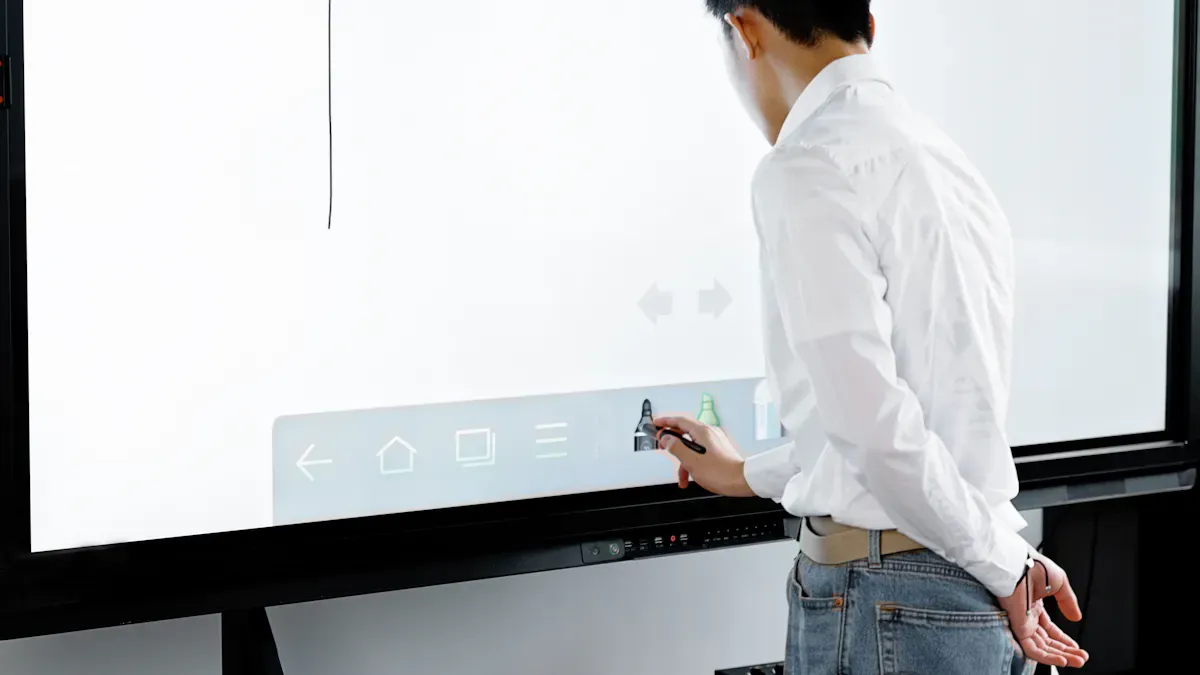
Next-generation PCAP touch screens use projected capacitive technology. This helps give very accurate and quick digital touch. You will see these screens become more common in 2026. More people want strong and high-quality displays. The market for pcap touch screens will grow a lot. It will go from $3.5 billion in 2024 to $8.2 billion by 2033. The growth rate is expected to be 10.2% each year. Flexible and foldable panels are now used in many devices. AI-enabled gesture controls and clear designs are also popular. You might see a foldable laptop or a car dashboard that reacts to your hand. These new ideas change how you use technology.
Shenzhen TopAdkiosk Display Technology Co., Ltd.
Add.: 2F, Bldg 10, Changfeng Industrial Park, Dongkeng, Fenghuang, Guangming, Shenzhen, China 518132
Mobile/WHATSAPP: 86-138 25769658
Email: marketing@topadkiosk.com topadkiosk@gmail.com
Skype: pghenry1
Wechat: adkioskhenry
English Web.: http://www.topadkiosk.com/
https://www.topkioskdisplay.com/
http://www.ad-kiosk.com/
https://www.toplcddisplay.com/
http://www.multitouchdigitalsignage.com/
https://www.youtube.com/channel/UCYVYNJHxLVEcQD8fuUxXNTA/videos?view_as=subscriber
https://www.facebook.com/TOPADKIOSKSHENZHEN/?ref=bookmarks
Key Takeaways
Next-generation PCAP touch screens will change how people use devices. They can detect touches quickly and correctly. Flexible and foldable screens are now more common. These screens help make new designs for phones and laptops. Hybrid touch technology makes using devices better. It gives a feeling when you touch the screen. This makes devices feel quicker and more fun to use. Transparent and very thin screens are stronger and more sensitive. These screens work well in many places, like hospitals and stores. The PCAP touch screen market is growing fast. People want smarter, stronger, and more flexible devices in many fields.
What Is PCAP Touch?
PCAP Technology Overview
You use screens every day. PCAP is a touch technology that makes screens smart. It senses changes in capacitance with tiny wires. When you touch the screen, it detects your finger right away. It works even if you wear gloves or use a cover. This makes pcap touch fast and accurate.
PCAP technology is special because it does not need pressure. You only need to touch the surface gently. Other touch types, like resistive, need you to press down. That can feel slow and less exact. Surface acoustic wave (SAW) uses sound waves, but it does not work everywhere.
Some reasons to like pcap touch are:
You get quick and accurate touch detection.
You can use multi-touch and cool gestures, like pinch-to-zoom.
These screens are tough and easy to clean, which is good for places where hygiene matters.
Evolution to Next-Gen Screens
Touch technology has changed a lot over time. You can see this in the devices you use now. It started with resistive touchscreens. These needed pressure to work. Then, capacitive touchscreens came next. They used your body’s electrical properties. This allowed for multi-touch actions.
The next big step was pcap technology. This made screens clearer and more flexible. Now, you see pcap in foldable phones and transparent displays. You also see it in curved dashboards in cars. Each step made your experience smoother and more fun.
When you look at screens, you see how pcap touch has changed the way you use technology.
PCAP Touch Trends in 2026
In 2026, new trends will shape pcap technology. These trends change how you use your devices. They also help companies make better products for you. Here are some of the most important trends in pcap touch.
Flexible and Foldable Screens
Flexible and foldable screens are a big trend now. You will see more devices with screens that bend or fold. Some screens can even roll up. People want bigger and clearer screens on their phones, tablets, and laptops. You might have a phone that folds into a tablet. You could use a laptop that rolls up to carry easily.
Flexible pcap screens let you use foldable or wearable devices. This makes your gadgets do more things.
Foldable and rollable screens give companies new ideas. You get more ways to use your devices.
Cars are changing too. They now have curved dashboards and smart systems with flexible pcap screens.
Smart homes and factory devices use these screens for better control.
Smaller electronics mean you get tiny, power-saving touch sensors.
Haptic feedback in games and virtual reality feels more real.
You will find flexible pcap screens in foldable phones, curved car dashboards, and wearables. These trends make your devices more fun and useful.
Hybrid Touch Technology
Hybrid touch technology is another big trend. It mixes different touch methods for a better experience. You feel more connected to your devices with real touch feelings and feedback you can change.
Hybrid touch gives you tactile feedback. You feel a buzz or click when you touch the screen.
Wearables use tactile feedback, so you get alerts without looking.
Multi-layered haptic interfaces help in cars and factories. You can confirm actions by touch, which keeps you safe.
You can change how tactile feedback feels. Make your device feel just right for you.
Flexible materials let you use tactile feedback on curved surfaces. This helps wearables and foldable devices.
Studies show tactile feedback makes virtual worlds feel more real. You feel more involved.
Car screens use tactile feedback for safety. You confirm actions by touch, not by looking away.
The haptic technology market is growing fast. More people want devices with touch feedback.
Hybrid touch technology lets you use devices in new ways. You get more comfort, safety, and fun.
Transparent and Ultra-Thin Designs
Transparent and ultra-thin pcap screens change how devices look and work. These designs help companies make cool, modern products that are also strong.
Advantage | Description |
|---|---|
Superior Sensitivity | PCAP screens can sense even a light touch, making them easy to use and very accurate. |
Robust Durability | The glass cover lens protects against scratches and bumps, so they work well in tough places. |
Enhanced Multi-Touch Capability | You can use gestures like pinch-to-zoom, which makes using devices easier and more fun. |
Superior Image Clarity | The screen stays clear and bright, which is important for jobs where you need to see details. |
Transparent and ultra-thin pcap screens are very tough. They do not scratch or wear out easily, even in busy places.
You can use gestures like pinch-to-zoom and swipe. This makes using your device smoother and more fun.
These screens can be bigger and support many touches at once. This helps people work together on one screen.
The clear screens let you see important info easily. This is great for hospitals and factories.
Their strong build means they work well in hard places, like hospitals and factories.
Transparent and ultra-thin pcap screens make your devices look cooler and last longer. You get better performance and a better experience.
You will see these trends in lots of new devices. Pcap touch technology keeps getting better to give you more accuracy, strength, and new ways to use your devices.
PCAP Touch Advancements
AI and Smart Interaction
Artificial intelligence is changing how you use screens. AI learns how you touch your device. The screen can change to fit your habits. This gives you a faster and more personal experience. AI can guess what you want to do next. It can fix small problems before you see them. When you use a screen with AI, gesture recognition gets better. The device understands your swipes, taps, and pinches more accurately. You feel like the screen knows you. This makes daily tasks easier and more fun.
AI helps keep your device safe. Your screen can spot strange touches and protect your information. In cars and smart homes, AI-powered screens change settings for each person. You get a device that feels made just for you.
Tactile Feedback and Haptics
Tactile feedback and haptics make your screen feel alive. You do not just see or hear your device. You feel it. When you touch a button, you might feel a buzz or click. This is tactile feedback. It tells your brain your action worked. Haptics can make the screen feel like real buttons or textures. You get touchscreens that feel real.
You use tactile feedback every day. When you type on a virtual keyboard, you feel a tap for each letter. In games, haptics make you feel bumps or shakes. This makes games more exciting. In cars, tactile feedback helps you control the screen without looking away. You feel a click when you change the radio or adjust the air. This keeps you safe.
Haptics are improving. New technology lets you feel different textures, clicks, and resistance. Some screens can detect gestures without touching them. This makes your device more fun and easy to use.
Haptic feedback makes your interaction feel real.
Tactile feedback helps you know when you press a button.
Haptics in wearables give you alerts you can feel.
Multi-layered haptics in cars and factories help you confirm actions by touch.
You can adjust tactile feedback to fit your style.
Tip: Tactile feedback and haptics make your device feel more alive and responsive.
Multi-Touch and Responsiveness
You want a screen that reacts fast and handles many touches. PCAP technology gives you this. You can use two fingers to zoom in or use all your fingers to draw. Some screens support up to 40 or 50 touch points at once. This is great for teamwork. You and your friends can use one screen together. In meetings, you can move objects, write notes, and share ideas on a big screen.
Here is a look at how many touch points some leading screens support:
Model | |
|---|---|
TD2465 | 10 |
InGlassTM | 40 |
PCAP screens respond right away. You do not have to wait. The screen detects even light touches. This makes your experience smooth and accurate. You can use advanced gestures like swiping, pinching, and rotating. Multi-touch lets you do more with your device. You get better control and more fun.
PCAP technology gives you quick responses to touch.
PCAP screens detect even faint touches for accuracy.
PCAP touch screens support multi-touch for advanced gestures.
PCAP technology makes sure light touches are registered.
Durability and Sensitivity
You need a screen that lasts and works in tough places. PCAP screens use strong materials like glass or acrylic. This makes them scratch and abrasion resistant. Even if you crack the top layer, the screen keeps working. You can use these screens in factories, hospitals, and outdoors. The screen stays clear and bright, so you always see what you need.
Here is a table showing the advantages of modern PCAP screens:
Advantage | Description |
|---|---|
Scratch/Abrasion Resistance | More resistant due to glass or acrylic lens |
High Responsiveness | Light touch actuation for smooth interactions |
Multi-Touch Capability | Supports multiple touch points simultaneously |
Functionality with Damage | Works even if the top lens is cracked or broken |
Visual Quality | High contrast and great visual appearance |
You can change the sensitivity of the screen for different jobs. You can use the screen with gloves or through a cover. This is important in hospitals and factories. The screen also resists water, dust, and chemicals. You get a device that works anywhere.
Recent improvements in IC controllers, drivers, and firmware make PCAP screens even better. You get more durability, better scratch resistance, and higher touch precision. This makes PCAP screens perfect for industrial use.
Sensitivity can be changed for different uses.
You can use the screen with gloves or covers.
The screen resists water, dust, and chemicals.
PCAP technology keeps improving. AI and high-performance computing need fast, smart screens. Cars, smart devices, and factories use PCAP screens for strength and speed. The rollout of 5G and 6G networks means you need secure and quick screens. Power efficiency matters for portable devices, so new screens use less energy. Touch controllers now have memory and security features. This makes your device smarter and safer.
Note: Next-generation PCAP screens combine AI, haptics, and new materials. You get a device that is fast, tough, and fun to use.
PCAP Touch Screen Market Overview
Market Growth and Forecast
You can see the pcap touch screen market changing fast. The market size is projected to reach USD 12.5 billion in 2025. By 2033, you will see the pcap touch screen market double to USD 25.8 billion. This means the growth rate will stay strong, with a CAGR of 9.4% from 2026 to 2033. You will notice this growth in many industries, from consumer electronics to cars and healthcare. The demand for pcap touch screen market solutions keeps rising because you want more innovation and better user experiences. Companies focus on making screens that are more flexible, durable, and smart. You will see new types of pcap touch screen market products every year. This growth comes from your need for devices that work everywhere, even in tough places. The pcap touch screen market also grows because you want more innovation in how you interact with technology.
The pcap touch screen market grows as you use more devices at home, in your car, and at work.
You drive growth by choosing products with better touch and more innovation.
The pcap touch screen market will keep growing as companies invest in research and new ideas.
Leading Regions and Companies
You will find the pcap touch screen market growing fastest in the Asia-Pacific region. China and India lead this growth because they make many vehicles and have a growing middle class. North America also plays a big role in the pcap touch screen market. You see many cars and smart devices using pcap touch technology there. Europe holds about 35% of the pcap touch screen market in 2024. You see this in luxury cars and new connected car features. The LAMEA region is also seeing growth, especially in cities where people want premium devices.
Asia-Pacific leads the pcap touch screen market with strong growth and innovation.
North America and Europe keep the pcap touch screen market strong with advanced technology and high demand.
LAMEA shows steady growth as more people want innovation in their devices.
You should know about key companies in the pcap touch screen market. Shenzhen TopAdkiosk Display Technology Co., Ltd. stands out as a leading manufacturer. They focus on innovation and have launched new pcap touch screen market products for smart devices and cars. Other major players include companies from Japan, South Korea, and the United States. These companies push the pcap touch screen market forward with new ideas and better technology.
Tip: Watch for new launches from top companies. You will see more innovation and better pcap touch screen market products every year.
Industry Impact of PCAP Touch
Consumer Electronics
PCAP touch screens are in many electronics you use. Phones, tablets, and smartwatches have these screens. They make using apps easier and more fun. You can swipe, tap, and zoom with your fingers. The screens are very sensitive, so they react fast. You can use more than one finger at a time. This helps you do things like pinch to zoom. These screens are strong and last a long time. Shenzhen TopAdkiosk Display Technology Co., Ltd. makes advanced PCAP touch screens for smart devices. You see easy-to-use screens in game consoles and home gadgets. More people want smart devices that work well. You want your device to answer quickly and feel solid.
Aspect | Description |
|---|---|
Sensitivity | Higher sensitivity means the screen reacts to light touches. This makes using your device easier and better. |
Multi-Touch Capability | You can touch the screen in many places at once. This lets you do more things with your device. |
Durability | Strong screens last longer, so your device stays good for years. |
You use apps that need quick and exact touch.
You like screens that let you do cool moves.
You want your device to work well for a long time.
Automotive and Transportation
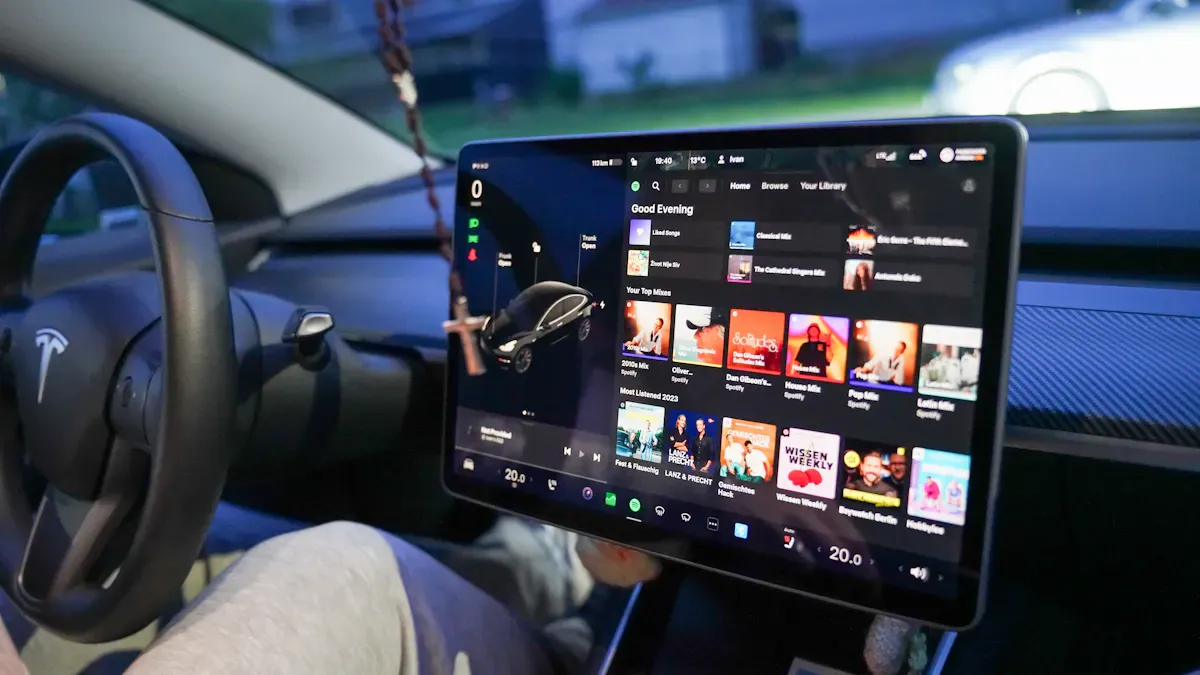
PCAP touch screens change how you use car controls. You can set the air, music, and seats with a touch. New cars use these screens for maps, songs, and weather. You use apps that make driving safer and more fun. Touch screens in cars help you use safety features. You also see these screens in buses, trains, and planes. They make rides more comfy and safe. You use apps that make it easy to control things in vehicles.
You change settings with touch screens.
You use apps for maps and music.
You drive safer with touch controls.
Healthcare Applications
Hospitals use PCAP touch screens for important jobs. You see them in machines that check patients and help doctors. These screens are very sensitive and strong. You can use them with gloves on. Flat screens are easy to clean, so germs do not spread. You can use more than one finger to get to apps fast. Doctors and nurses use these screens to watch patients. You also see them in small devices for emergencies.
You use apps that must be clean and right.
You use screens that let you touch in many spots.
You count on these screens for patient care.
PCAP screens solve problems in hospitals. You need strong screens for medical tools. You want apps that always work in busy places.
Retail and Business Use
Stores and offices use PCAP touch screens for many things. You use touch screens at the checkout to pay fast. These screens help workers and customers finish shopping quickly. PCAP screens are tough and easy to see. You find them in kiosks, self-checkouts, and signs. Clear glass makes products look nice. You can use these screens with covers to keep them safe from spills.
Benefit | Description |
|---|---|
The screens do not scratch or break easily. | |
Enhanced Visibility | Clear glass helps you see pictures and words better. |
High Sensitivity | The screen knows when you touch it, even softly. |
Multi-Touch Functionality | You can use many fingers at once, which helps at checkout. |
Operational Efficiency | You can pay and shop faster, making customers happy. |
You use screens that need to be cleaned a lot.
You use covers to keep screens safe.
You need screens that help you work faster.
PCAP screens help you keep displays clean. You use them in places like restaurants, where cleaning is important. These screens can handle strong cleaners and still work well.
You notice next-generation PCAP touch screens changing how you use devices every day. Flexible shapes, hybrid touch, and very thin screens make devices easier and more fun to use. AI and haptics help your devices feel smarter and more interactive. The way the market grows, new technology, what people want, and competition all affect your experience. In the future, screens will get even thinner and use less energy. This will make using devices better for you. There might be problems with how long screens last and how they affect the environment. Your experience will keep changing as new ideas come out. Think about how these changes could affect you at home, at work, or at school.
FAQ
What makes PCAP touch screens different from other touch screens?
PCAP touch screens use tactile sensing. You feel feedback when you touch them. This technology gives you quick and exact responses. You can use them with gloves on. These screens last longer and stay cleaner.
How do tactile features improve your experience?
Tactile features let you feel every tap and swipe. Feedback tells you when you press a button. Signals show your action worked. Tactile screens make games and apps more fun. You can use devices without looking at them.
Where do you see tactile PCAP touch screens used most?
You find these screens in phones, tablets, and cars. They help in hospitals and factories. Tactile displays are in smart homes and wearables. You see them in kiosks and checkout systems. These screens help you in many places every day.
Why do companies like Shenzhen TopAdkiosk Display Technology Co., Ltd. use tactile PCAP touch screens?
Shenzhen TopAdkiosk Display Technology Co., Ltd. uses these screens for better products. Tactile screens feel smooth to use. Feedback makes devices easy for everyone. This technology helps the company lead in new ideas.
What are the market size and trends for tactile PCAP touch screens?
Market size and trends show these screens growing fast. More devices use tactile screens each year. Demand rises in cars, homes, and offices. Tactile technology shapes the future of touch. These screens will keep changing how you use devices.
See Also
Discover Essential Features of Today’s Touch Screen Kiosks
Uncover 10 Unexpected Applications for Touch Screen Kiosks in 2026
Evaluating Business Touch Screen Kiosks: Performance and Cost Analysis
Understanding Touch Screen Displays in Contemporary Casino Environments
