Outdoor LCD Display or LED Display Which Is Best for Outdoor Signage
Add.: 2F, Bldg 10, Changfeng Industrial Park, Dongkeng, Fenghuang, Guangming, Shenzhen, China 518132
Mobile/WHATSAPP: 86-138 25769658
Email: marketing@topadkiosk.com topadkiosk@gmail.com
Skype: pghenry1
Wechat: adkioskhenry
English Web.: https://www.topkioskdisplay.com/
http://www.ad-kiosk.com/
https://www.toplcddisplay.com/
http://www.multitouchdigitalsignage.com/
https://www.youtube.com/channel/UCYVYNJHxLVEcQD8fuUxXNTA/videos?view_as=subscriber
https://www.facebook.com/TOPADKIOSKSHENZHEN/?ref=bookmarks
As long as we have the blueprints, Shenzhen TopAdkiosk Display Technology Co., Ltd no worse than anyone else.
please contact Shenzhen TopAdkiosk Display Technology Co.
Shenzhen TopAdkiosk Display Technology Co., Ltd.
Add.: 2F, Bldg 10, Changfeng Industrial Park, Dongkeng, Fenghuang, Guangming, Shenzhen, China 518132
Mobile/WHATSAPP: 86-138 25769658
Email: marketing@topadkiosk.com topadkiosk@gmail.com
Skype: pghenry1
Wechat: adkioskhenry
English Web.: https://www.topkioskdisplay.com/
http://www.ad-kiosk.com/
https://www.toplcddisplay.com/
http://www.multitouchdigitalsignage.com/
https://www.youtube.com/channel/UCYVYNJHxLVEcQD8fuUxXNTA/videos?view_as=subscriber
https://www.facebook.com/TOPADKIOSKSHENZHEN/?ref=bookmarks
As long as we have the blueprints, Shenzhen TopAdkiosk Display Technology Co., Ltd no worse than anyone else.
please contact Shenzhen TopAdkiosk Display Technology Co.
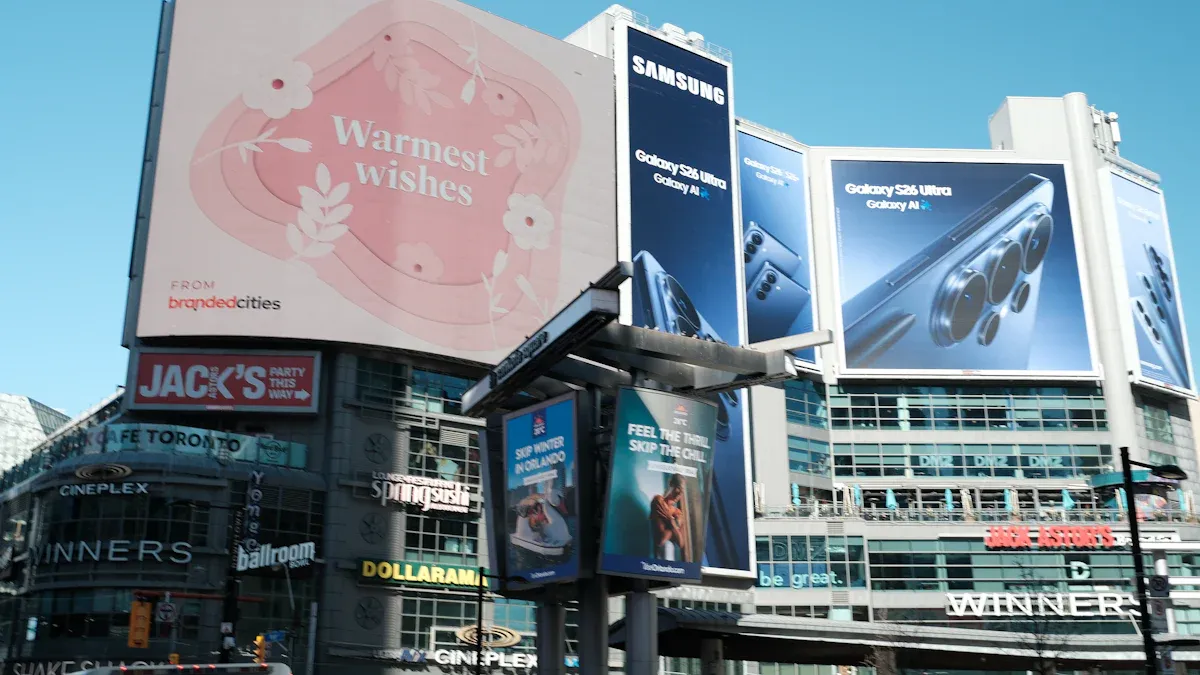
You want your outdoor sign to be easy to see and last long. LED displays are often the best because they are very bright. They can work in bad weather. They also use less power. But an outdoor lcd display can be good for small spaces. It also works well in places with some cover. You might see these used as:
Interactive kiosks
Storefront displays behind glass or in sheltered halls
Think about what your place needs as you read.
Key Takeaways
Pick LED displays if you want bright signs outside. They last a long time and you can see them in sunlight or bad weather. - Use outdoor LCD displays in small, covered spots. They show clear pictures and are good when people look from nearby. - Think about saving energy. LED displays use less power. This helps you spend less money on electricity over time. - Look at how far people will be from the sign. LED displays are good for big crowds. LCD displays are better when people are close. - Make sure to check the IP rating for weather safety. Both types should keep out water and dust when used outside.
Outdoor LCD Display vs LED Digital Signage
What Is an Outdoor LCD Display?
You can see outdoor LCD displays in places that need clear pictures and videos. These screens use liquid crystals and a backlight to show images. People often use outdoor LCD displays for menus, maps, or ads where there is some cover. They work best at bus stops, kiosks, or under awnings. The pictures look sharp and the colors are bright. But if the sun is very bright, the screen can be hard to see. Outdoor LCD displays need special boxes to keep out rain, dust, and heat. These boxes help the screens last longer outside.
Tip: Outdoor LCD displays are good for small signs or touch screens in covered spots.
What Is LED Digital Signage?
You can find led digital signage almost everywhere outside. These displays use light-emitting diodes to make bright and colorful pictures. Led digital signage is easy to see even when the sun is shining right on it. You can see the screen from far away and from the side. These displays can handle rain, wind, and dust without needing extra boxes. Led digital signage uses less power than LCD screens. You often see them on billboards, at stadiums, and on big outdoor signs.
Here is a table to help you compare both types:
Feature | LED Digital Signage | Outdoor LCD Displays |
|---|---|---|
Brightness | Very high, great for sunlight | Lower, can fade in bright light |
Energy Efficiency | Uses less power | Needs more power for backlighting |
Visibility | Clear in all outdoor conditions | Can lose clarity in bright environments |
Durability | Built for harsh weather | Needs special enclosure for protection |
Viewing Angles | Wide, easy to see from the side | Limited, best viewed straight on |
You should pick led digital signage if you want a bright, strong, and energy-saving sign for outside. Outdoor LCD displays are better for small, safe places where you need clear pictures up close.
Brightness and Visibility
Visibility in Sunlight
When you pick a screen for outdoor signs, you want people to see your message. The screen must be bright and easy to see. Outdoor lcd display screens use backlighting to show pictures. They can reach at least 1,500 nits of brightness. This is good for shaded or covered spots. But when the sun shines right on the screen, the picture can look faded. Colors may lose their strength and details can be hard to see.
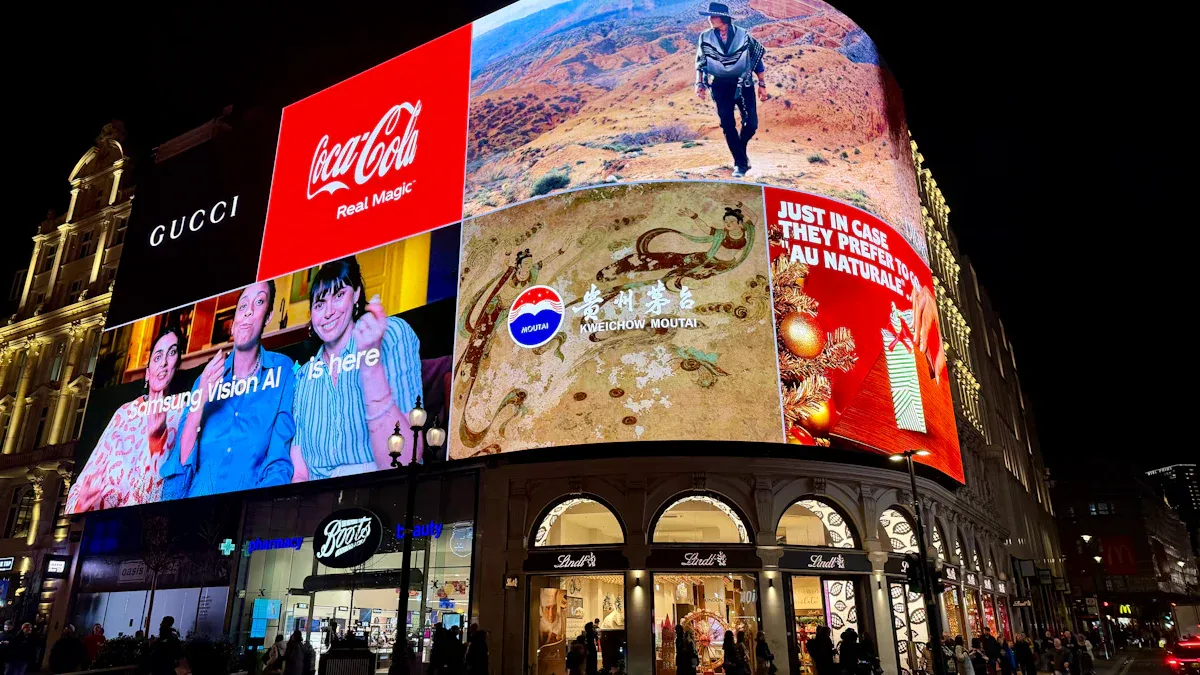
LED digital signage works well in bright sunlight. These screens use high brightness to fight glare from the sun. Most LED displays start at 2,000 nits and can go over 4,000 nits. This means your sign stays clear and colorful, even at noon on sunny days. The light from an LED screen stays strong, so you do not lose visibility when the weather changes.
Here is a quick comparison of maximum brightness levels:
Display Type | Minimum Brightness (nits) | Maximum Brightness (nits) |
|---|---|---|
LCD | 1,500 | N/A |
LED | 2,000 | 4,000+ |
LED screens work well in bright daylight and keep colors strong.
Their light stays steady even in direct sunlight, so they are great for outdoor use.
LCD screens depend on backlighting, which can make them hard to see in bright sunlight.
Tip: If your sign faces the street or sits in an open area, LED digital signage gives you the best results for visibility.
Viewing Angles and Distance
You want your sign to reach lots of people. Viewing angles and distance help your message get across. Outdoor lcd display screens usually have a viewing angle of 178 degrees. People can see the screen from the side or above. But the best picture is when you look straight at the screen. If you move too far to the side, colors may change or fade.
LED digital signage also has wide viewing angles. Most LED screens have a horizontal viewing angle of 160 degrees or more. Vertical angles can be just as wide. This lets people see your sign from many directions. Colors and brightness stay strong, even if you stand far to the left or right.
Outdoor LCD displays are best at about 45 degrees, but many can reach up to 178 degrees.
LED displays have a viewing angle of 160 degrees or wider, so colors stay the same.
Distance matters too. Outdoor lcd display screens are best up close. They work well for kiosks, menu boards, or maps where people stand nearby. LED digital signage can reach people from far away. High brightness and big size make your message easy to see across a parking lot or busy street. If you stand too close to an LED screen, the picture may look too bright or pixelated. The pixel pitch of an LED display tells you the best viewing distance. For example, a 6MM pitch means you should stand at least 6 meters away for a clear picture.
Here is a table to help you understand how viewing distance affects clarity:
Display Type | Viewing Distance Impact | Clarity Characteristics |
|---|---|---|
LED | Needs a certain distance to avoid dazzling effects; too close can make the picture less clear | High brightness, steady output in sunlight |
LCD | Clarity can drop in bright sunlight because of backlighting | Gives clear pictures and saves energy, best for close-up viewing |
Note: Use the 4/6/8 rule for LCD screens: 4 times the image height for close viewing, 6 for detailed, and 8 for general viewing.
Think about where people will stand when they look at your sign. If you want to reach drivers or crowds from far away, LED digital signage gives you the best brightness and visibility. If your audience stands close, an outdoor lcd display can give you sharp pictures and clear text.
Weather Resistance and Durability
Performance in Harsh Conditions
When you choose a display for outdoor signage, you want it to work well in all kinds of weather. Both outdoor LCD displays and LED digital signage offer strong performance in harsh environments. You can trust these screens to keep working during rain, snow, or heat waves.
Most outdoor screens come with sealed enclosures. These enclosures protect the inside parts from dust and water. You will often see an IP65 or higher rating on these displays. This rating means the screen is waterproof and dustproof. You do not have to worry about rain or dirt getting inside and causing damage.
Here is a table that shows how both types handle tough conditions:
Feature | Outdoor LCD Display | LED Digital Signage |
|---|---|---|
Waterproof and Dustproof | Needs sealed enclosure, usually IP65 or higher | Built-in protection, often IP65 or higher |
Temperature Resistance | Works from -40°F to 140°F with smart cooling systems | Handles -40°F to 140°F, uses fanless cooling |
Impact Resistance | Needs extra protection for glass | Strong modules, resists bumps and shocks |
You will find that both types use intelligent temperature control systems. These systems keep the inside temperature steady, even when it is very hot or cold outside. Some displays use fanless cooling. This design helps stop dust and moisture from getting inside. Outdoor LCD displays and LED digital signage both show strong resistance to water, dust, and extreme temperatures. You can count on their performance, even in harsh environments.
Tip: Always check the IP rating before you buy. A higher number means better waterproof and dustproof protection.
Lifespan and Maintenance
You want your sign to last a long time and need little care. Outdoor LCD displays and LED digital signage both offer good durability, but there are some differences in lifespan and maintenance.
LED digital signage usually lasts longer. You can expect an LED screen to work for 80,000 to 100,000 hours before the brightness drops. These screens need very little maintenance. You might clean the surface or check the power, but you do not have to replace parts often. The modules resist impact, so you do not have to worry about small bumps or knocks.
Outdoor LCD displays also have a long lifespan. Many can run for 50,000 hours or more. These screens use LED backlighting, which helps them save power and last longer. You may need to check the enclosure seals and clean the screen to keep the performance high. If the glass gets hit, you might need to replace it. LCD screens can handle extreme temperatures, so you do not have to worry about them failing in the cold or heat.
Here are some simple steps to keep your display working well:
Clean the screen with a soft cloth.
Check the enclosure for cracks or leaks.
Make sure the power supply works.
For LCD displays, check the seals to keep out water and dust.
Note: LED digital signage often needs less care than outdoor LCD displays. Both types give you strong performance and durability, but LED screens usually last longer and need less work.
You can trust both outdoor LCD displays and LED digital signage to stand up to tough weather. They both offer strong resistance to water, dust, and impact. With the right care, your sign will keep working for many years.
Energy Efficiency and Costs
Power Consumption
You want your outdoor sign to use less energy. This helps you save money. Power use is important when you compare outdoor lcd display and direct-view led. Outdoor lcd display screens need more power. They use backlighting and cooling systems. This can make your energy bills go up. If you run the sign all day, costs can rise.
Direct-view led displays use less energy. You can see the difference in the table below:
Display Type | |
|---|---|
Traditional P16mm Outdoor LED | 0.28 |
Low-cost P16mm Outdoor LED | 0.12 |
Energy Saving LED Display | 150 |
Normal LED Screen | 300-500 |
Direct-view led displays can save up to 60% in energy. They use less power than older lcd systems. Over five years, led displays cost less for energy. You do not need extra cooling. This helps you save even more.
Tip: Pick a direct-view led screen if you want lower electricity bills and a smaller carbon footprint.
Installation and Maintenance Costs
You should think about how much it costs to install and keep your sign working. Direct-view led displays last longer. They can reach 100,000 hours. You can fix them by swapping small modules. This makes repairs easy and cheap. Led displays use less energy and need fewer repairs. This lowers costs.
Outdoor lcd display screens last more than 50,000 hours. They need backlighting all the time. This raises energy use and costs. Repairs can be harder and cost more. You may need to replace the whole panel if it breaks.
Here is a quick comparison:
Display Type | Lifespan (hours) | Maintenance Cost | Repair Method |
|---|---|---|---|
LCD | > 50,000 | Relatively high | Standard repair |
LED | > 100,000 | Lower | Modular repair |
Led displays use less energy and cost less to run.
Direct-view led screens are easy and quick to fix.
Outdoor lcd display screens can cost more to run and repair.
You can save money over time by picking direct-view led displays for your outdoor sign.
Flexibility and Customization
Screen Sizes and Shapes
You want your outdoor sign to fit your space and grab attention. Outdoor LCD displays come in many sizes. You can pick screens from 10 inches up to 95 inches. These screens work well for menu boards, kiosks, and storefronts. LCD screens stay rigid, so you get a rectangle or square shape. You cannot bend or curve them.
LED digital signage gives you more choices. You can build signs as small as a poster or as large as a building wall. Some LED screens reach up to 100 feet. You can shape LED displays into curves, circles, or custom designs. This helps you create signs that match your brand or fit tricky spaces.
Display Type | Screen Size Range | Customization Capabilities |
|---|---|---|
LCD | 10" to 95" | Rigid, limited shapes |
LED | Up to 100 feet |
Tip: If you want a unique shape or a huge sign, LED digital signage gives you the most options.
Content Versatility
You need your sign to show different types of content. Outdoor LCD displays work best for close-range viewing. You can use them for menus, maps, or ads where people stand nearby. LCD screens show sharp pictures and clear text. They support video playback and dynamic content, but you must protect them from weather.
LED digital signage shines in busy places. You can use LED screens for billboards, transit stations, and sporting events. These displays show bright visuals and handle weather well. You can update content quickly with control systems. LED signs display ads, news, weather, and emergency alerts. You can manage them remotely and switch messages in seconds.
Display Type | Best Supported Content Types | Key Features |
|---|---|---|
Outdoor LCD | Menus, maps, close-up ads | Sharp images, needs climate control |
Outdoor LED | Billboards, events, transit | High brightness, weather-resistant |
Outdoor LED displays work well for high-visibility ads and public information.
Outdoor LCD displays suit close-up content and detailed graphics.
You can use both types for advertising, branding, and wayfinding. LED digital signage lets you change content fast and reach more people. LCD displays give you clear images for smaller, protected spaces.
Outdoor Environments and Suitability
High-Traffic Areas
You want your sign to get noticed in busy places. City centers, stadiums, and plazas have lots of people. These areas need signs that stay bright all day. LED displays are the best for these spots. You see them on big screens for ads and sports games. These screens show bright pictures that people see from far away, even in strong sunlight.
Here is a table to help you compare LED and LCD displays in busy outdoor places:
Feature | LED Displays | LCD Displays |
|---|---|---|
Brightness | High brightness for visibility | Lower brightness |
Energy Efficiency | More energy-efficient | Less energy-efficient |
Customization | Highly customizable | Limited customization |
Visibility | Excellent in sunlight | Poor visibility in sunlight |
LED displays let you pick the size and shape you want. You can make a huge screen or a curved one. People in crowded places will see your message. Outdoor LCD displays work better in small, covered spots. They do not work well in sunlight, so they are best for close-up use.
Tip: For crowded outdoor places, pick LED displays so everyone can see your sign.
Temporary vs Permanent Installations
You should think about how long your sign will stay up. LED displays are good for signs that stay outside for years. They last a long time and do not need much care. Stadiums and city centers use LED screens for signs that do not move.
Outdoor LCD displays are good for short-term use. You can move them and set them up in covered spots. They show clear pictures for menus or maps when people stand close. If you need a sign for a short time, LCD displays are a simple choice.
Use LED displays for signs that stay up all year.
Pick outdoor LCD displays for short-term needs in safe places.
Remember, your choice depends on where you put your sign and how long you need it.
Quick Decision Guide
When to Choose Outdoor LCD Display
Pick an outdoor lcd display if you want clear pictures and sharp words in a small spot. These screens are great for menu boards, maps, or kiosks where people stand close. Outdoor lcd display units keep the picture clear, even when it is sunny. They use smart tech to change how bright the screen is. This saves energy and stops too much light from shining out. These screens work well in bad weather. They can handle very hot or cold days, from -40 to 140 degrees Fahrenheit. The screen is safe from water and dust because of its strong design. You can change what is on the screen from far away using 4G or Wi-Fi. If you need to show detailed pictures or want a touch screen, outdoor lcd display is a smart pick.
Shows clear pictures up close
Changes brightness to save energy
Stays safe from water, dust, and tough weather
Lets you update content from far away
Best for small signs in covered or partly covered places
Note: Outdoor lcd display is best if you want clear pictures and details in a safe spot.
When to Choose LED Digital Signage
Pick LED digital signage for big outdoor signs. These screens work well in busy places like city centers, stadiums, or highways. LED digital signage is very bright, so people see your message even in strong sunlight. The screens last a long time and do not need much care. You save money because they use less power. LED screens come in many shapes and sizes, so you can make cool signs. They can handle rain, wind, and heat without trouble. If you want your ads to work better and reach more people, LED digital signage is the best choice.
Very bright for sunlight and big crowds
Lasts long and works in any weather
Can be made in many shapes and sizes
Saves energy and money over time
Great for outdoor signs in busy or open places
Tip: LED digital signage helps you show bright ads and reach lots of people with eye-catching screens.
You want the best quality for your outdoor signage. LED displays work well for most outdoor spaces because they stay bright and last long. Outdoor lcd display screens give you high quality images for small, covered spots. Use this table to help you decide:
Display Type | Best For | Key Quality Points |
|---|---|---|
LCD | Small, covered areas | Sharp images, lower cost |
LED | Large, open locations | High brightness, durable |
Think about your space, budget, and the quality you need. If you feel unsure, talk to a signage expert for the best results.
What Is an Outdoor LCD Display?
An outdoor LCD display is a liquid crystal display specifically engineered to operate reliably in unprotected outdoor environments. Unlike standard indoor TVs or monitors, an outdoor LCD is built to withstand direct sunlight, rain, dust, extreme temperatures, and physical impact – while remaining readable even on the brightest days.
🔆 Key Differences from Indoor LCDs
Feature | Indoor LCD | Outdoor LCD |
|---|---|---|
Brightness | 250–400 nits | 1,000–5,000+ nits (up to 10,000 nits for direct sunlight) |
Operating temperature | 0°C to 40°C | -30°C to 70°C (with built‑in heating/cooling) |
Weather protection | None | IP65 or IP66 (dust‑tight, water‑jet / rain resistant) |
Solar loading | Not a factor | High‑brightness + anti‑reflective coating to combat glare |
Thermal management | Passive vents | Forced air cooling (fans) or air conditioning for hot climates; heating elements for freezing conditions |
Durability | Plastic bezel, standard glass | Rugged metal enclosure, often with tempered anti‑vandal glass (IK08+ rating) |
Lifespan | ~30,000 hours (8‑10 hours/day) | 50,000–100,000 hours (designed for 24/7 operation) |
🛠️ Core Technologies That Make It Work Outdoors
1. High Brightness (Sunlight Readable)
Standard LCDs become unreadable in direct sun because the screen’s brightness is lower than ambient light.
Outdoor LCDs use ultra‑bright LED backlights (1,000–5,000+ nits) to overcome glare.
Many also add optical bonding – a clear resin layer between the LCD panel and cover glass – which reduces internal reflections and improves contrast in bright light.
2. Thermal Management (Heating & Cooling)
Heat is the #1 enemy of LCDs. Direct sun can bake a sealed enclosure to 70°C+.
Outdoor displays include:
Cooling fans with filtered airflow (dust‑protected).
Compressor‑based air conditioners for extreme heat (e.g., Middle East, summer deserts).
Heating elements (PTC heaters) that turn on below freezing to prevent the LCD from becoming sluggish or permanently damaged.
3. Weather & Environmental Protection
IP rating (Ingress Protection):
IP65 – Dust‑tight; protected against low‑pressure water jets.
IP66 – Dust‑tight; protected against powerful water jets (heavy rain, hose‑down cleaning).
UV‑resistant coatings prevent the enclosure from yellowing or cracking after years of sun exposure.
Sealed cable entries (glands, compression fittings) keep moisture out.
4. Durability & Vandal Resistance
Tempered anti‑vandal glass (typically 4–6mm thick) rated IK08 (resists 5 joules of impact – e.g., a hammer strike).
Rugged metal enclosures (powder‑coated aluminium or stainless steel) resist corrosion.
📍 Common Applications
Use Case | Example Environment | Why Outdoor LCD? |
|---|---|---|
Digital signage | Street‑side advertising, bus shelters, store windows | High brightness readable in sun; weatherproof; 24/7 operation |
Wayfinding & information kiosks | Parks, campuses, tourist areas | Touch‑enabled; vandal‑resistant; works in rain and heat |
Drive‑thru menu boards | Fast‑food restaurants | Sunlight readable; wide temperature range; easy remote content update |
Public transport displays | Bus stops, train stations, airport curbside | Reliable in all weather; high brightness for outdoor visibility |
Outdoor self‑service kiosks | Car parks, EV charging stations, ticket vending | Weather‑sealed; touch compatible; rugged |
Sports & stadiums | Perimeter advertising, entrance gate info | High brightness; wide viewing angles; durable against impacts |
⚠️ Limitations & Considerations
Limitation | Explanation |
|---|---|
Higher cost | An outdoor LCD typically costs 3–10x more than a same‑size indoor TV due to engineering (cooling, high‑brightness backlight, rugged enclosure). |
Thicker & heavier | Enclosures add bulk. A 55″ outdoor display may weigh 50–100 kg, compared to 15–20 kg for an indoor TV. |
Power consumption | High‑brightness backlights and active cooling draw significantly more power (often 200–500W for a 55″ outdoor screen vs. 60–100W for indoor). |
Glare still possible | Even with anti‑glare coatings, direct low‑angle sun can cause some reflection. Proper positioning (shielding, orientation) is critical. |
Not all "outdoor" are equal | Some consumer‑grade TVs marketed as "outdoor" are simply indoor units with a weather cover – they lack proper cooling and will fail quickly. Always look for IP rating + operating temperature range specifications. |
💡 How to Choose an Outdoor LCD Display
Determine sunlight exposure
Full direct sun → 2,500–5,000 nits minimum.
Shaded / north‑facing → 1,000–2,000 nits may suffice.
Check your climate
Hot summers (above 40°C) → forced air cooling or AC required.
Cold winters (below 0°C) → heater required.
Humid or coastal → look for IP66 and corrosion‑resistant enclosure.
Verify the rating
IP65/IP66 for weather.
IK08+ for vandal‑prone locations.
Operating temperature range that matches your local extremes.
Consider total cost of ownership
An outdoor LCD is a long‑term investment. Cheaper units with inadequate cooling may fail in 1–2 years. Commercial‑grade outdoor displays often come with 3–5 year on‑site warranties.
✅ Summary
An outdoor LCD display is a specialised, ruggedised screen designed to remain visible and functional in direct sunlight, rain, snow, dust, and temperature extremes. It achieves this through high‑brightness backlights (>1,000 nits), active thermal management (cooling fans or AC + heaters), weather‑sealed enclosures (IP65/IP66), and impact‑resistant glass. While significantly more expensive than indoor displays, an outdoor LCD is essential for any permanent outdoor signage or interactive kiosk application where reliability and readability matter.
FAQ
What makes outdoor digital displays different from indoor screens?
Outdoor digital displays use strong materials and high brightness. You see clear images in sunlight. These displays resist water and dust. You can use them in fully exposed outdoor environments. Indoor screens do not handle weather or bright light as well.
How do digital signage displays handle bad weather?
Digital signage displays use sealed cases and tough parts. You can trust them in rain, snow, or heat. LED screens work well in fully exposed outdoor environments. Outdoor lcd display screens need extra protection but still perform in harsh conditions.
Can you use outdoor led signs for small spaces?
You can use outdoor led signs for small areas. LED screens come in many sizes. Outdoor digital displays fit menu boards, kiosks, and storefronts. You get bright images and flexible shapes. Outdoor lcd display screens also work well for close-up viewing.
How do you choose between led and lcd for digital signage displays?
You should look at your space and needs. LED screens give high brightness and last longer. You use them for big signs and open areas. Outdoor lcd display screens show sharp images up close. Digital signage displays work best when you match them to your location.
Do digital signage displays save energy?
Digital signage displays use less power than old signs. LED screens save more energy. You spend less on electricity. Outdoor lcd display screens use more power for backlighting. You can lower costs by picking LED for your outdoor digital displays.
See Also
Selecting Ideal Outdoor Digital Signage For Your Company
Discovering The Right Outdoor Digital Signage Option
Leading Providers Of Outdoor LCD Display Kiosks
Benefits Of Outdoor Digital Signage For Business Visibility
Comparing Digital Signage And LED Signs For Businesses In 2026
