How to Choose the Right Bus Shelter Advertising Company for Your Brand
Shenzhen TopAdkiosk Display Technology Co., Ltd.
Add.: 2F, Bldg 10, Changfeng Industrial Park, Dongkeng, Fenghuang, Guangming, Shenzhen, China 518132
Mobile/WHATSAPP: 86-138 25769658
Email: marketing@topadkiosk.com topadkiosk@gmail.com
Skype: pghenry1
Wechat: adkioskhenry
English Web.: https://www.topkioskdisplay.com/
http://www.ad-kiosk.com/
https://www.toplcddisplay.com/
http://www.multitouchdigitalsignage.com/
https://www.youtube.com/channel/UCYVYNJHxLVEcQD8fuUxXNTA/videos?view_as=subscriber
https://www.facebook.com/TOPADKIOSKSHENZHEN/?ref=bookmarks
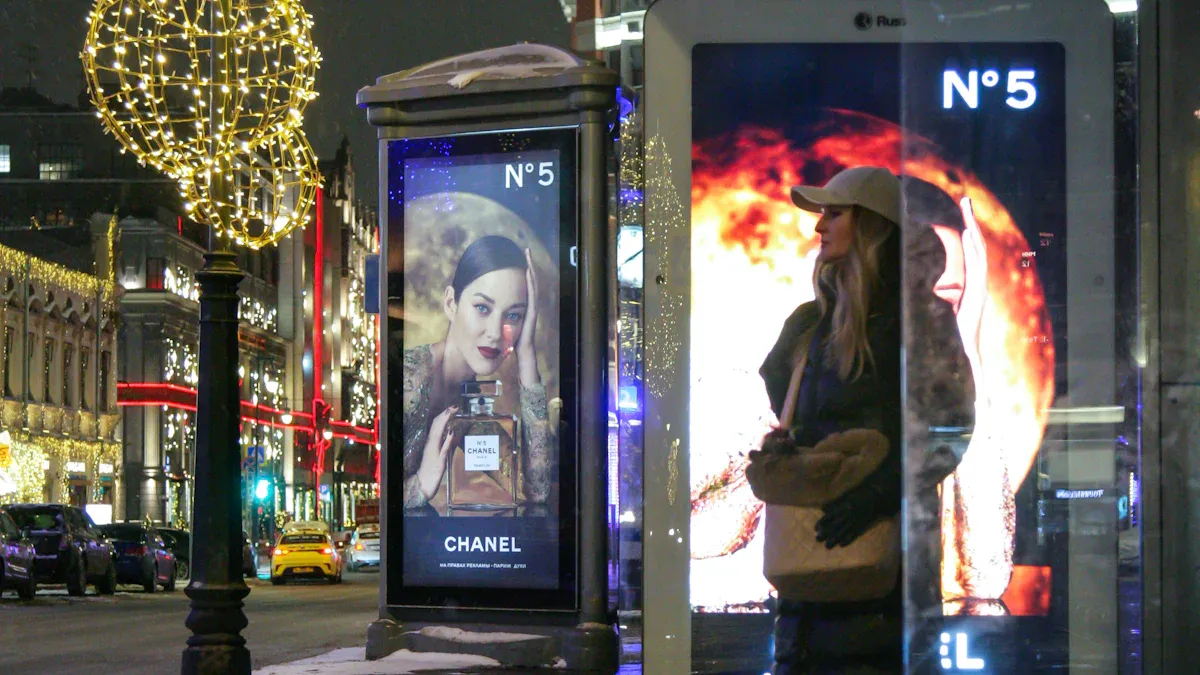
You want people to notice your brand in busy city streets. To do this, look at experience, reputation, coverage, ad format variety, analytics, and service quality when picking a bus shelter advertising company. These things help you get better ads and reach more people. Bus shelter advertising lets many people see your brand and shows your message to your target audience every day. When you match what the company does well with your goals, you use your money wisely.
Key Takeaways
Pick a bus shelter advertising company that matches your brand’s look and goals. This helps your message stay clear and attractive.
Reach the right people by choosing companies that use data to find busy spots. This makes your ads more likely to be noticed.
Ask for case studies to see real results. Good examples show how bus shelter advertising works well for your brand.
Check companies for their experience and reputation. A trusted company will likely give you good advertising campaigns.
Learn about pricing and ask for clear costs. Knowing prices helps you plan your budget and avoid surprise bills.
What Makes a Bus Shelter Advertising Company Right?
Brand Alignment
You want your ads to show your brand’s style. The right bus shelter advertising company helps with this. They make sure your campaign fits local people and your business goals. They run your ads at many shelters, so your message stays the same everywhere. You get bright and bold designs that look like your brand. Companies can also put your ads in certain neighborhoods or city spots. This way, you can reach the people you want and connect with them.
Match campaigns to local people and business goals
Run ads at many shelters for the same message
Place ads in certain neighborhoods or city spots
Audience Targeting
You want your ads to reach the right people. Bus shelter advertising companies use different ways to do this. They study locations to find busy places. They use tools like heatmaps and mobility data to pick the best spots. When ads are in busy areas, more people see them. Companies also change messages for people who use those shelters. Some mix bus shelter advertising with digital marketing to reach even more people.
Audience targeting helps you find the right people
Location study picks busy places for more views
Knowing who you want to reach is important
Heatmaps and mobility data show the best spots
Good ad spots help more people know your brand
Mixing with digital marketing helps your ads go further
Proven Results
You want to know if your ads work. Many bus shelter advertising companies share case studies to prove their success. These stories show how bus shelter advertising brings more views, more visits, and more sales. You can see how much money you get back from real ads.
Case Study | Impressions | Traffic Increase | Sales Uplift | ROI |
|---|---|---|---|---|
Jefferson Coffee Shop | 18% | $4,500 | 220% | |
Atlanta Clinic | 150k | 22% | N/A | N/A |
Retail Chain | 500k | N/A | $18k | 300% |
Tip: Always ask for case studies or results before you pick a bus shelter advertising company. This helps you know if they give real value.
Key Factors in Bus Shelter Advertising
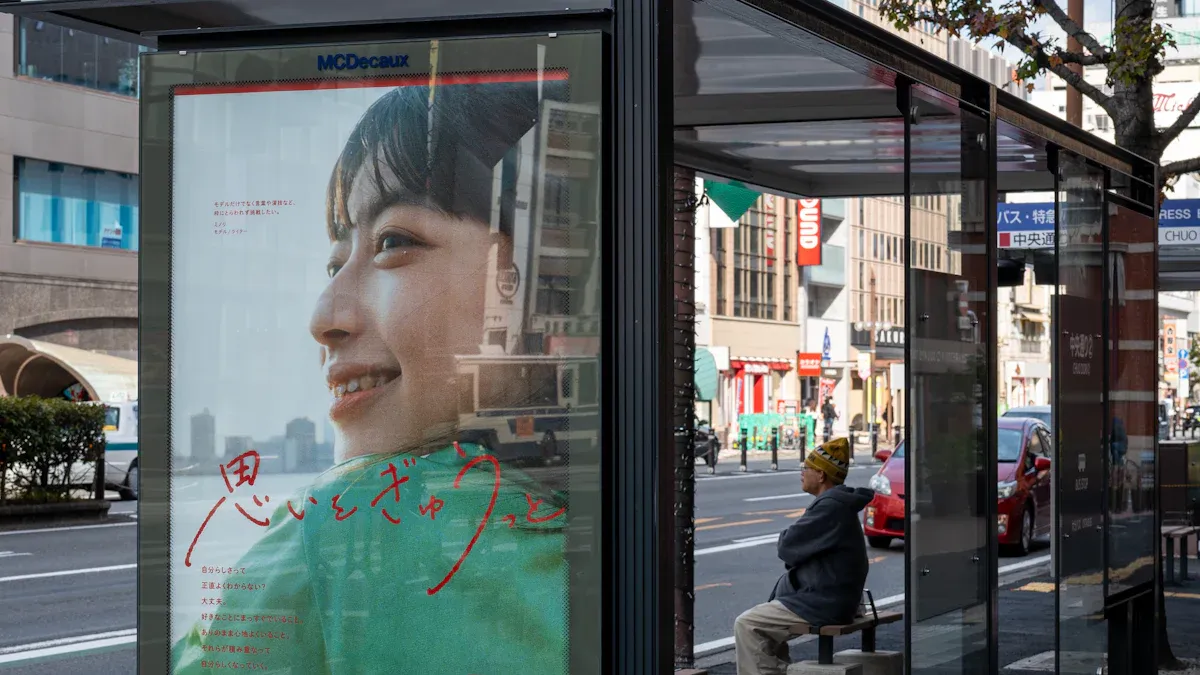
Company Experience & Reputation
You should pick a company with lots of experience. This means they know how to solve problems and get good results. Reputation is important because it shows if other brands trust them. You can read reviews and ask for references. Look at their past campaigns to see their work. Companies with a good reputation have case studies that show their success. If you choose a company with experience and a good reputation, you lower your risk and have a better chance to succeed.
Tip: Ask for past campaign examples and client testimonials before you decide.
Coverage & Audience Reach
Coverage is how many places your ads can be shown. Wide coverage helps you reach more people in different areas. Audience reach is how many people see your ads. Companies use tools like Geopath audits to measure this. These tools can show 50,000 to 200,000 viewers per shelter each week. Demographic filters help you reach groups like urban professionals or families.
Here is a table showing how top companies cover different places:
Company | Geographic Coverage |
|---|---|
Adsposure | |
Bus Bench Ads | Major markets across the United States, local to national campaigns |
Blue Line Media | Over 200 cities with a single agency |
You want a company that gives your brand wide reach and strong exposure in the right spots.
Ad Formats: Print & Digital
Bus shelter advertising uses both print and digital ads. Print ads are still and have a classic look. Digital ads use screens to show moving images and videos. Digital ads let you change your message quickly, which is good for events or offers. Print ads stay the same until someone changes them by hand.
Here is a table comparing print and digital ad formats:
Feature | Print Ads | Digital Ads |
|---|---|---|
Cost | Lower cost, one-time printing | Higher price, dynamic content |
Engagement | Static, simple experience | Dynamic, uses videos and animations |
Content Update | Manual replacement | Real-time updates possible |
Digital ads give you more flexibility and can boost exposure. Print ads can be cheaper for long-term campaigns.
Analytics & Reporting
You need to know if your ads work. Good companies give clear reports that show how many people see your ads. They use numbers like impressions, CPM, and dwell time. Some companies do brand lift studies to see if your ads change how people think about your brand.
Metric | Description |
|---|---|
Impressions | Number of times people see your ad, estimated with multipliers |
CPM | Cost per thousand impressions, helps plan and optimize your budget |
Dwell Time | Average time people spend looking at your ad |
Brand Lift | Surveys to measure changes in brand awareness or opinion |
You want a company that gives you these numbers so you can track your ads and make them better.
Ad Space Quality
Good ad space makes your ads stand out. Companies use standard sizes like 6-sheet and 16-sheet posters. They put ads in busy places like shopping centers and schools. This helps more people see your ads. The design should be clear, creative, and simple. Strong materials and custom designs keep ads looking good, even in bad weather.
Standard sizes help ads fit well in shelters.
Ads in busy spots get more views.
Clear and creative designs grab attention.
Durable materials keep ads looking fresh.
You want your ads to look great and last a long time.
Design & Production Services
Design and production services help your ads look their best. Many companies offer creative design and custom fabrication. They handle printing and installation. Some add special features like scent machines or interactive screens for digital ads.
Service Type | Description |
|---|---|
Creative Design | Making eye-catching and effective ads |
Production Services | Printing and installing ads for outdoor use |
Concept Development | Helping you come up with creative ideas |
Custom Fabrication | Building unique ad structures for your brand |
Installation | Setting up ads in bus shelters |
Custom Electronics | Adding interactive or digital features |
You want a company that handles everything from idea to installation so your ads stand out.
Transit Authority Partnerships
Strong partnerships with transit authorities help companies get the best ad spots. These partnerships mean your ads can appear in more shelters and better locations. Companies with good relationships help you follow rules and get your ads up faster. If you pick a company with strong transit authority connections, you get better placement and more exposure.
Pricing & Transparency
Bus shelter advertising costs between $250 and $1,500 per month. Prices depend on location, size, and type of ad. Digital ads and premium spots in big cities cost more, sometimes up to $6,500. Good companies give you a clear breakdown of costs. They explain what you pay for and why, so you can plan your budget.
Small to medium markets: $300 - $900 per ad
High-income areas: $3,000 - $6,500 per ad
Digital bus shelter ads: $3,000 - $6,500
You want a company that is open about pricing and helps you understand all costs before you start your campaign.
Evaluating Bus Stop Advertising Options
Checklist for Providers
When you search for a bus stop advertising company, you need a simple checklist. This helps you compare companies and find the best one for your brand. Use this list to keep your search easy and organized:
See if the company puts ads in busy areas.
Ask if they know how to reach daily commuters.
Check their ad formats, like print and digital.
Make sure they give reports and analytics for your ads.
Look at their design and production services.
Make sure they work with local transit authorities.
Ask if your ads will be at eye level.
Check their prices and if they explain costs.
Ask for case studies that show real results.
Tip: A good company will answer your questions and share details about their past ads.
Questions to Ask
You want your bus stop ads to work well. Ask these questions to learn how each company does things:
Strategy | Description |
|---|---|
Contextual Assessment | How do you pick places with lots of people and the right groups? |
Testing and Optimization | How often do you change or test ads for better results? |
Clear Objectives | How do you help set goals and check if my ads succeed? |
Simplicity in Messaging | How do you keep messages simple and easy for commuters to remember? |
Creativity in Design | What makes your ad designs special and grabs attention at bus stops? |
These questions help you see if the company knows bus stop advertising and can help your brand get noticed.
Red Flags
Look out for warning signs when you choose a bus stop advertising company. These problems can hurt your ads and waste your money:
Bad placement of important info confuses people.
If ads are hard to read, people won’t understand them.
Ignoring the target audience means fewer people care.
Not keeping designs the same hurts your brand.
Forgetting about movement or the area lowers eye level visibility.
Not checking ads for mistakes can be embarrassing.
No clear call-to-action leaves people unsure what to do.
Ignoring local rules can get your ads taken down.
Not testing ads before launch can cause problems.
Too much in the design makes it hard to look at.
If you see these issues, you should look for a different bus stop advertising company.
Comparing Companies & Making a Choice

Comparing Proposals
You will get proposals from different bus shelter advertising companies. Each proposal explains how the company will run your campaign. Look for details about where your ads will go. Check what ad formats they use and how many shelters are included. Review their design ideas to see if they match your brand’s style. See if the company tells you how they will measure your campaign’s success. Ask for references and examples of past campaigns. This helps you know if the company has worked with brands like yours.
Tip: A clear proposal means the company understands your goals and can get good results.
Weighing Pros & Cons
You need to compare what each company does well and what they don’t. Use a simple table to help you organize your thoughts:
Criteria | Company A | Company B | Company C |
|---|---|---|---|
High | Medium | High | |
Geographic Targeting | Yes | Yes | No |
Ad Design Quality | Creative | Simple | Creative |
Cost Efficiency | Good | Average | Good |
Audience Demographics | Matched | Partial | Matched |
Think about how each company uses advertising to reach people. Some companies use interruptive marketing so everyone at the bus stop sees your ads. Others focus on geographic targeting to put your ads in the best spots. Look for companies that know your target audience and use simple, creative ad designs. Cost efficiency is important. You want your ads to get noticed without spending too much money.
Final Decision Steps
You can follow these steps to make your final choice:
Decide what you want your campaign to do. Do you want more sales or more people to know your brand?
Figure out who you want to reach with your ads.
Find the best places for your campaign. Pick bus shelters near busy spots or local events.
Choose the right ad format. Pick print or digital ads that fit your goals.
Ask how the company will track your campaign’s results.
Look at past campaigns and talk to other clients if you can. This helps you feel sure about your final choice. When you follow these steps, you pick a bus shelter advertising company that helps your campaign succeed.
You can find the best bus shelter advertising company by using four easy steps. First, think about what you want your ads to do. Next, look at important things like how many places your ads will show and what ad types they offer. Then, use a simple checklist to compare different companies. Last, look at their plans and pick the one you like best. When you choose the right company, more people will see your ads and know your brand. The table below shows what can happen:
Impact Type | Result |
|---|---|
Extensive Reach | Lots of people and daily bus riders see it |
Strategic Placement | Ads in busy places get noticed more |
Successful Campaigns | Website visits can go up by 30% |
Creative Messaging | People pay more attention to your ads |
Digital Integration | Even more people see and interact with ads |
Start now and see your brand become bigger.
What Is Bus Shelter Advertising?
Bus shelter advertising is an outdoor advertising format that communicates with passengers during the time they wait for their bus – a period of close, sustained contact. It cleverly uses the “fragmented time” people spend at the stop, making it a medium with both high visibility and high attention.
🎯 Key Characteristics
Close proximity: The ad is at eye level with pedestrians, creating strong visual impact and shortening the distance between the brand and the audience.
24‑hour visibility: Built‑in lighting ensures the advertisement remains clear and visible both day and night.
High frequency: Daily commuters pass the same stop repeatedly, providing multiple opportunities to notice the ad and reinforcing brand recall.
High attention rate: The average waiting time of 3–8 minutes gives passengers ample time to read the ad, improving message retention.
📋 Main Types
Bus shelter advertising generally comes in two forms:
Static lightbox: The traditional, most common form. A large‑format printed poster is installed inside a backlit frame. It offers strong visual impact and is suitable for long‑term brand image campaigns.
Digital display screen: A newer format that uses LCD or LED screens to rotate multiple advertisers’ content. Its advantage lies in flexible, dynamic content – including video – which attracts more attention.
🤩 Benefits & Advantages
Wide reach with precision targeting: Bus routes cover a city extensively, and ads can be tailored to specific areas or demographic groups. High recall rates (up to 84%) demonstrate their effectiveness.
Effective brand awareness lift: High‑quality, large‑format visuals effectively enhance brand image. Studies show digital signage can increase brand awareness by 47.7%.
Cost‑effective: Compared to TV or online media, bus shelter advertising offers a lower cost per thousand impressions (CPM), making it a very efficient medium.
Captive audience & high readership: Passengers waiting for the bus cannot easily “change the channel”. This relatively enclosed environment leads to high reading rates and some potential for interactivity.
📊 Cost & Procurement
Key pricing factors: The price of an ad space is primarily determined by location, traffic volume, and the grade of the spot. Premium locations in central business districts with high foot traffic cost significantly more than ordinary stops.
Flexible rental periods: Spaces can be leased for annual, semi‑annual, quarterly, or monthly periods. Some prime locations may be acquired through competitive bidding.
Price reference: Costs vary greatly by city, street, and advertising company. As a rough example, a standard bus stop ad might cost around 200 RMB per panel per month.
Procurement process: Generally, bus shelters are owned by the transit authority, but advertising concessions are often held by specialist media companies. Advertisers can work directly with these concessionaires. Spaces are often sold in packages (e.g., “standard stop package”, “premium stop package”), and experienced agencies will recommend a strategy based on your budget and target audience.
⚖️ Potential Challenges
Risk of visual clutter: Poorly designed or overly crowded ads can negatively impact the cityscape and viewing experience.
Obstruction: The ad may be blocked by passing vehicles, trees, pedestrians, etc., reducing visibility.
Content restrictions: Some regions restrict certain types of advertising (e.g., tobacco, alcohol).
Maintenance and wear: Outdoor exposure can cause fading, tearing, or damage – requiring regular upkeep and replacement.
💎 Summary
Bus shelter advertising is well‑suited for brands seeking continuous, widespread exposure, close connection to the mass consumer market, and a desire to build a strong presence in specific neighbourhoods. If your goal is to build or deepen brand awareness among urban audiences through sustained, high‑frequency exposure, bus shelter advertising deserves a place in your marketing strategy.
Many brands combine shelter advertising with bus body advertising to create a “fixed point + moving line” omnidirectional coverage – an even more effective approach. If you have a preliminary plan, share your target city, and I can help you outline a similar strategy.
FAQ
How long does it take to launch a bus shelter ad campaign?
Most companies can launch your campaign in two to four weeks. This time includes design, printing, and getting approval from transit authorities.
Can I choose specific bus shelter locations for my ads?
Yes, you can pick locations. Companies often let you target certain neighborhoods or busy streets to reach your ideal audience.
What is the minimum budget for bus shelter advertising?
You can start with as little as $250 per month for one shelter in a small market. Larger campaigns or digital ads cost more.
How do I know if my ads are working?
You get reports with data like impressions and audience reach. Some companies offer surveys or brand lift studies to show real results.
Do bus shelter ads work for small businesses?
Yes! Bus shelter ads help small businesses reach local customers. You can target your neighborhood and build brand awareness quickly.
See Also
Selecting Ideal Outdoor Digital Signage For Your Company
Choosing Optimal Outdoor Signage Solutions For 2025 Businesses
The Benefits of Outdoor Digital Signage For Business Visibility
Discovering The Right Outdoor Digital Signage For Your Needs
