How Digital Signage Transforms Communication in Healthcare Settings
Shenzhen TopAdkiosk Display Technology Co., Ltd.
Add.: 2F, Bldg 10, Changfeng Industrial Park, Dongkeng, Fenghuang, Guangming, Shenzhen, China 518132
Mobile/WHATSAPP: 86-138 25769658
Email: marketing@topadkiosk.com topadkiosk@gmail.com
Skype: pghenry1
Wechat: adkioskhenry
English Web.: https://www.topkioskdisplay.com/
http://www.ad-kiosk.com/
https://www.toplcddisplay.com/
http://www.multitouchdigitalsignage.com/
https://www.youtube.com/channel/UCYVYNJHxLVEcQD8fuUxXNTA/videos?view_as=subscriber
https://www.facebook.com/TOPADKIOSKSHENZHEN/?ref=bookmarks

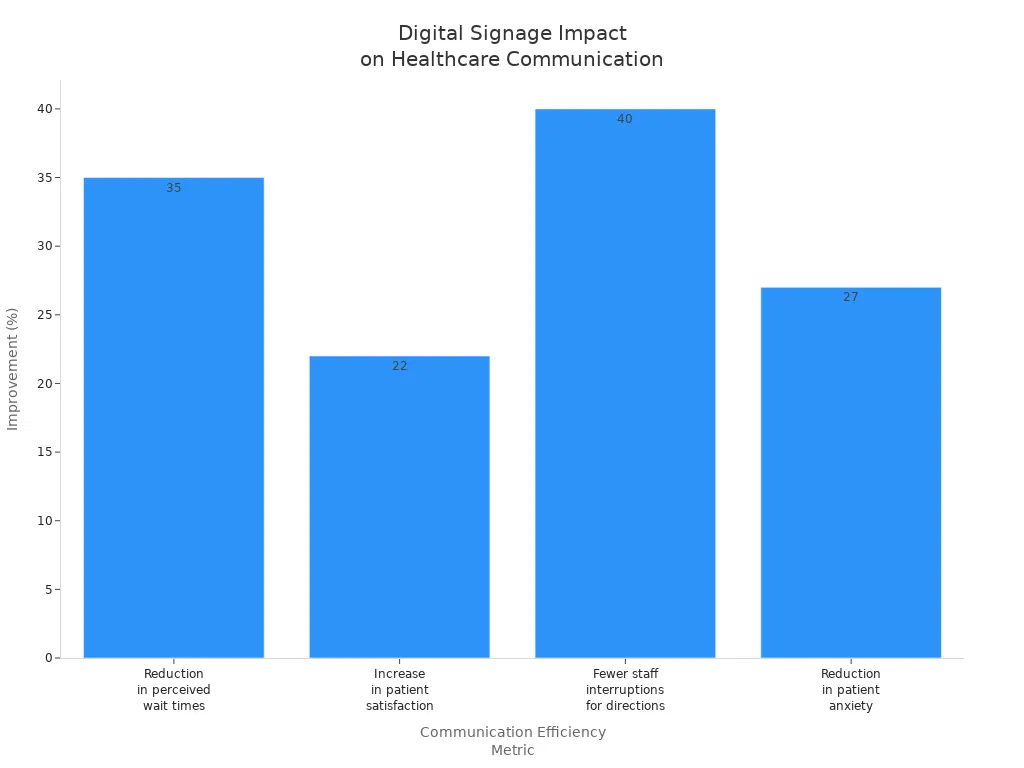
Digital signage is changing healthcare. It changes how you get information in clinics and hospitals. When you enter a medical facility, digital signage healthcare tools show real-time updates. They make the patient experience better. They help staff work together. You see fewer staff interruptions for directions. This goes down by 40%. Patient satisfaction scores go up by 22%. Digital signage also makes wait times feel shorter by 35%. It lowers patient anxiety levels by 27%. These screens show clear directions. They show important alerts. They show helpful reminders. This makes every patient visit easier.
Statistic Description | Value |
|---|---|
Reduction in perceived wait times | 35% |
Increase in patient satisfaction scores | 22% |
Fewer staff interruptions for directions | 40% |
Reduction in patient anxiety levels during high volume | 27% |
You get better communication. You get a better patient experience. You get information in a cost-effective way. Digital signage is at the center of changing healthcare. It helps every patient get the right message at the right time.
Key Takeaways
Digital signage helps patients by giving updates right away. It makes wait times feel shorter by 35%. Clear directions and reminders on screens help patients feel less worried by 27%. This makes visits easier for everyone. Staff also use digital signage to talk to each other. This means there are 40% fewer interruptions and better teamwork. Each department can show different messages. This helps patients get the right information for them. Digital signage also keeps people safe. It gives emergency alerts and instructions fast, so everyone knows what to do.
Benefits of Digital Signage Healthcare
Patient Education
You see digital signage healthcare screens in many hospitals and clinics. These screens help you learn about your health in a simple way. While you wait for your appointment, you watch videos and slides. They explain common health problems and treatments. This information helps you know your choices and make good decisions. You feel less nervous because you see happy stories and helpful tips instead of bad news.
Digital signage makes it easier for patients to get information. You see reminders about check-ups, vaccines, and healthy habits. You also learn about services and programs that help you stay healthy. This way, you pay more attention and feel more sure about your health choices.
Digital signage shows interesting and helpful facts about health and treatments.
You see clear instructions and news from your healthcare team.
Good stories and tips replace bad news, so you feel calmer.
You learn about services and treatments to make smart choices.
When you understand your care, you feel happier with your visit. Digital signage healthcare tools help by giving you the right information at the right time.
Staff Communication
Digital signage healthcare systems help staff work together better. Staff see important messages and news on screens in their work areas. This helps everyone know what is happening. Staff do not need to use paper notes or just talk to each other. Digital signage is a main place for news, safety rules, and training tips.
Digital signage helps staff by sharing news in one spot.
Staff get updates right away, which is important in busy places.
Managers can share news fast and clearly.
Digital boards show training, scores, and safety reminders.
This better way of talking saves time and stops confusion. Staff can spend more time helping patients instead of looking for news. There are fewer missed messages and better teamwork. Digital signage healthcare solutions also mean less paper, which saves money and helps the planet.
Using less paper saves lots of money every year.
Self-check-in screens and quick messages help staff work faster.
Happier patients can bring more money to your hospital.
Real-Time Updates
You get real-time updates in healthcare places. Digital signage tells you about wait times, changes, and emergency alerts. You see these updates right away, so you can plan your visit and feel less stressed.
Healthcare Facility | Outcome |
|---|---|
Vanderbilt University Medical Center | Patients find their way and get information from digital displays. |
Schweiger Dermatology Group | Better communication and happier patients with new messages. |
Mayo Clinic | Patient satisfaction scores went up by 28% because of better wait time information. |
Statistic | Result |
|---|---|
Patient comprehension of post-appointment instructions | 27% higher with digital signage than with paper. |
Reduction in perceived wait times | Waiting rooms with digital signage saw up to 35% shorter wait times. |
Improvement in patient satisfaction scores | Mayo Clinic saw a 28% rise in satisfaction about wait times. |
You see that digital signage healthcare solutions make visits easier. You get clear directions and news, so you do not miss anything important. You feel happier because you know what will happen. Digital signage also helps staff act fast during changes and emergencies, which keeps everyone safe.
Digital signage healthcare tools help both patients and staff talk better. You see things more clearly, spend less money, and pay more attention. These good things make patients happier and give everyone a better healthcare experience.
Practical Uses of Digital Signage
Queue Management
Digital signage is in many waiting rooms. These screens show your place in line. You can watch videos or health tips while you wait. This keeps you busy and makes waiting feel shorter. Digital signage can make wait times seem 35% shorter. You feel calmer, and you are happier with your visit. Places using digital signage see a 28% rise in satisfaction about wait times.
Digital signage tells you about your appointment.
You watch health content, which helps you stay interested.
You feel less stressed and less confused while waiting.
Wayfinding and Guidance
Digital signage helps you find your way in big hospitals. You see directions on screens, kiosks, and directories. This helps you get to your appointment on time. It also means fewer missed appointments. Staff spend less time giving directions. They can help patients more. Hospitals using digital signage saw 30% fewer complaints about finding their way. Johns Hopkins Hospital had 18% fewer missed appointments after using kiosks.
Benefit Type | Benefits |
|---|---|
For Patients | You arrive on time and have a better visit. |
For Staff | Staff get interrupted less and have more time for care. |
For Hospital Admins | Hospitals work better, save money, and look good. |
Types of Digital Signage | Lobby kiosks, screens, directories, room signs, mobile apps, video walls |
You move through the hospital easily. Digital signage helps people talk and share information better.
Emergency Alerts
Digital signage gives updates during emergencies. Screens show evacuation routes and instructions. Everyone sees the same message at once. This helps people respond faster and keeps you safe.
Benefit | Description |
|---|---|
Real-time alerts | Screens show emergency alerts right away. |
Enhanced coordination | Screens show routes and important instructions. |
Improved response times | Everyone gets information at the same time. |
You get clear instructions quickly. Digital signage makes healthcare safer and stops confusion in emergencies.
Tip: Digital signage helps you miss fewer appointments and feel less confused. You see directions and reminders, so your visit is easier and safer.
Customization and Integration
Department-Specific Content
Digital signage lets each department share the right message. Every area in a hospital needs different information. The emergency room needs quick updates about wait times and safety. The pediatric wing can show health tips for kids and calming pictures. You can change what shows on screens for each group. This keeps people interested and helps them learn. Each department gets news that fits what they do. This makes talking to patients and staff better.
Use moving pictures and words to keep people watching.
Give fast updates that matter to each place.
This way, everyone gets the right information for their needs.
System Integration
Digital signage can connect with other hospital systems. This helps information move easily and stay correct. It also stops mistakes. Here are some ways to use digital signage well:
Make words big and easy to read. Use simple pictures.
Change what is on the screen often with one main system.
Link digital signage to hospital systems for fast updates.
Make sure everyone, even people with special needs, can see the screens.
Put screens in busy places like lobbies and waiting rooms.
Note: Match your digital signage plan with your goals. Show new and helpful information to keep people watching. Always keep patient information safe and protect your system.
You can see that digital signage helps patients feel happier. It also means fewer missed visits and better communication.
Accessibility and Compliance
Digital signage should be easy for everyone to use and follow rules. Use bright words on dark backgrounds so people can see better. Add sounds for people who cannot see well. Use more than one language so everyone understands. Digital signage can change languages for different people. This helps in hospitals with many kinds of patients.
Compliance Standard | Description |
|---|---|
HIPAA | Keep patient information safe and control what shows on screens. |
FDA Guidelines | Make sure digital signage is safe and works well in hospitals. |
Regional Data Privacy Laws | Follow local rules about patient information. |
Never show private patient information in public places. Lock your screens and use strong software to keep them safe. Check and update your system often to protect important information. Doing these things makes the hospital safer and friendlier for everyone.
Implementation Tips
Planning and Deployment
First, set clear goals for digital signage. Decide if you want to teach patients, lower stress, or help with lines. Pick screens or kiosks that fit your space. Choose software that is easy to use. Make content with licensed pictures and health tips. Test your system in a few waiting rooms. Ask people what they think. Change your plan if you need to. Teach staff how to send urgent messages and update screens fast.
Planning helps you avoid problems. You can help staff accept changes by giving good training. You fix money problems by showing how digital signage saves money. Keep your content new with a good plan. Protect patient data by following privacy rules and using strong security.
Staff Training
You help staff feel sure by using digital signage for training. Show new workers important things right away. Use screens to play safety videos and share hospital news. Put messages in break rooms where staff meet. Show messages at different times so everyone sees them. Tell staff about training and job openings. Share news about certifications to help staff grow.
Strategy | Description |
|---|---|
Onboarding Materials | Show new staff what they need to know. |
Safety Training | Play safety videos to help staff follow rules. |
Updates on Procedures | Share news to keep staff working the right way. |
Staff feel important and safe. You make a good place to work and help patients feel happy.
Measuring Success
You check important numbers to see if digital signage works. Count new patients each month to see if more people come. Look at how many insurance claims get turned down to check how well things work. Track how fast you get paid by counting days in accounts receivable. Count free consults for each test to see if more people get care. Watch how many days pass between ordering and getting care to see if things move faster.
KPI | Description |
|---|---|
New Patients Per Month | Shows if more people come because of your outreach. |
Percent of Rejected Insurance Approvals | Checks if claims are handled well. |
Days in Accounts Receivable | Tells how fast you get paid. |
Free Consultations per Diagnostic Assessment | Shows if more people get care. |
Days Between Ordered Procedures and Service Rendering | Checks if care is faster. |
You use these numbers to make visits better for patients. Digital signage helps make healthcare safer and faster.
You notice digital signage changing healthcare all the time. It gives you clear information, so you feel sure as a patient. Digital signage makes it easier to talk with staff and helps your visit go smoothly. You get updates, directions, and reminders right away. Fewer patients get lost, and more show up on time. Staff work together better, and everyone stays safe.
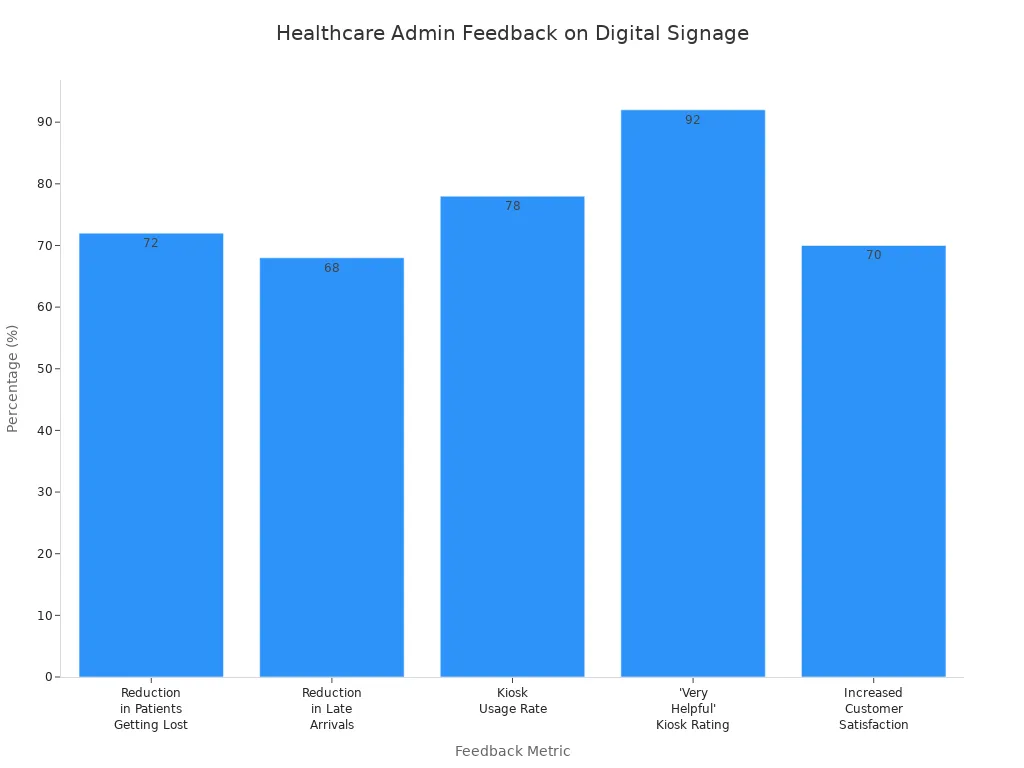
Digital signage makes visits better with fast updates.
It helps healthcare teams talk to each other.
Patients and families see helpful information on screens.
Administrators say they are happier and work better.
Benefit Type | Description |
|---|---|
Enhancing patient experience | Digital signage shows updates about lines, wait times, and appointments, so patients can make choices. |
Streamlining internal communication | It shares emergency alerts and news, so staff get important information quickly. |
Improving navigation | Wayfinding screens help patients find their way in big hospitals, so staff answer fewer questions. |
Strengthening healthcare marketing | Fun displays teach patients and help them trust healthcare services. |
Improving compliance and safety measures | Screens remind everyone about HIPAA rules and infection control, so people stay safe. |
Healthcare administrators think digital signage is a smart choice. You will see new things like touchless kiosks and smart screens soon. Digital signage will keep getting better and help you get good care. Start using digital signage to make your hospital safer, smarter, and friendlier for everyone.
How Digital Signage Benefits QSR Operations
Digital signage is fundamentally transforming quick‑service restaurant (QSR) operations, bringing significant improvements to ordering experience, back‑of‑house efficiency, and profitability. Below is a detailed analysis of the core benefits.
1. Increasing Average Check & Sales
1. Visually Appealing Food Displays
High‑definition food videos: Use dynamic footage of cheese pulling, gravy dripping, or steam rising – far more enticing than static images. Studies show dynamic menus can increase sales of featured items by 15‑30%.
Bundle combination animations: Burger + fries + drink fly into a combo box, showing “Combo saves $2 vs. à la carte” – guiding customers to higher‑margin bundles.
2. Smart Cross‑Selling & Upselling
Related item prompts: When a customer orders a burger, the screen automatically shows “Add onion rings for $1” or “Upgrade to large fries for only $0.50”.
Daypart‑aware recommendations: Morning – coffee + breakfast sandwich combos; lunch – main + drink; late night – snack platters.
Inventory‑driven suggestions: When an item is low in stock, automatically highlight an alternative with “Try our new crispy chicken”.
3. Creating Urgency with Limited‑Time Offers
Countdown timers: Screen corner shows “Limited offer ends in 03:15” – stimulating impulse purchases.
Sales counters: “250 signature burgers sold today” – leveraging social proof.
2. Improving Operational Efficiency & Reducing Errors
1. Higher Order Accuracy
Order confirmation screen: A customer‑facing secondary display shows the order (items, quantity, price). Customers can correct mistakes immediately – reducing remakes and food waste.
POS synchronisation: Menu prices and discounts are synced with the POS system in real time – eliminating manual entry errors.
2. Reducing Staff Repetitive Work
Remote menu updates: Headquarters can update menus, prices, and promotions across all stores instantly – no manual poster changes or file adjustments needed by store staff.
Smart scheduling: Menus automatically switch by preset times (breakfast/lunch/dinner) – no manual intervention.
3. Speeding Up Ordering
Clear information hierarchy: Large fonts, high contrast, well‑organised categories help customers find what they want quickly – shortening decision time.
Highlighting popular items: Use different background colours to frame high‑margin or best‑selling items, guiding fast choices.
3. Enhancing Customer Experience & Reducing Perceived Wait Time
1. Reducing Perceived Wait Time
Wait‑area entertainment: Play brand stories, kitchen live feeds, or fun short videos on queue‑area screens – making waiting feel shorter.
Progress indicators: Display “Your order is being prepared – 2 orders ahead of you” – transparent process reduces anxiety.
2. Personalised Interaction
Loyalty member recognition: After scanning a member code, the screen shows “Welcome John, you have a free fries coupon” – boosting loyalty.
Customisation options: Touchscreens allow customers to choose ingredients (e.g., “extra pickles”, “light ice”) – reducing verbal miscommunication.
4. Back‑of‑House Management & Data Analytics
1. Real‑Time Data‑Driven Decisions
Sales heatmaps: Management dashboard shows which items are clicked most, peak ordering times – guiding product development and inventory planning.
Menu A/B testing: Different menu layouts at different times in the same store – compare conversion rates to optimise design.
2. Remote Fault Monitoring
Device health dashboard: IT administrators can remotely check each screen’s online status, brightness, and playback content – automatic alerts for failures.
3. Integration with Kitchen Display System (KDS)
Orders are automatically sent to kitchen screens after checkout – eliminating lost paper tickets and order sequence confusion. Digital menu boards can also show “Peak hours – thank you for your patience”.
5. Cost Savings & Environmental Benefits
Traditional Pain Point | Digital Signage Solution | Savings Effect |
|---|---|---|
Frequent printing of menus and posters | Remote electronic updates – zero paper consumption | Thousands of dollars saved annually on printing |
Manual price tag changes | One‑click POS price sync | Labour hours saved, price inconsistency eliminated |
Storage of promotional materials | Fully digital – no physical materials | Frees up back‑of‑house/office space |
6. Typical QSR Deployment Strategy
Screen Location | Content Focus | Operational Goal |
|---|---|---|
Entrance welcome screen | Daily specials, new product teasers | Attract walk‑ins, increase average check |
Main ordering menu board | Clear categories, popular items, combo bundles | Shorten decision time, improve ordering efficiency |
Queue area side screen | Entertainment videos, brand stories | Reduce perceived wait anxiety |
Above cashier – secondary screen | Upsell prompts (“Add a drink and save $1”) | Assist staff upsell rates |
Pick‑up area waiting screen | Order progress, customer satisfaction survey | Increase transparency, collect feedback |
Conclusion
The value of digital signage for QSR operations is multi‑dimensional: it increases sales through visual menus and smart recommendations; reduces errors and labour through automatic updates and order confirmation screens; improves customer experience through queue entertainment and progress transparency; and optimises back‑of‑house decisions through data analytics and remote management. In the highly competitive fast‑food industry, digital signage has evolved from a “nice‑to‑have upgrade” into essential infrastructure, with a payback period typically shorter than 12 months.
FAQ
What is digital signage in healthcare?
Digital signage means screens in hospitals and clinics. These screens show health information, directions, and news. You get messages fast. This helps you know what is happening. You feel more at ease during your visit.
How does digital signage improve patient communication?
Digital signage gives you reminders and instructions. You see news about appointments, wait times, and safety. This keeps you updated and stops confusion. You feel sure about your visit because you know what will happen.
Can digital signage help create a patient-centric environment?
Yes, digital signage helps make care about you. You get tips and stories that fit your needs. This makes your visit easier. You feel important as a patient.
How does digital signage support improving patient outcomes?
Digital signage teaches you about treatments and healthy habits. You learn about services too. You can make good choices for your health. This helps you follow care plans and get better results.
Is digital signage secure for sharing health-related information?
Digital signage keeps your information safe. Hospitals use strong systems and follow privacy rules. Private details are never shown in public. This protects your health information.
See Also
Understanding Digital Signage And Its Importance In Today’s World
Enhancing Restaurant Efficiency With Digital Signage Innovations In 2026
Utilizing Digital Signage For Unforgettable Experiences In Hotels
Innovative Outdoor Digital Signage Trends Shaping Community Spaces
