What Are Holographic Displays and How Do They Work
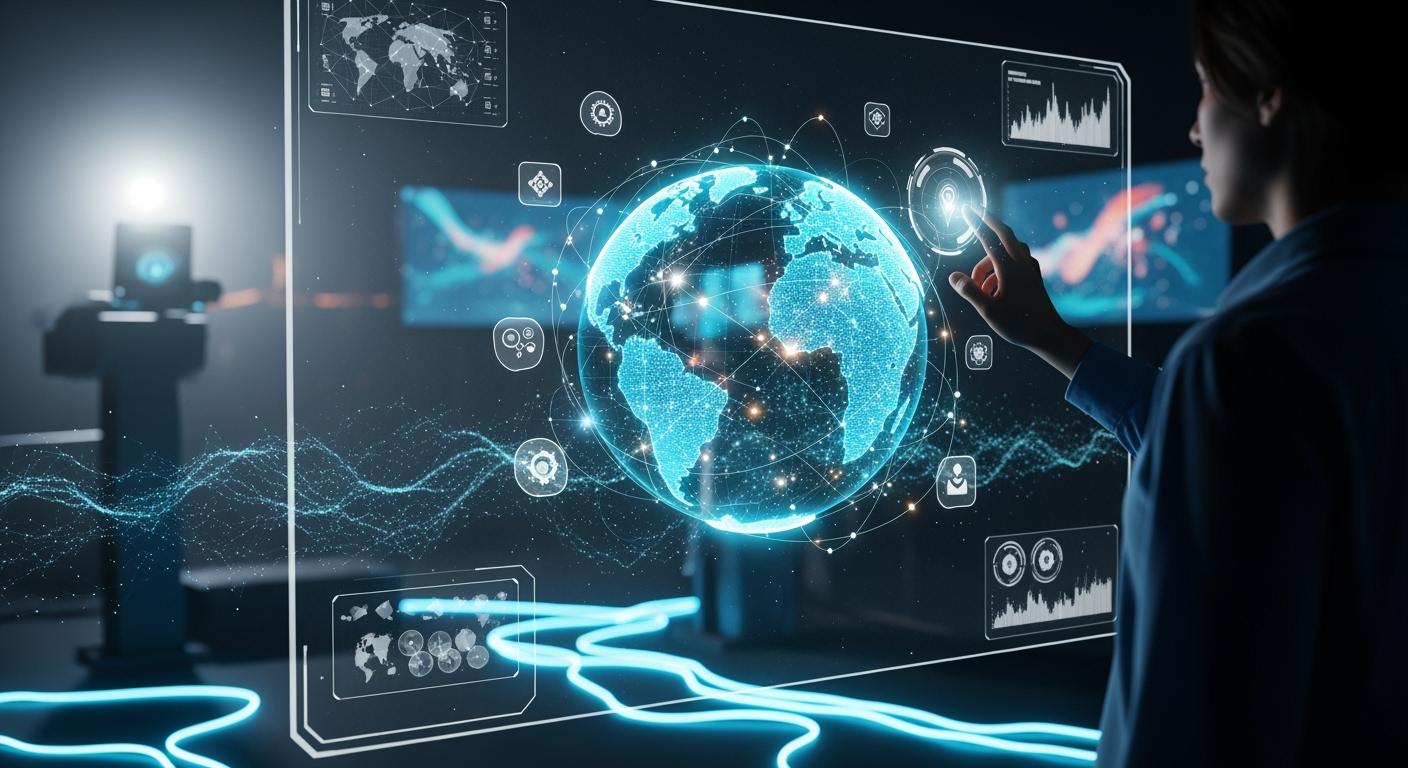
Holographic displays make 3D images you can see without glasses. You can look at holograms from many sides. This makes them seem real and fun to use. Holographic display technology uses light diffraction instead of lenses. It records and shows the shape of light waves. This way, you can walk around the display. The hologram changes as you move.
Shenzhen TopAdkiosk Display Technology Co., Ltd.
Add.: 2F, Bldg 10, Changfeng Industrial Park, Dongkeng, Fenghuang, Guangming, Shenzhen, China 518132
Mobile/WHATSAPP: 86-138 25769658
Email: marketing@topadkiosk.com topadkiosk@gmail.com
Skype: pghenry1
Wechat: adkioskhenry
English Web.: http://www.topadkiosk.com/
https://www.topkioskdisplay.com/
http://www.ad-kiosk.com/
https://www.toplcddisplay.com/
http://www.multitouchdigitalsignage.com/
https://www.youtube.com/channel/UCYVYNJHxLVEcQD8fuUxXNTA/videos?view_as=subscriber
https://www.facebook.com/TOPADKIOSKSHENZHEN/?ref=bookmarks
You see holographic displays are special because they feel more real than regular 3D displays.
Metric | Holographic Displays |
|---|---|
Market Size (2023) | |
Expected Market Size (2032) | USD 17.71 Billion |
CAGR (2024-2032) | 22.55% |
Percentage of 3D Applications | 76% |
North America Market Share (2023) | 34% |
Asia Pacific CAGR (2024-2032) | 23.30% |
Key Takeaways
Holographic displays show 3D images without glasses. They make things look more real and fun to use.
This technology uses light diffraction to make images. The images change when you move around them.
Holographic displays are used in healthcare, education, entertainment, and business. They help people learn and stay interested.
In the future, displays will be smaller and easier to carry. People will be able to touch and move holograms with their hands.
Even though they are exciting, there are problems like high costs and technical limits. These need to be fixed before more people can use them.
Holographic Displays Overview
What Are Holographic Displays
Holographic displays are special screens that show 3D images. You can look at these images from different sides. The images seem to float in the air. You do not need glasses to see the 3D holograms. Holographic display technology uses laser beams to make two waves. These waves meet and create a pattern on a surface. When you shine light on this pattern, you see a hologram. This lets you see things as if they are real and right in front of you.
Holographic display technology is used for more than just fun. People use it in healthcare, military maps, and ads. You can walk around the 3D holograms and see them from many sides. This makes the technology special.
Key Features
Holographic displays have some cool features:
You see 3D images without any glasses.
The images move and change as you move.
You can touch and interact with the display.
You can use hologram technology in school, work, or for fun.
Holographic displays show more details than normal screens.
Tip: Holographic display technology helps you learn hard ideas by showing them in 3D.
Types of Holograms
There are different kinds of holograms in holographic display technology. Each kind has its own use and look. Here is a table to help you see the differences:
Type of Hologram | Characteristics |
|---|---|
Reflection Holograms | You can see these with normal light. They are used in art and museums. |
Transmission Holograms | These need laser or LED light. You see them in science and tech displays. |
Computer-Generated Holograms (CGH) | These are made by computers. You find them in virtual shows, 3D ads, and AI images. |
You can also find stereoscopic holograms, which show still images, and realistic holograms, which can move and let you interact. Realistic holograms use advanced 3D hologram technology to make lifelike models.
How Holographic Display Technology Works
Light Diffraction and Optics
Have you ever wondered how holograms are made? Holographic display technology uses light diffraction and optics to make 3d holograms look real. When you see a hologram, you are looking at light waves shaped like the ones from a real object. Holographic displays use lasers because laser light moves in one direction and is all the same color. This kind of light is called coherent light.
To make a hologram, holographic display technology splits a laser into two beams. One beam shines on the object. The other beam, called the reference beam, goes straight to the recording surface. When the object beam hits the object, it bounces off and meets the reference beam. The two beams mix together and make a pattern called an interference pattern. This pattern keeps all the details about the object’s shape and depth.
When you shine a similar light on the pattern, the hologram bends the light. This bending is called diffraction. The light spreads out and lets you see the 3d hologram from different sides. You can walk around and see new views of the hologram. This is how holographic display technology makes images look real and three-dimensional.
Note: Light diffraction is what makes holographic displays special. It lets you see 3d holograms without wearing glasses.
Creating the 3D Illusion
How do people make holograms? Holographic display technology uses a few steps to make the 3d illusion. Here is how hologram technology works:
Recording Phase: First, a laser beam is split into two parts. One part shines on the object. The other part, called the reference, goes to the recording surface.
Interference Pattern Formation: The object beam bounces off the object and meets the reference beam. They mix on the recording surface and make an interference pattern. This pattern saves the shape and depth of the object.
Reconstruction Phase: When you shine a laser or LED light on the pattern, the hologram bends the light. This bending brings back the original waves from the object. You see a 3d hologram that looks real and changes as you move.
You can understand how holograms work by following these steps. Holographic display technology lets you see 3d holograms from many sides. The hologram changes when you move, making the illusion feel even more real.
Tip: If you want to know how holograms are made, remember these three steps: record, make a pattern, and use light to see it.
Holographic Technology Components
To make a holographic display, you need special parts. Holographic display technology uses these main pieces:
Light Field Displays: These use tiny lenses to show images with real depth. You see 3d holograms that look solid and real.
AI Rendering: Some systems use AI, like NVIDIA’s HoloGAN, to make 3d images quickly. This helps make moving holograms and displays you can interact with.
Haptic Feedback: Some holographic displays let you touch the hologram. You can feel it, not just see it. This makes hologram technology more fun and useful.
You also need lasers, recording surfaces, and special optics. Holographic display technology puts all these parts together. The result is a display that shows 3d holograms you can see, walk around, and sometimes even touch.
Note: Holographic technology is always getting better. New parts make 3d hologram technology more real and interactive every year.
Holographic display technology changes how you see and use images. You can explore 3d holograms in ways that regular screens cannot do. Now you know how holograms work: hologram technology uses light, patterns, and smart parts to make holograms come alive.
Applications of Holographic Technology
Healthcare
Hologram technology is changing healthcare in many ways. Holographic display technology lets doctors see 3d holograms of patient scans. Doctors use these holograms to plan surgeries and explain health problems. At the National University Health System, families saw 3d holograms of MRI scans. This helped them understand treatments better. Holographic displays help doctors make fast choices in emergencies. You can use hologram technology for remote doctor visits. This makes patients safer and happier. Medical teams use holographic display systems to work together and study anatomy. You get better training and learn how to work as a team.
Application Area | Description |
|---|---|
Surgical Planning | Holographic displays show 3d holograms of patient anatomy, helping doctors plan surgeries. |
Medical Education | Holograms offer interactive lessons, making learning more engaging than traditional labs. |
Patient Communication | Visual displays improve understanding and help patients give informed consent. |
Education
Holographic display technology makes learning more fun. You can see 3d holograms of science topics. This makes hard ideas easier to understand. Students use hologram technology to explore history, math, and biology. Holographic displays help you pay attention and remember lessons. Teachers say students get better test scores and join in more. Holograms in real life make subjects feel exciting and real.
Metric | Holographic Displays | Traditional Classroom |
|---|---|---|
Post-Test Scores | Higher | Lower |
Student Engagement | Greater | Limited |
Tip: Holographic display technology helps you learn by showing 3d holograms you can walk around and study from every side.
Entertainment
Holographic display technology gives you new ways to enjoy entertainment. Concerts use holograms of famous artists, like Tupac at Coachella and ABBA's Voyage tour. Holograms in real life let you watch shows that look and feel real. Companies make lifelike holograms for live events using motion capture and CGI. You can play games with holograms that move when you do. Holographic displays make entertainment more fun and interactive.
Hologram technology brings artists back to the stage.
3d hologram technology makes game characters look real.
Augmented displays let you interact with holograms at concerts.
Business
Holographic display technology helps business presentations stand out. Hologram technology lets you show products in 3d holograms with sound and gestures. Portable displays get more people to visit your booth at events. You can give remote demos with holographic displays to reach people anywhere. Marketing teams use QR codes and NFC tags to link brochures to holograms in real life. Real-time feedback tools help you make your display better right away.
Application Type | Description |
|---|---|
Interactive Product Visualization | Holograms make product demos engaging with sound and gestures. |
Event Activation | Portable displays boost engagement and lead capture at expos. |
Remote Demonstrations | Holographic display technology connects you with clients worldwide. |
Omnichannel Marketing | Augmented displays link digital campaigns to holograms in real life. |
Real-time Feedback | Tools help you refine hologram content during presentations. |
Note: Holographic display technology gives you new ways to connect, teach, and entertain. You see 3d holograms everywhere, from hospitals to concerts.
Future Trends in Holographic Displays
Emerging Technologies
New changes are coming to holographic display technology soon. Scientists want to make hologram technology easier to use. You might touch holograms or use your hands and voice to control them. Making holographic displays smaller is a big goal. Engineers are working to make them light and easy to carry. One day, you could use hologram technology on your phone or tablet. Holographic display technology will work with 5G and new medical tools. This helps doctors and patients talk and share information better. As it gets easier to make hologram content, more people will create their own. This means more people will want to buy display hardware.
Smaller, portable holographic displays
Integration with 5G and medical imaging
Easier tools for hologram content creation
Industry Impact
Holographic display technology will change many jobs and businesses. You will see holograms in stores, cars, and on phones. Stores use hologram technology to make shopping more fun. Car companies put special dashboards in cars that show live information. Phone companies use holographic displays to make their brands stand out.
Industry | Impact Description |
|---|---|
Retail | Holograms create engaging advertising and product displays, enhancing customer interaction and experience. |
Automotive | Augmented reality dashboards improve safety and convenience by providing real-time information to drivers. |
Telecommunications | Holographic displays foster brand engagement through visually appealing displays, enhancing customer experiences. |
The market for holographic display technology will get much bigger. Experts think it will grow from USD 5.38 billion in 2025 to USD 50.95 billion by 2036. This is a growth rate of 25.2% each year. You will see more 3d holograms in your daily life.
Challenges
There are some problems with holographic display technology. It costs a lot to make and buy, so not everyone can use it. Some technical problems affect how clear the images look and how wide you can see them. You might see problems with colors and how bright the display is. Making 3d hologram content needs people with special skills. Companies need to find good ways to use hologram technology so it is not just for fun.
Challenge Type | Description |
|---|---|
The technology is expensive to develop and manufacture, limiting access to high-value applications. | |
Technical Limitations | Issues with resolution, viewing angles, and latency hinder performance and user experience. |
Content Creation Bottleneck | A lack of skilled creators for 3D holographic content restricts the growth of the medium. |
Market Education and Use Case Development | Businesses need to identify practical applications and ROI to move beyond novelty use. |
Note: Holographic display technology has limits with how small the pixels are, how much energy it uses, and how well it shows colors and brightness. Sometimes, you may see narrow viewing angles or background noise.
Researchers are working to fix these problems. Hologram technology will get easier to use and more helpful for everyone.
You now know how holographic technology makes augmented hologram experiences. Hologram systems will get smaller and easier to use. Many jobs will use augmented hologram displays for learning, health, and fun. You might see augmented hologram dashboards in cars or on your phone. The table below shows important challenges and trends:
Challenges and Trends | Description |
|---|---|
High Development Costs | The technology costs a lot because it needs high-resolution parts and strong computers. |
Technical Limitations | It is hard to get clear images, wide views, and bright displays in bright rooms. |
Content Creation Ecosystem | There are not enough standard tools and formats to make holographic content easily. |
Future Integration | Holographic technology will be added to everyday devices, making them better and easier to use. |
AI Convergence | AI will help make and improve holographic content. |
Haptic Feedback | New systems will let you feel holograms, opening up more ways to use them. |
Augmented hologram displays will let you touch and move hologram content.
You will find augmented hologram technology in phones, smart devices, and cars.
Augmented hologram systems will work with 5G and medical scans.
More people will make augmented hologram content, so the market will grow.
You can picture how augmented hologram technology will change your life and job.
FAQ
What makes holographic displays different from regular screens?
You see 3D images that float in the air. You do not need glasses. Holographic displays use light patterns, not just pixels, so you can view images from many sides.
Can you interact with holograms?
Yes! Some holographic displays let you touch or move the hologram. You use your hands or special tools to interact with the 3D images.
Are holographic displays safe for your eyes?
Holographic displays use safe light levels. You do not need to worry about eye damage. You should take breaks, just like with any screen.
Where can you see holographic displays today?
You find holographic displays in museums, hospitals, concerts, and some stores. Businesses use them for product demos and events. You may see more of them soon!
See Also
Understanding Hologram Boxes: Functionality and Applications Explained
Exploring the Functionality of Hologram Fans in 2026
Transparent OLED Displays: Their Functionality and Uses Explained
