Discussing digital signage trends shaping 2026 now
You see, discussing digital signage is more than just about screens. AI-driven content now runs over 41% of digital signage systems. More than 60% will use AI for personal messages by 2026. Predictive personalization helps people pay attention and buy more. It changes messages right away to fit each person. Dynamic communication hubs make regular screens into smart networks. These networks help businesses work better and earn more money. Retailers have 25% of all digital signage setups. They use these tools to reach customers in new ways. By discussing digital signage trends, you find ways to get better business results.
Key Takeaways
AI-driven content is changing digital signage. By 2026, more than 60% of systems will use AI. These systems send messages made for each person. This helps customers feel more connected.
Cloud-based platforms make managing content easier. Businesses can update screens from anywhere. This helps them change things quickly when needed.
Dynamic displays make experiences interactive. These screens grab attention and help increase sales by over 30%. They do this by showing content made for each person.
Real-time data makes messages work better. Businesses can change content based on how people act. They can also change it for different places and times. This makes messages more useful.
Sustainability is important in digital signage. Using energy-saving displays and eco-friendly materials lowers costs. It also helps support green projects.
Discussing Digital Signage Technologies
AI & Predictive Personalization
Artificial intelligence is changing digital signage in big ways. AI avatars now greet people in stores, airports, and hospitals. These avatars answer questions and help visitors find their way. This makes each visit feel special. Generative AI makes content triggers that update right away. Your messages always fit what is happening, so you save time and work.
AI-powered interactivity lets you use your voice or hand movements to control screens. You can ask for directions or see product info without touching anything. Computer vision analytics watch how people use the displays. This helps you learn what works best and change your content for better results. AI also sends out content and checks systems by itself, so you do not have to spend much time managing your network.
AI technology could change retail digital signage a lot. As it gets better, you should use these new tools. They can make shopping more fun and personal for customers.
Predictive personalization uses customer data to show the right message at the right time. When you walk by a screen, it can know what you like and show offers just for you. This makes people pay more attention. In fact, 91% of shoppers like brands that know them and give them good deals. Personalized interactive signage keeps people interested longer and makes them want to act. AI-powered signage works like an engagement engine. It studies what people do and changes content right away.
Cloud-Based Platforms
Cloud-based digital signage platforms are now used for most new setups. These platforms let you control content from anywhere. You can update many screens in different places with just a few clicks. This makes it easy to keep up with changes and trends.
Here is how cloud-native platforms are growing:
Year | Percentage of Cloud-native Platforms |
|---|---|
2023 | 52% |
2024 | 62% |
2025 | 71% |
2026 | 78% |
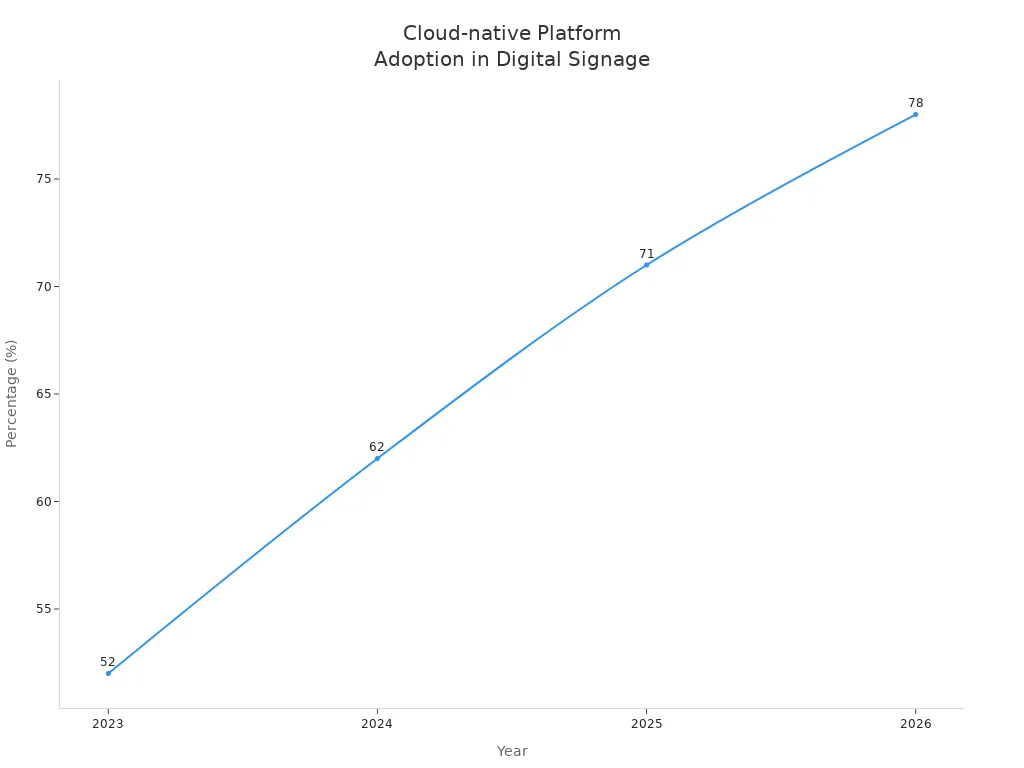
Cloud-based digital signage platforms help you with real-time updates, fixing problems from far away, and growing your system easily. These platforms also make it simple to use content triggers that react to live data, like weather or how busy the store is. This keeps your messages new and useful.
Dynamic Displays
Dynamic displays are a big change in digital signage. You go from still posters to screens you can interact with. These displays make cool spaces that get attention and let people join in. You can use touch, hand waves, or voice to see more content.
Dynamic displays have many features:
Personalization: Show content for the person watching.
Wayfinding and Maps: Help people find their way in big places.
Social Media Integration: Show live social feeds and posts from users.
Interactive signage lets you connect with people in new ways. You get feedback right away and can change your messages fast. This two-way talk builds better relationships and helps you know what your audience likes.
Dynamic digital signage also brings real results. Businesses say sales go up by 31.8% after using digital signage. People remember up to 83% of what they see on these screens, which is much more than with old signs.
KPI | Definition | Measurement Method |
|---|---|---|
Engagement Rate | Percentage of viewers interacting with signage content. | Interaction tracking, sensors |
Conversion Rate | Leads generated per signage impression or interaction. | CRM and lead attribution tools |
Dwell Time | Average time viewers engage with signage. | Video analytics, heatmaps |
You can see that content triggers and dynamic displays help you reach your goals faster. These trends turn normal screens into smart networks that get people involved and help you sell more.
Personalization & Engagement
Real-Time Data
You can use real-time data to make digital signage smarter. When you collect data as things happen, you can change messages fast. This helps you reach the right people with the right content. For example, you can show different ads at different times of day. You can also show ads based on how many people are in the store. Weather data can help you promote cold drinks when it is hot outside.
Here is how real-time data works in digital signage:
Evidence Type | Description |
|---|---|
Watch and react to audience actions and changes right away. | |
Personalization | Show messages made for certain groups or situations. |
Automation Tools | Make updates and schedules easier and faster. |
Continuous Measurement | Use KPIs and feedback to make campaigns better. |
You can use tools like Google Attribution or Tableau to see how people use your displays. These tools help you know what works and what does not. Eflyn’s solutions let you change content for people’s age or past actions. Your screens can show what viewers like, so watching becomes interactive. This makes digital signage trends work better and keeps people interested.
Audience Analytics
Audience analytics help you know who looks at your screens and how they react. You can measure how long people watch and how many interact. This data helps you make your messages better and reach your goals faster.
Some key metrics include:
Dwell Time: See how long people watch your content.
Engagement Rate: Track how many people use your screens.
Demographic Breakdown: Learn about your audience’s age, gender, and interests.
AI analytics give you real-time information. You can see who is watching and what they do next. This helps you show the right content to the right person. Studies show AI can boost engagement by up to 30%. You can use this data to run better ads and get more sales.
Here is how you can measure success:
KPI | Definition | Measurement Method |
|---|---|---|
Engagement Rate | How many people interact with the signage | Sensors, touch, app scans |
Attribution Rate | How many views lead to conversions | CRM, UTM, surveys |
Return on Investment | Money made compared to campaign costs | Sales vs. campaign spend |
Retailers use analytics to track foot traffic and see which displays work best. You can test different messages and see which ones get more attention. This helps you make smart choices and improve your return on investment.
Immersive Experiences
Immersive experiences are changing how you connect with your audience. You can use high-definition visuals, sound, and even scent to make displays stand out. Interactive touchscreens and haptic feedback let people join in and explore your content. These displays turn regular visits into special moments.
You can create experiences that match what your audience needs right now. In retail, you can use big screens to show new products and help shoppers. In healthcare, you can show real-time updates and help patients find their way. In education, you can use interactive lessons to keep students interested.
Here are some ways you can use immersive technology:
Visual: Use bright, moving images to get attention.
Auditory: Add sound to make your message clear and emotional.
Olfactory: Use scent to set a mood or bring back memories.
Tactile: Let people touch and use your screens.
Gustatory: Give samples to connect taste with your message.
Sector-specific solutions are growing fast. Retailers use immersive displays to boost sales and make shopping fun. Hospitals use them to share updates and help patients. Schools use them to make learning more fun for students and teachers.
Industry | Key Features | Impact on Engagement |
|---|---|---|
Retail | Dynamic visuals, promotions, wayfinding, real-time updates | Makes customers more interested and boosts sales |
Healthcare | Real-time updates, schedules, personal content | Helps patients and makes things run smoother |
Education | Real-time updates, wayfinding, interactive lessons | Gets students and teachers more involved |
You can see that immersive experiences are not just a trend. They are shaping the future of digital signage. You can use these tools to make stronger connections and guide your audience every step of the way.
Sustainability & Smart Infrastructure
Energy Efficiency
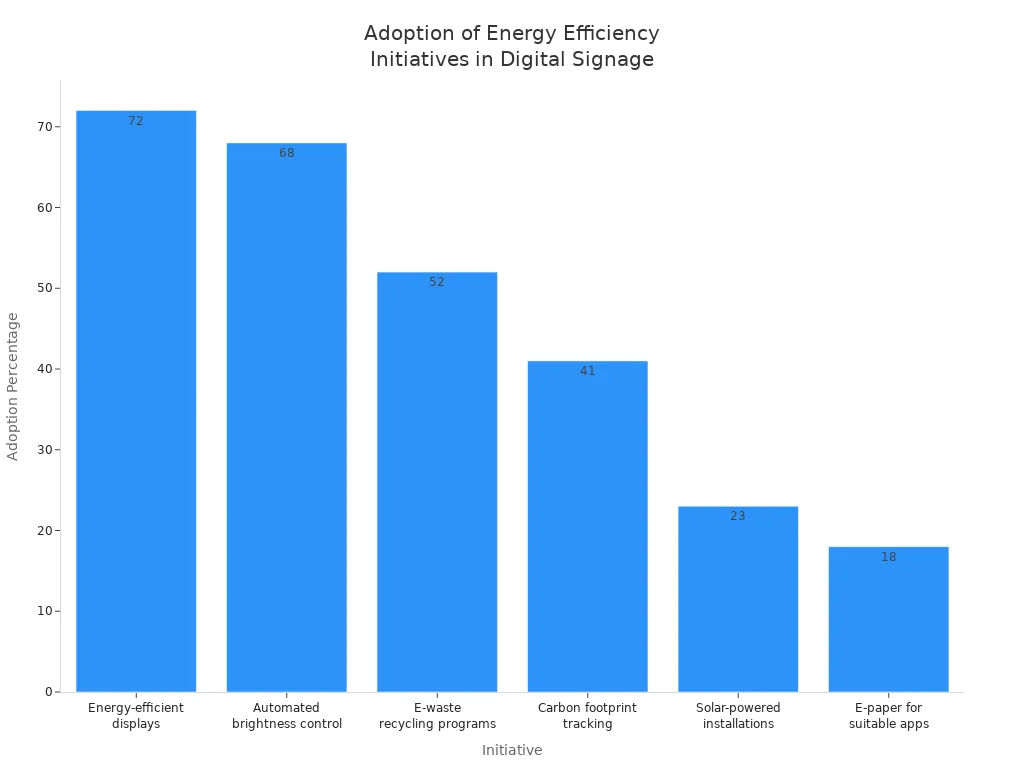
You can save energy with new digital signage hardware and smart controls. Many businesses pick displays that use less power. These displays have features like automatic brightness control. These features help you use less energy and spend less money. The table below shows how different actions help cut energy use:
Initiative | Percentage | Energy Reduction Achieved |
|---|---|---|
Adoption of energy-efficient displays | 72% | Average 35% reduction with smart brightness |
Automated brightness control | 68% | 45% reduction with scheduling optimization |
E-waste recycling programs | 52% | 60% reduction when replacing older displays |
Carbon footprint tracking | 41% | |
Solar-powered installations | 23% | |
E-paper for suitable apps | 18% |
Energy-saving digital signage can use up to 80% less power than old displays. You will pay less for electricity and make less pollution. These changes help you reach new green goals and follow the latest trends.
Eco-Friendly Materials
You can pick digital signage made from eco-friendly materials. These materials are better for the planet and help green business plans. Here are some choices you can look at:
Recycled materials help cut down on e-waste.
Energy-efficient displays use less power.
E-paper displays are a greener way to show images.
Recycled aluminum and plastics help with recycling.
Responsibly sourced wood helps forests stay healthy.
Water-based and plant-based inks are safer for people and nature.
LED lighting uses much less energy.
Solar-powered signage uses energy from the sun.
When you use these materials, you make less waste and help the Earth. Many companies now use recycled aluminum, plastics, and wood that is good for forests. Water-based inks are safer for workers and the environment.
Smart City Integration
Digital signage is important for smart city projects. You can use these screens to share live information with people in your city. For example, bus and train stations use digital signage to show real-time schedules and delays. Emergency alerts can reach people fast on these screens.
Digital signage gives live updates and helps you talk to people.
It shows city projects and lets people give feedback.
Displays help local businesses and bring in more tourists by sharing tips.
You can link your signage to live data systems. This helps your city work better and keeps everyone up to date. Smart city integration helps you build a safer and more connected place to live.
Business Impact
ROI Measurement
It is important to know if your digital signage is working. You can check this by using simple numbers. These numbers show what helps your business the most. Here are some easy ways to see your results:
Metric | Description |
|---|---|
Tells you how many people look at your digital signage. | |
Engagement Rate | Counts how many people touch your screens or scan a code. |
Conversion Rate | Shows how many people buy something after seeing your message. |
Sales Uplift | Compares sales when you use signage to when you do not. |
Customer Engagement | Looks at how long people watch or remember your content. |
Cost Savings | Shows how much money you save by using less paper and fewer signs. |
Operational Efficiency | Checks if your team works faster and better with digital signage. |
Content Effectiveness | Uses A/B testing to find out which messages work best. |
You can use smart tools to track ROI more easily. These tools connect views to sales and show which content is best. You can also use the basic ROI formula:
ROI = (Gain from Investment – Cost of Investment) ÷ Cost of Investment
Smart tools help you control many screens at the same time. You can try new ideas and get answers quickly. This helps you save money and make more.
Advertising Models
There are new ways to advertise with digital signage. Now, digital signage uses AI, IoT, and mixed reality to make ads more fun. You can reach people in stores, on apps, and outside. This gives you more chances to talk to customers and earn money.
Stores use apps and screens to show new ads and see what works.
Companies that make materials and chemicals use smart glass signage to show their tech and make ad money.
Real estate companies use outdoor screens and in-app ads to reach more people and make more money.
You can make your brand look modern by using new technology. You will also stand out from other businesses. These trends help you build better relationships with your customers.
Cross-Channel Integration
You can make your digital signage stronger by connecting it with other channels. This means your message can reach people in more places and in new ways.
Interactive displays let people touch, play, and learn about your products.
Gamification adds quizzes and games, making shopping more fun.
Social media integration brings live posts and user content to your screens. This gets people talking online and in your store.
When you use these cross-channel ideas, you turn viewers into fans. You also get more data to help you make better choices. Digital signage trends show these tools will change how you connect with your audience in the future.
Challenges & Opportunities
Privacy Concerns
It is important to think about privacy with digital signage. Many screens collect data to make messages fit you. People want to know their information is safe. Companies use strong tools like encryption to protect your data. They also follow rules such as GDPR. More businesses now tell you how they collect data and ask for your permission. Most companies only take the data they really need. This helps you feel safe and trust them.
Data protection uses encryption and follows rules
Companies are clear about data collection and ask for consent
Only important data is collected
Privacy laws decide how you use digital signage. You must follow these laws to keep data safe. When screens use sensors or cameras, companies do privacy checks. They also control who can see the data. These steps help keep your information private and safe.
Scalability
You might start with one screen but want more later. Many businesses find it hard to grow their digital signage systems. They have problems managing content in many places or updating old screens.
Many companies set up digital signage for one reason, then have trouble growing or changing when they need more.
You can fix these problems with cloud-based content management systems. These tools let you control all your screens from one spot. Using the same hardware and automating updates also makes it easier to grow.
Challenge | Solution |
|---|---|
Managing content in many places | Cloud-based content management systems |
Old systems that do not grow | Standard hardware and automated workflows |
Need for control from one place | Cloud-based CMS for updates anywhere |
These solutions give you more chances to grow your network.
Regulatory Issues
Rules and laws change how you use digital signage in different places. In Europe, strict rules make you pick energy-saving screens. In Asia-Pacific, governments help smart city projects use digital signage. The UK and Germany want green technology, so you see more efficient screens there. In new economies, more screens in public places help the economy grow. Qatar and Dubai spend a lot on digital signage, which helps the market get bigger.
Region | Regulatory Influence |
|---|---|
Europe | Strong environmental rules push for energy-saving digital signage. |
Asia-Pacific | Governments support smart city projects with digital signage. |
UK | Needs strict green and energy-saving projects for better solutions. |
Germany | Rules for green tech help more people use efficient digital signage. |
Emerging Economies | More digital signage in public places helps the economy grow. |
Qatar & Dubai | More demand and spending on digital signage helps the market grow. |
You will see new trends and more chances as rules change and technology gets better.
You can see digital signage trends for 2026 are changing fast. AI-driven personalization, cloud-first strategies, and immersive formats are leading the way. You can get more people interested by using modular systems. You can also connect your signage with business tools. If you focus on being green and using real-time updates, you will stay ahead.
Always be ready to change when new technology comes out. Digital signage will keep growing and change how you talk to your audience. 🚀
FAQ
What is the biggest trend in digital signage for 2026?
AI-driven content and predictive personalization are the top trends. These tools help you show the best message to each person. You can reach people at the right time with the right info.
How does digital signage use real-time data?
Sensors and analytics collect data as things happen. This helps you change messages fast and keep your content new.
Why should you care about energy efficiency in digital signage?
Energy-efficient displays save you money and help the planet. New screens use less power and have smart controls to cut costs.
How does digital signage fit into smart cities?
Digital signage shares live updates, emergency alerts, and city news. This keeps people informed and helps make cities safer.
What is driving growth in the digital signage market?
Growth comes from new technology and smart city projects. Businesses want better ways to connect with people and keep them interested.
See Also
Key Factors That Make Digital Signage Essential For Business Growth
Seven Emerging Trends In Digital Signage Technology For 2026
Leading Digital Signage Innovations Revolutionizing Retail Experiences In 2026
Current Trends In Outdoor Digital Signage Enhancing Public Areas
Selecting The Best LCD Digital Signage Solutions For Your Business
