Digital Wayfinding Signage Explained for 2026
Add.: 2F, Bldg 10, Changfeng Industrial Park, Dongkeng, Fenghuang, Guangming, Shenzhen, China 518132
Mobile/WHATSAPP: 86-138 25769658
Email: marketing@topadkiosk.com topadkiosk@gmail.com
Skype: pghenry1
Wechat: adkioskhenry
English Web.: https://www.topkioskdisplay.com/
http://www.ad-kiosk.com/
https://www.toplcddisplay.com/
http://www.multitouchdigitalsignage.com/
https://www.youtube.com/channel/UCYVYNJHxLVEcQD8fuUxXNTA/videos?view_as=subscriber
https://www.facebook.com/TOPADKIOSKSHENZHEN/?ref=bookmarks
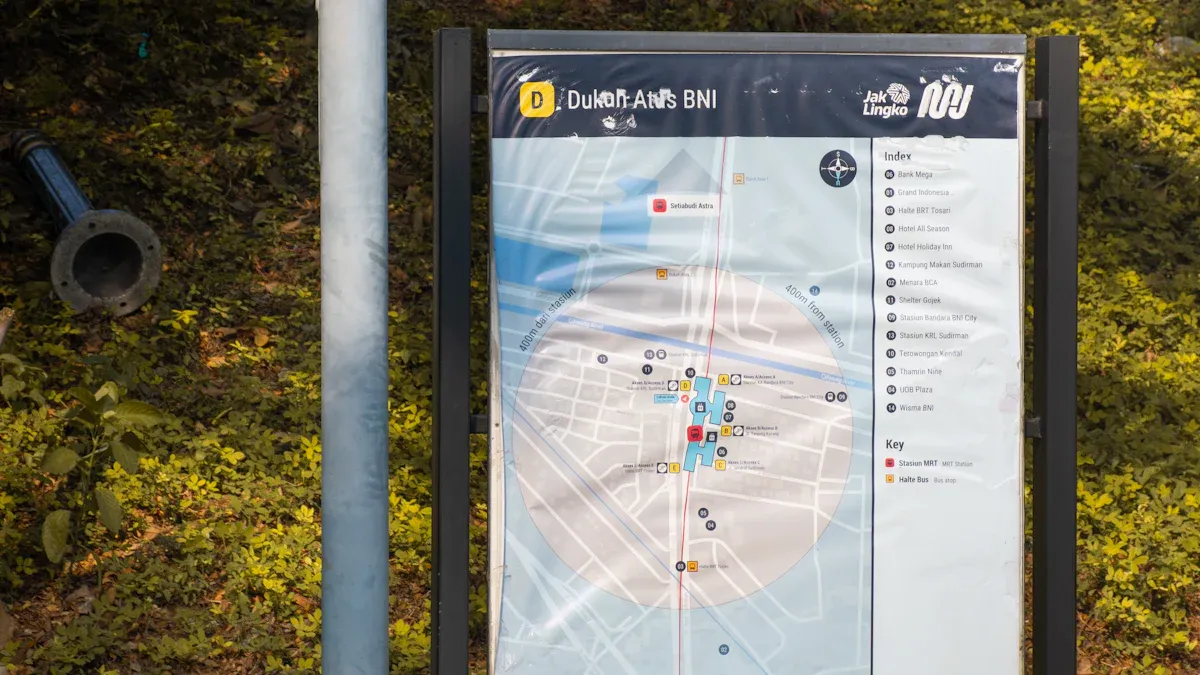
Digital wayfinding signage uses screens that you can touch. These digital displays help you find your way in big places. The signs are clear and change right away. This makes it much easier to get around. In 2026, digital wayfinding signage will be special. It mixes with old signs and changes fast when there is new information. You can use digital wayfinding solutions on kiosks, phones, and the web. These solutions are important because the market could be worth over USD 34 billion by 2026. Digital wayfinding signage is better than regular signs. It gives you updates right away, maps you can use, and easier ways to find things. Many groups use digital wayfinding solutions from https://www.topkioskdisplay.com/ to help everyone find their way.
The digital wayfinding signage market could grow by 5.8% to 9.26% each year after 2026.
Digital signage helps people find places 62% faster than old signs.
Feature | Digital Wayfinding Signage | Traditional Signage |
|---|---|---|
Real-time updates | Yes | No |
Interactive maps | Yes | No |
Update speed | Minutes | 6-8 weeks |
Key Takeaways
Digital wayfinding signage has screens you can touch. These screens help you move around big places fast and easy.
These systems show updates right away. This makes it easier to find where you need to go. It also helps you feel less worried when you visit.
Mobile apps and QR codes let you get directions on your phone. This makes things easier and helps more people use them.
Digital signage works better than old signs. It saves time and makes things better for people in airports and hospitals.
The market for digital wayfinding will get much bigger. This shows it is becoming more important in many businesses.
What Is Digital Wayfinding Signage?
Core Concepts and Definition
You can find digital wayfinding signage in airports, hospitals, malls, and schools. These systems use screens and displays that you can touch. They help you find your way in big or confusing places. Digital wayfinding signage is a smart technology. It uses digital displays to guide you. You get clear directions and live updates. The signs tell you where you are and where you need to go.
Digital wayfinding signage gives you location-based data that is correct. You can touch the screen to look for a store, restroom, or office. The system shows you the best way to go. It changes if something new happens. This makes you feel less worried and helps you move with confidence. You also get real-time updates. This means you always see the newest information.
Tip: Many digital wayfinding signage systems let you scan a QR code. You can send directions to your phone. This helps you keep going as you walk.
Here are the main parts of digital wayfinding signage:
Component | Description |
|---|---|
Interactive Displays & Kiosks | You use these to touch digital maps and ask for directions. |
Digital Maps & Real-Time Updates | These show routes and places you might want to visit. They update live for better navigation. |
Mobile Integration & QR Codes | You can move maps and directions to your phone for easy use. |
Points of Interest (POI) | The system shows you important places and gives you routes that fit what you need. |
Digital wayfinding signage does more than just show maps. It makes your visit better. It helps building managers work faster. It also helps everyone, even people with disabilities, get around easily.
You get location-based data that is correct.
Your visit is better because it is easy to find your way.
Building managers can change information fast.
You see updates right away.
You feel less worried when you look for places.
Digital vs. Traditional Wayfinding
You may wonder how digital wayfinding signage is different from old wayfinding methods. Old wayfinding uses signs that do not change, paper maps, and arrows on walls. These signs do not update fast. They may not show the newest information.
Digital wayfinding signage is special because you can interact with it. You can search for places, see live updates, and get directions sent to your phone. The system can update right away for events, emergencies, or changes in the building.
Feature | Digital Wayfinding Signage | Traditional Wayfinding Methods |
|---|---|---|
Interactivity | Lets you interact and search for information in real time | Uses maps that do not change much |
Information Updates | Updates right away for events and sales | Needs someone to change the signs |
User Experience | Makes your trip better with help from apps | Only uses signs and paper maps |
Accessibility | Has features for people with disabilities | May not help everyone |
Many people like digital wayfinding signage because it gives updates right away and directions made just for you. You can get help that fits what you need. The system often has options for people with disabilities. This makes digital wayfinding signage a better choice for most places today.
How Digital Wayfinding Works
Dynamic Maps and Real-Time Updates
You use digital wayfinding in places like airports and malls. These systems use digital maps that update right away. The screens show routes and landmarks that can change fast. This helps you find your way, even if things move around. You get live info about rooms, events, or exits. All screens show the newest updates at the same time.
Digital wayfinding helps you move through big buildings easily.
Real-time updates help you during emergencies and show safe paths.
You can find important places fast, so your visit is smoother.
Tip: Real-time updates always show the newest info, so you do not get lost.
Content Management Systems (CMS)
A content management system, or CMS, lets you pick what shows on screens. You do not need to be a tech expert to use it. You can make and design content with easy tools or add it from other places. The CMS keeps all files in one spot, so they are easy to find. You can set times for content to show and send it to screens in many places. The CMS also checks if screens work and sees how people use the system.
Technology | Description |
|---|---|
AI | Gives special navigation and can guess what you need. |
IoT | Connects devices to share data and update fast. |
BLE beacons | Sends location-based updates to users. |
AR | Makes navigation better with cool overlays. |
Sophisticated mapping tools | Gives detailed and changing maps for better directions. |
Integration with Traditional Signage
You often see digital wayfinding and old signs together. This makes finding your way easier. Good design uses both digital and regular signs. You might see a digital map next to a normal sign or use an app with paper directions. Planners watch how people move and test ideas so you do not get confused. They make sure everyone can use the system, even from the start. Keeping both types of signs updated helps you trust what you see.
User tests help designers make wayfinding better.
Planning and testing make sure both sign types work well together.
Using both kinds of signs gives you the best way to get around.
Features of Digital Wayfinding Solutions
Interactive Kiosks and Displays
You can find interactive kiosks and displays in busy places. They are often near entrances, lobbies, or hallways. These digital wayfinding tools have screens you can touch. You use the screen to look at maps and find your way. You do not need to ask anyone for help. You can search for a store, office, or restroom by yourself. The displays show you directions and lists of places in the building. You get information quickly, even when there are lots of people. When you use these kiosks, you see building directories and step-by-step routes. This makes your visit easier and less stressful.
You can use digital maps on the displays.
You get help right where you are.
These tools are great for airports and malls.
Mobile and Web-Based Wayfinding
Mobile and web-based wayfinding lets you use your phone or computer. You can get directions by downloading an app or scanning a QR code. These digital wayfinding solutions use GPS, Bluetooth beacons, or Wi-Fi. They show you exactly where you are. You get live navigation and step-by-step help. This is useful in big places like hospitals or airports. Mobile wayfinding also helps people who have trouble with regular signs.
Mobile apps give you live directions.
You can get help when signs are not enough.
These solutions make finding your way easier for everyone.
Multi-Layered Information and User Intent
Digital wayfinding gives you more than just a map. You can search for places, see routes, and get updates if things change. Real-time updates show you the best way to go. You can send directions to your phone so you do not forget. Interactive wayfinding systems also show important places that fit what you need. This makes your trip faster and fits you better.
Feature | Description |
|---|---|
AI-Powered Navigation | Picks the best route for you based on crowds and what you like. |
Augmented Reality | Shows directions on your phone camera to help you walk. |
Voice-First Interfaces | Lets you use your voice if you cannot use your hands or see well. |
IoT Integration | Connects with building systems to give you smarter routes. |
Tip: Digital signage with lots of information helps you make good choices and saves time.
You have a better time with digital wayfinding because it fits your needs and gives you control.
Applications and Benefits of Wayfinding Signage
Key Industries (Healthcare, Retail, Airports, Campuses)
You can find digital wayfinding in many places now. These systems help people in:
Healthcare
Retail
Airports
Campuses
Transportation
Education
Hospitality
Manufacturing
Every industry uses wayfinding signage to help people get around. Hospitals use digital wayfinding to show patients where clinics or labs are. Airports use these systems to show gates and flight times. Retail stores help shoppers find sales or new items. Schools and campuses help students and guests find classrooms or events.
Enhancing User Experience and Accessibility
Digital wayfinding makes it easier to get around. You do not waste time looking for places. You feel less lost and worried. These systems give you:
Voice commands to help you find your way
Routes that work for wheelchairs
Support for many languages
Designers make wayfinding signage for everyone, not just those who need ADA help. You can move around by yourself and feel sure of where you are going. Digital wayfinding cuts down on questions by 60% and saves 35% of your time. You can see wait times, health tips, and info about the building. This makes your visit better and you feel happier.
Tip: Digital wayfinding can help places get better reviews and talk to visitors more easily.
Operational Efficiency and Data Insights
Wayfinding signage helps places run better. Staff do not have to give directions as much. They can do other important jobs. Digital wayfinding helps people move smoothly and use space well. You always see the newest info because staff can update it from anywhere.
Organizations learn from the data too. They see which paths people use most. They watch how busy places get and when. This helps them plan and keep people safe. Data from digital wayfinding shows how people move and what they need. This helps leaders make smart choices and give visitors a better time.
Benefit | Impact on Organizations and Visitors |
|---|---|
Less staff help needed | Staff can do their main jobs |
Real-time updates | Visitors always see the latest info |
Data analytics | Places use space and services better |
Improved safety | Visitors do not get lost or stuck in crowds |
You can see digital wayfinding really helps people find their way and helps places serve you better.
Trends in Digital Wayfinding for 2026

AR/VR and Immersive Experiences
In 2026, more digital wayfinding systems will use AR and VR. AR navigation lets you use your phone’s camera to see arrows and signs on your screen. These arrows show you where to go right away. You can scan a marker on a digital sign and get step-by-step directions on your phone. As you walk, the directions change to keep you on track. VR makes you feel like you are inside the place. This helps you find your way and makes it more fun. Immersive experiences help you feel sure and happy as you move through new places.
Note: AR makes a digital guide that reacts to what is around you. This makes wayfinding safer and more interesting.
Mobile-First and Personalization
Mobile-first design is changing digital wayfinding. You can use your smartphone or a wearable device to get directions. This way, your needs come first and wayfinding is easier. Systems now use AI to give you directions made just for you. You can type in where you are and where you want to go to get step-by-step help. The system can also give you updates right away, like if a room is closed or there is a detour. Many digital wayfinding solutions let you pick your language. Cloud-first platforms help groups update info fast and reach more people.
Mobile technology helps you find your way in big places.
Personalization means you get directions that fit you.
Smart Buildings and Sustainability
Smart buildings use digital wayfinding to work better and be greener. These systems use real-time data to help you find the best way to go. They also cut down on paper maps, which saves trees. Some wayfinding signage uses solar power, so they are even better for the planet. By picking the best routes, digital wayfinding helps lower pollution. You help the earth every time you use a digital map instead of a paper one.
Sustainability Benefit | How Digital Wayfinding Helps |
|---|---|
Less paper waste | No need for printed maps |
Lower carbon footprint | Optimized routes save energy |
Solar-powered displays | Use renewable energy |
You will see digital wayfinding become a big part of smart and green buildings in the future.
You have learned that wayfinding signage gives live updates and maps you can use. These tools make it easy to move in busy places. Many groups say people ask fewer questions and crowds move better after using wayfinding. First, make a team and decide what you want to do. Plan where the screens should go. Pick a system that is simple to update. Watch for new trends in wayfinding so visitors always have a great time.
Digital wayfinding signage is an interactive system of digital screens, kiosks, and mobile applications that helps visitors navigate complex indoor or mixed-use spaces. Think of it as a GPS for indoor spaces, with the global market for dynamic wayfinding expected to reach $2.47 billion in 2026.
📈 1. Core Benefits: Why Upgrade?
The shift from static signs to digital wayfinding offers major operational and financial advantages:
Enhanced Visitor Experience: Provides clear, interactive guidance, helping visitors reach their destinations faster and reducing confusion.
Real-Time Updates & Operational Efficiency: Allows instant changes to reflect detours, maintenance, or last-minute event room swaps. This eliminates costly reprinting of static maps (one project noted static maps for construction cost $10,000-$15,000) and reduces staff interruptions.
Data-Driven Insights: Tracks high-traffic routes, popular searches, and engagement metrics, providing valuable data for facility planning and retail optimization.
Accessibility: Easily integrates features like high-contrast modes, screen readers, multi-language support, and ADA compliance to ensure inclusivity.
Sustainability: Reduces paper waste from printed directories and maps, aligning with green initiatives.
New Revenue Opportunities: Monetizes idle screen time by displaying advertisements, promotions, or sponsored content.
⚙️ 2. How It Works: The Technology Stack
A digital wayfinding system is built on three integrated layers:
Front-End Interface: Interactive touchscreen kiosks strategically placed at entrances and high-traffic areas, plus a mobile wayfinding app for on-the-go navigation.
Back-End Content Management System (CMS): A cloud-based platform for creating, updating, and managing maps and points of interest (POI) across your entire network.
Underlying Technologies: Enables key features like Search (for locations like restrooms or specific stores), Real-Time Directions (calculating optimal routes, potentially across multiple floors), and integration with other data sources (e.g., flight information systems).
🏢 3. Key Applications Across Industries
Digital wayfinding is versatile and deployed across many sectors:
Industry | Use Cases |
|---|---|
Healthcare | Help patients and visitors navigate large hospital complexes to find specific clinics or departments |
Corporate Campuses | Assist employees and guests in locating meeting rooms, amenities, and different buildings |
Retail & Malls | Enable shoppers to find stores, restrooms, and parking. The Waikiki Shopping Plaza recently deployed double-sided digital kiosk displays for this purpose |
Transportation | Guide passengers through airports, train stations, and transit hubs to gates, baggage claim, and exits |
Education | Help students, staff, and visitors navigate large university campuses and buildings |
🛠️ 4. Leading Suppliers & Solution Providers
The market includes end-to-end solution providers and specialized software vendors:
22Miles, Inc.: Provides an all-in-one digital signage and wayfinding solution, emphasizing flexible, scalable software.
Acquire Digital: Specializes in the "Acquire Wayfinder" platform, integrating interactive kiosks, smart directional signage, and mobile app integrations.
Scala: Offers "Scala Wayfinder," a dynamic, cost-effective tool for large spaces like complexes and campuses.
Mappedin: A leader in indoor mapping and wayfinding software, known for its integration capabilities.
ONELAN (Uniguest): Provides enterprise-grade technology solutions for digital signage, wayfinding, and meeting room bookings.
ZetaDisplay: Specializes in digital signage concepts and systems, including wayfinding for public spaces and the transport industry.
Creative Realities (CRI): A full-service digital signage solutions company with a suite of proprietary CMS and wayfinding products.
📊 5. Costs & ROI: What to Budget
Deploying digital wayfinding involves several cost factors. The ROI comes from cost savings and new revenue:
Cost Components:
Hardware: Touchscreen kiosks and displays.
Software: Up-front licensing fees and recurring annual support subscriptions.
Installation & Integration: Professional setup and integration with existing building systems.
Content Creation: Designing and building your digital maps.
ROI Drivers:
Savings: Eliminates recurring costs of reprinting static maps and signs, which can cost thousands of dollars per project.
Revenue: Monetization through on-screen advertising.
Efficiency: Reduced staff time spent on giving directions.
🚀 6. Future Trends (2025-2032)
The digital wayfinding market is projected to grow significantly, from $1.06 billion in 2025 to $1.18 billion in 2026. Key trends include:
AI and Personalization: Systems using AI to provide tailored navigation and integrate with building systems for real-time, context-aware content.
Augmented Reality (AR): Smartphone apps that overlay directional arrows and information onto a live camera view.
Touchless & Mobile-First: Growing use of QR codes and mobile apps as the primary wayfinding interface.
E-Paper Technology: Adoption of low-power, sunlight-readable ePaper displays for static or frequently-updated signage.
Integration with IoT and 5G: Enabling seamless, real-time updates across extensive display networks.
FAQ
What is digital wayfinding signage?
Digital wayfinding signage uses screens and maps you can touch. These help you find your way in big buildings. You get directions and updates right away. These systems work better than paper maps or signs that do not change.
How do you update information on digital wayfinding signage?
You use a content management system, called CMS, to change maps and directions. You do not need to be an expert. Updates show up on all screens in just a few minutes.
Can digital wayfinding signage help people with disabilities?
Yes! Many systems have voice commands, bigger words, and paths for wheelchairs. You can pick the options that work best for you.
Where can you use digital wayfinding signage?
You see digital wayfinding signage in places like airports, hospitals, malls, schools, and offices. These systems help visitors, workers, and students get around without trouble.
Is digital wayfinding signage secure?
Most systems use safe networks and get updates often. You should pick trusted companies and keep your software up to date.
See Also
Exploring Digital Signage Innovations That Will Define 2026
Latest Advancements in Digital Signage Technology for 2026
Enhancing Restaurant Efficiency with Digital Signage in 2026
Key Considerations for Outdoor Digital Signage Setup in 2026
