Emerging Digital Signage Trends and Updates
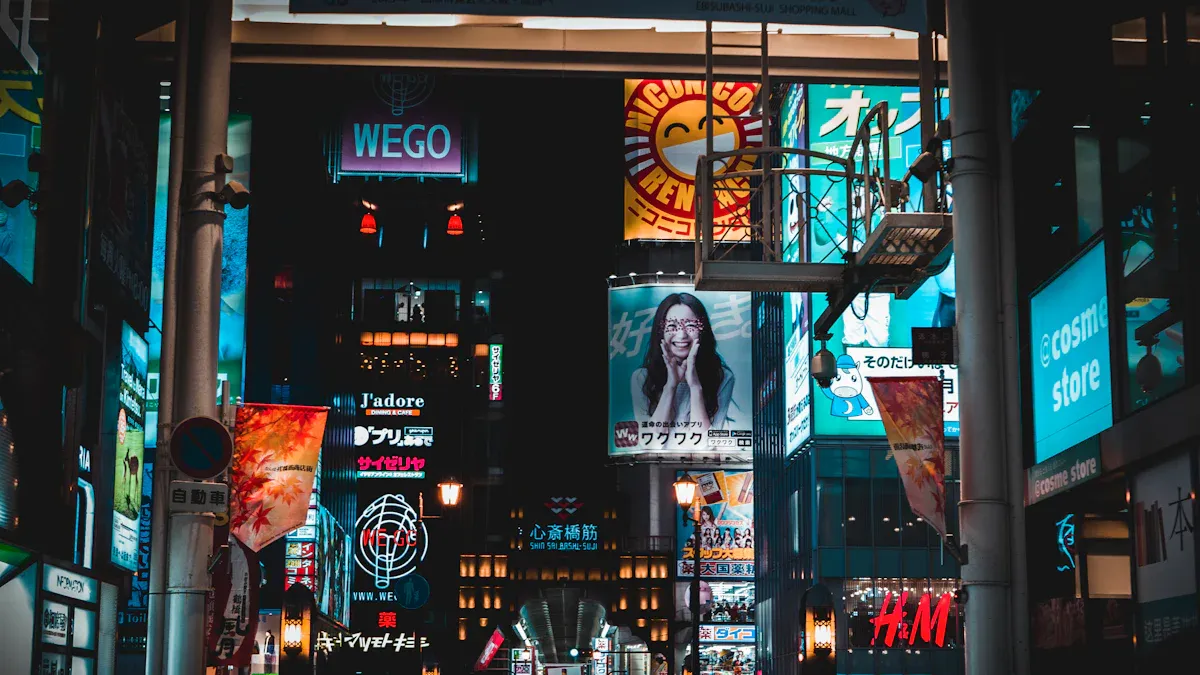
Digital signage is changing quickly as its value goes up. Experts think the global market will be worth USD 33.56 billion by 2026. Technology like AI, mixed reality, and advanced media networks help this growth. You see more personalized and interactive signage now. Hyper-personalization and immersive digital environments make this possible. These changes let you share targeted content. This content attracts and engages your audience.
Shenzhen TopAdkiosk Display Technology Co., Ltd.
Add.: 2F, Bldg 10, Changfeng Industrial Park, Dongkeng, Fenghuang, Guangming, Shenzhen, China 518132
Mobile/WHATSAPP: 86-138 25769658
Email: marketing@topadkiosk.com topadkiosk@gmail.com
Skype: pghenry1
Wechat: adkioskhenry
English Web.: http://www.topadkiosk.com/
https://www.topkioskdisplay.com/
http://www.ad-kiosk.com/
https://www.toplcddisplay.com/
http://www.multitouchdigitalsignage.com/
https://www.youtube.com/channel/UCYVYNJHxLVEcQD8fuUxXNTA/videos?view_as=subscriber
https://www.facebook.com/TOPADKIOSKSHENZHEN/?ref=bookmarks
Key Takeaways
Digital signage is growing fast. It may be worth USD 33.56 billion by 2026. Businesses can use digital signage to get more customers. This helps them talk to people better.
AI personalization makes customer experiences better. It gives people content made just for them. Use AI tools to see what your audience likes. This can help you get more people interested.
Interactive digital signage uses touchless and gesture-based screens. These screens are safer and more fun to use. Try these new technologies to bring in more customers.
Sustainability is very important in digital signage. Pick displays that use less energy. Use modular hardware to save money and help the planet.
Remote monitoring and subscription models make digital signage easier to manage. These ideas help businesses keep up with new changes.
Digital Signage Trends for 2026
Market Growth and Expansion
Digital signage will grow quickly in 2026. Many things help this industry get bigger. Stores, airports, hospitals, and schools use digital signage instead of old signs. You can change what shows on the screens right away. Bright displays catch people’s eyes and make them pay attention. This helps brands get noticed and connect with people.
More companies use cool and lively ways to share messages. These ways make messages easy to remember. New technology also helps the market get bigger. You see more LED, LCD, and clear screens. These screens use less power and shine brighter. Smart cities use digital signage to give people information. Outdoor screens show up in more places, like downtown and highways.
Here are the main reasons digital signage is growing:
Businesses want to update signs fast and talk with customers.
AI tools help you learn what people like to see.
Programmatic solutions let you set up signs to change by themselves.
Better screens make signs look great and work well.
iot-enabled experiences link signs to smart gadgets.
Because of these changes, digital signage will get more advanced. This means new ways to earn money and show ads outside.
Media Network Convergence
Digital signage networks now work with other media platforms. TV, online videos, and digital signage mix together. This makes it easier to see how people react to content. You can check how people use screens and devices.
Advertisers want to know more than just how many times ads show. They want to see if people pay attention to their ads. "Convergent TV" means TV and digital platforms come together. This helps you reach people wherever they are.
Media network convergence changes digital signage in these ways:
Tools measure how people interact with signs and screens.
Advertisers want clear results from their campaigns.
Companies that share info across platforms lead the way.
Digital signage connects with social media, apps, and streaming.
Content triggers help send the right message at the right time.
This trend lets you make smarter ads and learn more about your audience.
Campaign Focus
You should use data and technology to make your campaigns better. Good campaigns use predictive analytics and content triggers. These tools help you send messages that fit each person.
iot-enabled experiences connect signs with sensors and phones. This lets you make signs that change when something happens. For example, a sign can show a new message if it rains or gets dark.
Keep your messages simple and use strong colors. Clear messages help people understand fast. Bright LED signs make your ads stand out, even outside.
In 2026, campaign-focused strategies will push digital signage forward. More brands will use digital signage to connect with people and check results right away. The industry will reward those who use new tech and focus on what works.
Tip: Use data tools and interactive features when planning your campaigns. This will help you stay ahead as digital signage changes fast.
AI Personalization in Digital Signage
AI personalization is changing digital signage. It helps you make each customer’s experience special. This technology lets you show the best content to each person. You can reach people at the right time. More people pay attention and respond to your signs. AI makes digital displays smarter. These displays learn from your audience. You can make the customer experience better. Every journey can feel more important.
Predictive Analytics
Predictive analytics helps you plan what to show. You use live data to change messages. Machine learning helps you know who is watching. Computer vision sees how people react and what they like. Natural language processing makes messages fit each viewer.
You can use advanced analytics to:
Show content when your audience is most active.
Change messages if the weather or time changes.
Guess traffic patterns for better sign placement.
Make content automatically to save time and money.
AI-driven personalization can boost conversion rates by 34%. You can use live audience signals to show different ads. The ads change based on who is nearby. This makes your digital signage more fun and useful.
Hyper-Personalized Content
Hyper-personalized content makes each journey feel special. You can show different messages to groups by age or gender. AI systems look at who is watching and change the content. This helps you make things feel personal and get more people interested.
More than 40% of shoppers say digital displays help them buy things. This happens when the content is right and close to where they shop. AI-powered facial recognition and live analytics help signs change for each viewer. You can use AR technology to make cool experiences that help sales.
Feature | Description |
|---|---|
Personalized Content Delivery | AI looks at what users do and shows special content. This gets more people interested. |
Real-time Data Analysis | AI changes what is on the screen using live info like weather and traffic. |
Optimized Content Placement | AI picks the best spot and time for content to get the best results. |
Tip: Use AI personalization to make every customer’s journey better and more fun. This helps you stand out in digital signage.
Interactive Digital Signage Trends
Touchless and Gesture-Based Screens
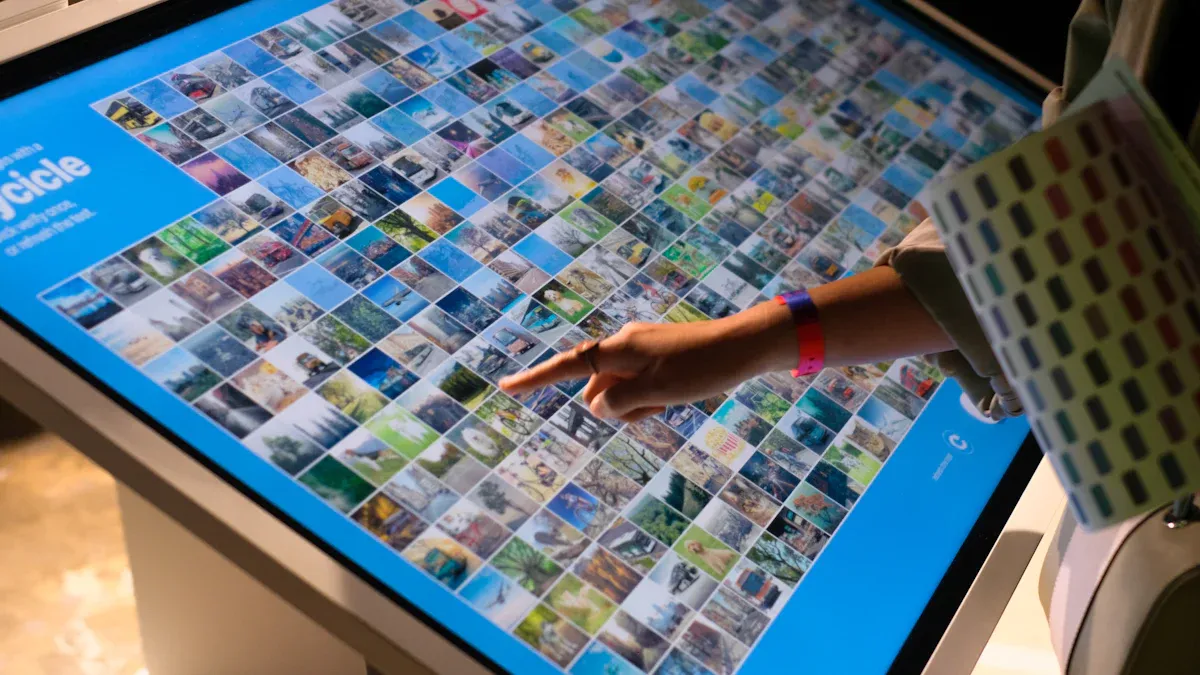
Interactive digital signage does not need you to touch it. In 2026, many businesses use touchless and gesture-based screens. This keeps places clean and safe for everyone. You can wave your hand or talk to control the screen. These ways work well in busy places like malls and hospitals. Researchers keep making these screens smarter. Gesture recognition and voice control let you interact in new ways.
Touchless screens have many good points:
Customers get more involved
Businesses work faster
More people buy things
You can change content right away
You get useful information
Customers enjoy a better experience. People feel safer when they do not touch public screens.
AV-over-IP Video Walls
AV-over-IP technology changes how video walls work. You send audio and video over a network instead of old cables. This makes setting up big displays easier in many places. You can add screens or move them with little effort. AV-over-IP lets you grow your digital signage quickly. It also gets your system ready for the cloud. Experts think this market will get much bigger by 2033.
With AV-over-IP, you get:
Flexible ways to show your content
Easy updates for your screens
Lower costs for big projects
You can show interactive content on many screens at once. This keeps your audience interested and helps you share your message.
Robotics Integration
Robotics now works with interactive digital signage. Robots can move and show content to people. You can use robots in stores, hotels, or airports. They answer questions, guide visitors, or show ads. This makes things more fun and helpful. Robots use sensors to find where people are. They change their message based on who is close.
Robotics helps you get more people involved and makes your signage special. This technology lets you build a smart and interactive place.
Immersive Experiences and Design
AR/VR Environments
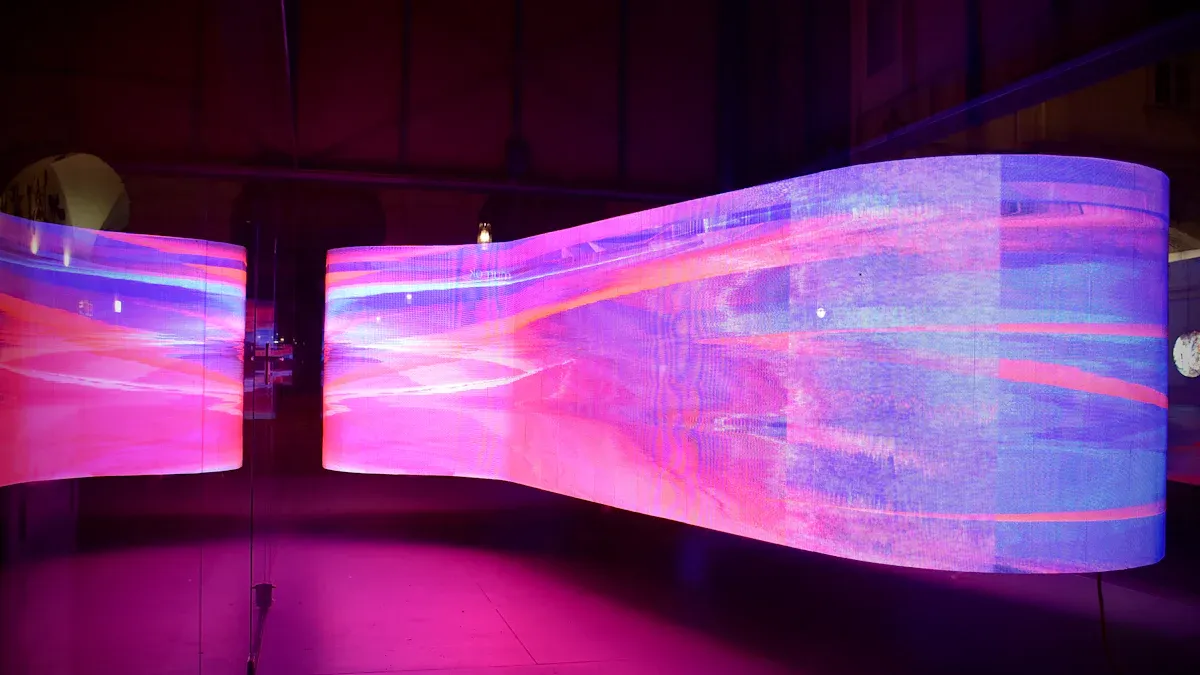
You can use AR and VR to make cool experiences. These tools mix the digital world with the real world. Many brands use mixed-reality to get people interested. Museums now have AR exhibits that are fun to see. Some walkthroughs do not need you to wear a headset. You can use your phone to upload avatars and talk to displays. Cultural places use AR for stories and fun exhibits. At big events, mixed reality and IoT make things more exciting. You might see holograms and 360° videos that help brands stand out.
Phones let you interact and make things personal.
High-Performing LED Signs
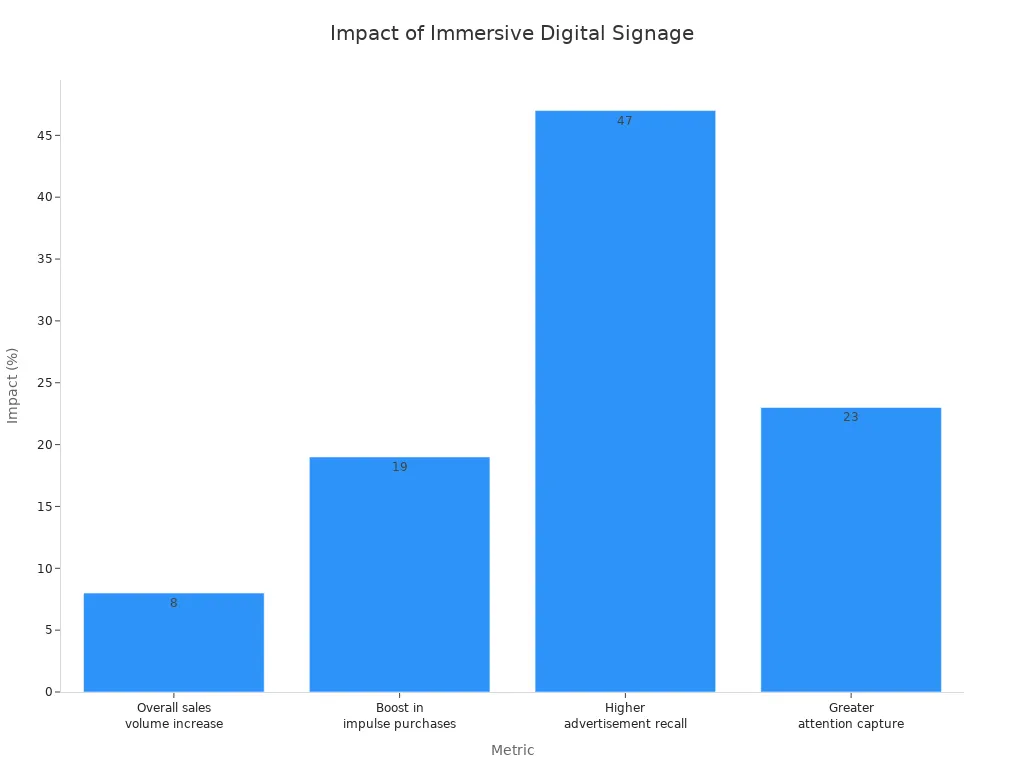
High-performing LED signs help you get noticed fast. These signs use less energy and shine very bright. You can get your money back in 9 to 18 months. Stores see sales go up by 32% with digital signage. People remember ads 55% more with these signs. LED and AI upgrades can save up to 80% on energy. These signs work great in busy places and reach more people.
Metric | Impact |
|---|---|
Sales volume increase | 8% |
Impulse purchases boost | 19% |
Advertisement recall | 47% |
Attention capture | 23% |
Simple Messaging and High Contrast
Simple messages and high contrast make signs easy to read. Use dark words on a light background or the other way around. High contrast helps people see your sign from far away. Bright colors get more attention than dark ones. Leave space around words and pictures so it does not look crowded. Put one main message with a short headline on each screen. This helps people know what you mean fast. Using the same style on all screens makes things feel connected.
High contrast helps people see and read signs.
Bright colors and space make signs more interesting.
One main message per screen helps people understand fast.
Tip: Make your design simple and your message clear. This will help your digital signage work best.
Sustainability and Eco-Friendly Solutions
Energy-Efficient Displays
You can use less energy by picking the right screens. New tech helps you save power and money. Many companies use ENERGY STAR-rated screens and low-power players. These choices lower costs and help the planet. Smart scheduling turns screens off when no one is there. E-paper displays use very little energy for still pictures. Modern software finds waste and helps you fix it fast. Remote tools let you change settings from anywhere.
Innovation Type | Description |
|---|---|
ENERGY STAR-rated screens and low-power players save money. | |
Smart Scheduling | Sets screen times to stop wasting energy. |
Eco-friendly materials | Uses recycled parts and designs that are easy to recycle. |
Low-power display options | E-paper screens use almost no energy for still content. |
Software management | CMS platforms find and stop extra screen use. |
Touchless technology | Gesture and voice controls save power and keep screens clean. |
High-resolution displays | 4K and 8K screens look sharp and use less power. |
Upgrade parts instead of changing the whole screen. | |
Remote management | Change and check screens to save energy and cut trips. |
You can see big changes in how much energy is used:
Technology Type | Energy Consumption Comparison |
|---|---|
Conventional Displays | 40 to 100 kWh each year |
ENERGY STAR LED Displays | About 4% less than old screens |
Philips 3000 Series | Uses 50% less energy |
E-paper Displays | Single-digit kWh each year |
Modular and Recyclable Hardware
You help the earth by picking modular and recyclable hardware. Modular designs let you fix or upgrade parts. You do not need to buy a new screen. This cuts down on electronic waste and saves resources. Many screens use metal and glass. These materials last longer and are easy to recycle. Some brands use over 90% recycled materials in their stands. You keep harmful waste out of landfills and make your signage safer for the planet.
Green Content Strategies
You can make your digital signage greener with smart content choices. Try these best ideas:
Use energy-saving screens like LED displays with ENERGY STAR labels.
Pick e-paper screens for signs that do not change often.
Switch from printed posters to digital content to cut waste and pollution.
You also help the planet by setting power schedules and using automatic brightness controls. Remote tools let you check and change energy use. E-paper price tags can cut pollution by thousands of times compared to paper tags.
Digital signage shows ESG data in a way people can see and trust. You can share your green efforts with everyone.
You make better experiences for your audience and help the earth at the same time.
Operational Shifts and Future Outlook
Subscription Models
More companies now use subscription models for digital signage. With these models, you pay a fee each month for hardware, software, and support. You do not have to buy everything at the start. This makes it easier to handle costs and try new things. Subscription plans give you updates and security fixes. You always get the newest technology without paying a lot at once. Many businesses like this because it helps with planning and keeps systems current.
Remote Monitoring
Remote monitoring changes how you look after your digital signage. You can check screens from anywhere you are. This means you can fix problems quickly and keep content working. You get alerts if a screen has trouble. You can update what shows or change settings without going to each place. This saves both time and money.
You keep screens working with fast alerts and remote checks.
You work better by updating content and settings right away.
You can grow your network from a few screens to many.
You spend less by making fewer trips for repairs.
You get better reports with proof-of-play and rule checks.
A big company uses remote dashboards to plan content for teams, get alerts when screens stop, and change brightness to save energy.
You can also watch devices, restart screens, and check HDMI links. This makes your network stronger and easier to control.
Workforce Training
You need to teach your team how to use new technology. Good training helps everyone learn and get used to changes. The best training follows these steps:
Explain why the change is important.
Help people want to support the change.
Show how to use the new system.
Practice new skills to get better.
Keep learning so skills stay strong.
You can use online classes, guides, and help tools. Training should fit each person’s job. Ongoing help stops mistakes and builds trust.
Recommendation | Description |
|---|---|
AI-native hardware | Pick hardware ready for AI features. |
Centralized platforms | Use systems that control all screens from one place. |
Scalability | Choose solutions that grow with your business. |
Immersive solutions | Add high-brightness displays for a better experience. |
Sustainability | Plan for long-term use and eco-friendly practices. |
You will face new problems like finding skilled workers and following new rules about emissions. You also need to connect new technology with old systems. If you get ready now, you can lead in digital signage.
You notice digital signage is changing how businesses talk to customers. Here are some important things for your business to remember:
Cloud-first control helps signs work well, even offline.
Self-service and AI make content faster and more helpful.
Mobile handoffs and immersive formats give people better experiences.
Advantage | Benefit |
|---|---|
Quicker reactions and smarter messages | |
Customer service options on screens | More loyal customers and more visits |
Advanced digital displays can bring in 24% more people.
Smart technology helps you get better results for a long time.
Be ready to change and try new digital tools so you can lead in 2026.
FAQ
What is digital signage?
You use digital signage to show messages, ads, or information on screens. This system helps you reach people in stores, schools, or public places. You can change content quickly and make it fit your needs.
How does interactive signage work?
Interactive signage lets you control screens with gestures or voice. You can wave your hand or speak to get information. This makes your experience safer and more fun in busy places.
Why is digital technology important for signage?
Digital technology helps you update signs fast and show clear images. You can use smart tools to learn what people like. This makes your signs more useful and helps you connect with your audience.
How can you make signage eco-friendly?
You choose energy-saving screens and recycled materials. You set schedules to turn off screens when not needed. These steps help you save power and protect the planet.
What skills do you need to manage digital signage?
You learn how to use new systems and software. You practice updating content and fixing screens. Training helps you work better and keep your signage running smoothly.
See Also
Exploring Emerging Digital Signage Trends for 2026
Innovations in Digital Signage Technology Expected in 2026
How Outdoor Digital Signage Is Changing Urban Environments
Seven Key Trends in Digital Signage Player Technology
Key Factors That Make Digital Signage Essential for Businesses
