Digital Signage Trends Shaping Tomorrow’s Technology
Add.: 2F, Bldg 10, Changfeng Industrial Park, Dongkeng, Fenghuang, Guangming, Shenzhen, China 518132
Mobile/WHATSAPP: 86-138 25769658
Email: marketing@topadkiosk.com topadkiosk@gmail.com
Skype: pghenry1
Wechat: adkioskhenry
English Web.: https://www.topkioskdisplay.com/
http://www.ad-kiosk.com/
https://www.toplcddisplay.com/
http://www.multitouchdigitalsignage.com/
https://www.youtube.com/channel/UCYVYNJHxLVEcQD8fuUxXNTA/videos?view_as=subscriber
https://www.facebook.com/TOPADKIOSKSHENZHEN/?ref=bookmarks
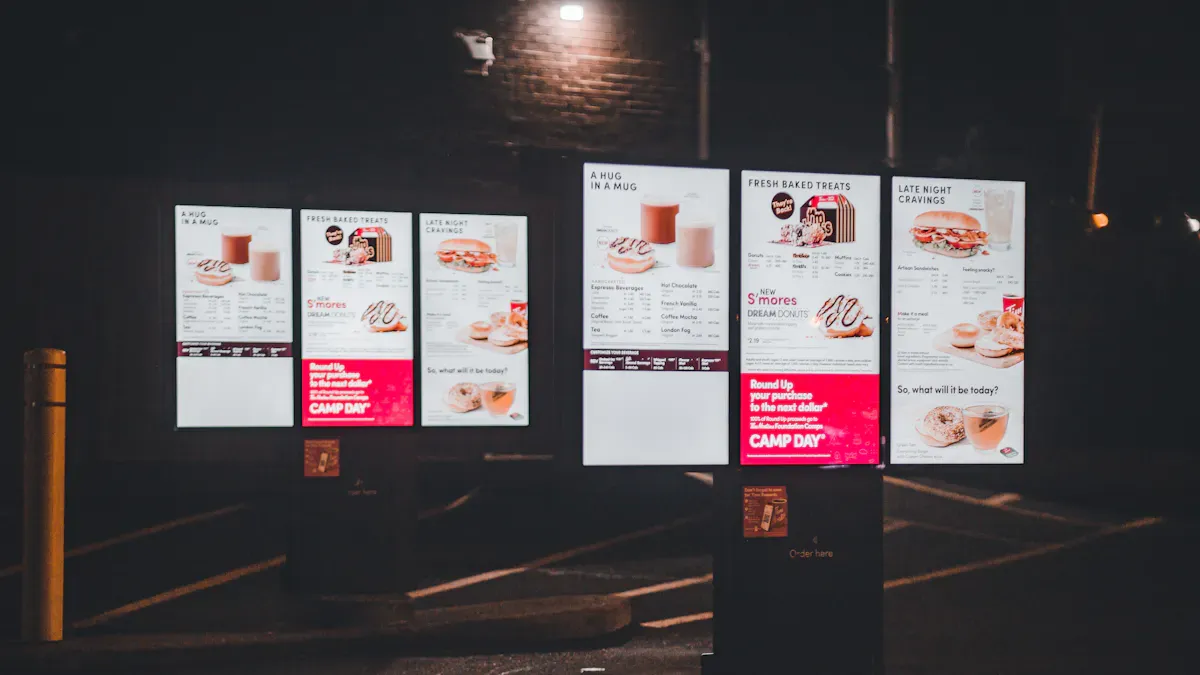
What digital signage trends will change how you use technology soon? The industry is growing very fast. Market values may double in ten years. Digital signage is more than just screens now. You can use touchless and voice controls. AR gives you immersive experiences. Displays can change to fit your needs. Accessibility helps more people use these tools. AI-driven content makes things smarter. Cross-platform integration connects different devices. These features help you and your business a lot.
Key Takeaways
Touchless and voice interfaces help keep people safe. They make digital signage easier to use. You can get information fast without touching anything.
AI-driven content makes your experience more personal. It shows offers and information that fit you. It uses your likes and where you are.
Cloud solutions let people manage signs from far away. They can update signs right away. This saves time and keeps everything in one place.
Energy-efficient displays use less power and cost less. Eco-friendly materials help the planet. They make your digital signage better for the environment.
Accessibility features help everyone use digital signage. They help businesses follow rules. They let more people see the signs.
Digital Signage Trends In Interactivity
Touchless And Voice Interfaces
Touchless and voice interfaces are changing how people use digital signage. These tools let you use screens without touching them. You can give voice commands or use hand gestures. This makes it easier to get information. The pandemic made many businesses use touchless technology. People wanted safer ways to interact. A 2021 Forrester report said 63% of customers like contactless tech in public places. Verizon put voice-activated screens in over 1,400 stores. Customers liked them, and sales went up even during Covid.
Touchless tech lets you use screens without touching them.
Voice and gesture controls help more people use displays.
Health and safety needs made contactless screens popular.
Airports, museums, and stores use touchless systems.
You get safer and easier ways to use digital signage. Touchless and voice tools help you get content fast. These trends will keep growing in 2026. More screens will answer to your voice or gestures.
Mobile And Gesture Integration
Mobile and gesture integration make digital signage more fun. You can scan QR codes to see menus or control screens with your phone. BrightMenu and BrightLink let you order food or find your way without touching anything. Gesture systems turn on screens when you walk by. AI sensors make the experience feel real. You can move your hand or use your phone to interact.
Mobile integration links your phone to digital signage.
Gesture recognition lets you use screens without touching.
Proximity sensors and AI gestures make things more interesting.
These features turn watching into doing.
You get more personal and fun ways to use digital signage. Restaurants, airports, and stadiums use these tools to help people. Trends in interactivity will change how you get information in 2026. More screens will change based on what you do and like.
AI And Dynamic Content
Personalized Experiences
AI makes digital signage change quickly. Screens do not show the same thing to everyone. They use smart tools to learn about you. When you walk by, the screen can greet you. It can show deals you might like. This makes you feel special. It keeps you interested. AI helps businesses show messages at the right time. You get offers that fit your age or where you are. Sometimes, the weather changes what you see. These triggers help you find things faster.
Here is how AI-driven personalization helps you and businesses:
Benefit | Description |
|---|---|
Customer Engagement | Personalized content grabs your attention. It makes you want to learn more. |
Higher Conversion Rates | Targeted messages make you more likely to buy or act. |
Personalized Offers | Special deals for you increase your chance of making a purchase. |
Relevance of Content | AI shows you what matters most. You stay interested. |
Efficient Ad Spend | Businesses save money by reaching the right people at the right time. |
You see ads and information that are more useful. Businesses get better results. In 2026, screens will be even smarter. They will know what you want before you ask.
Adaptive Displays
AI helps displays react to things around them. Modern screens use sensors and cameras to collect data. They can change brightness or color. They can change the message based on the crowd or weather. You might see a drink ad on a hot day. You might see a coat ad when it rains. These real-time changes make signs more helpful and fun.
You benefit from these features:
Intelligent content management systems use AI and big data to pick the best message for you.
High-resolution LED and OLED screens show clear, bright images that last longer.
Advanced sensors let displays adjust to light, sound, or movement.
Smart scheduling and predictive maintenance keep screens working without problems.
You get new and useful content every time you look at a screen. Businesses save time and money because AI can fix problems before they happen. In 2026, digital signage will feel alive and always ready to help.
Cloud Solutions And Remote Management
Centralized Control
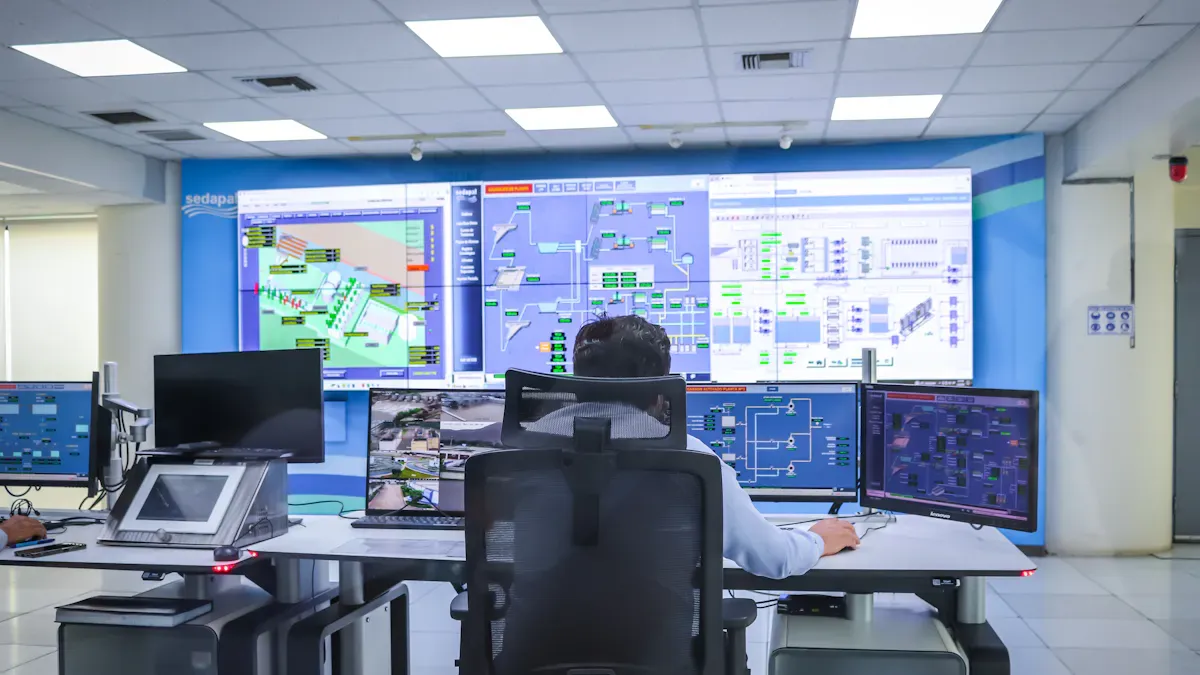
Cloud-based digital signage gives you the power to manage screens from anywhere. You do not need to be in the same place as your displays. You can update messages, videos, or menus with just a few clicks. This makes your work faster and easier. You can control hundreds of screens in different cities at the same time.
You get a single platform to update content instantly.
You can change digital signage content triggers for special events or sales.
You do not need a big IT team to handle updates.
You save money because you need less hardware and software.
You can keep your content fresh and relevant. Real-time updates help you share important news right away. In 2026, more businesses will use cloud solutions to grow their networks without extra cost.
Security And Scalability
Cloud-based systems bring new security needs. You must protect your screens from hackers and data leaks. Common threats include malware, ransomware, and network attacks. You can keep your system safe by using regular updates and strong passwords. You should also train your team to spot risks.
Regular backups keep your data safe if something goes wrong.
Network segmentation stops hackers from reaching all your screens at once.
Physical security and incident response plans help you act fast during problems.
Continuous monitoring finds and fixes security gaps quickly.
You can scale your digital signage network as your business grows. You do not need to buy lots of new equipment. Cloud solutions let you add new screens or locations with ease. In 2026, you will see even more secure and flexible systems. You can trust your network to stay safe and grow with your needs.
Sustainability In Digital Signage
Energy-Efficient Displays
You can help the planet by picking energy-efficient displays. These screens use less power than old ones. New displays have special features to save energy. They have brightness controls and sleep modes. These tools help you use less electricity every day. MicroLED technology is special because it uses even less power. You can save money and help the earth at the same time.
Here are some smart ways to save energy:
Evidence Description | Energy Saving Strategy |
|---|---|
Picking screens with low-power settings, brightness controls, and sleep modes cuts down on energy use for big networks. | Low-power hardware selection |
Using energy-saving hardware can lower your bills and help the environment. | Cost reduction and sustainability support |
Turning off screens with a central system stops wasting energy at night or on weekends. | Automated controls for energy management |
MicroLED screens use less power than other types, so they are better for the planet. | Adoption of energy-efficient display technology |
You can use a central system to turn off screens when not needed. This step stops energy waste when no one is around. BCI Bank used remote controls to save energy after hours. You can do this too to make your network greener.
Energy-efficient displays help lower your electric bills.
Automated controls stop wasting power at night or on weekends.
Low-power hardware helps you reach your green goals.
Eco-Friendly Materials
You can help the earth by using eco-friendly materials in your digital signage. Many companies use recycled plastic, aluminum, or glass now. These materials are better for the planet. You can pick hardware that lasts longer to make less waste. Taking care of your screens keeps them working and out of landfills.
Strategy | Description |
|---|---|
Content Design | Use dark backgrounds and fewer moving images to save energy. |
Centralized Management | Set screens to turn off when not needed. |
Hardware Selection | Pick displays that last long and use little power. |
Maintenance Practices | Check and fix hardware often to make it last longer. |
More people want green products in 2026. A survey showed shoppers will pay more for eco-friendly items. By using green materials and smart habits, you show you care about the earth. This helps your business and the world.
Immersive Experiences
AR And 3D Displays
Digital signage is changing quickly with AR and 3D displays. These tools make screens more exciting for everyone. AR lets you see digital pictures in the real world. You can try on clothes without actually wearing them. You can look at 3D products right in front of you. Shopping and learning become more fun and interactive.
3D and holographic displays show products in cool new ways. You see brighter colors and shapes that look real.
AR lets you join in instead of just watching. You can touch, move, and explore digital things.
Samsung’s Spatial Signage uses 3D to make displays stand out. Messages look real and grab your attention.
Warehouses use AR glasses for training. Workers see digital instructions on real equipment, so learning is easier.
By 2026, more businesses will use 3D signage and AR for marketing. Stores, museums, and airports will use these tools to make experiences memorable. Brands will build virtual worlds with VR. You can explore products and spaces in new ways.
AR and 3D displays change how you use digital signage. You become part of the story, not just someone watching.
Invisible Technology
Invisible technology helps digital signage fit into your surroundings. You see information on glass walls or windows without blocking your view. Stores show deals and product details on glass. You can look inside and see offers at the same time.
Transparent OLED displays let you see real things and digital content together. You see both at once.
Museums project information near exhibits. You get facts without missing the artifacts.
Offices use glass walls to share news and updates. You get information without making the workspace messy.
Airports and train stations show arrival times and directions on glass. Spaces stay clean and open.
Invisible displays give you information without making you feel crowded. By 2026, you will see more smooth digital signage in public places. These displays make stories better and help you enjoy your visit.
Accessibility And Inclusion
ADA Compliance
Digital signage should be easy for everyone to use. ADA compliance keeps your business out of legal trouble. It also helps people with disabilities. In 2026, big companies must follow new rules. Smaller businesses have until 2027. If you do not follow the rules, you could pay a $75,000 fine. If you break the rules again, the fine goes up to $150,000.
ADA compliance keeps your business safe from lawsuits.
Customers trust you more when you follow the rules.
People with disabilities can use your digital signage.
Some businesses forget about ADA rules. They focus on design and branding instead. You should care about accessibility now. ADA Title II and III have clear rules for screen placement. Screens must be between 27 and 80 inches from the floor. Use sans-serif fonts that are easy to read. Do not use flashing content.
Accessibility Aspect | Requirement |
|---|---|
Visual Accessibility | Use sans-serif fonts; minimum contrast ratio of 4.5:1 for body text and 3:1 for headers. |
Flashing Elements | Avoid rapidly flashing content to prevent seizures. |
Physical Accessibility | Position screens 27–80 inches from the floor for visibility and interaction. |
ADA compliance will matter even more in 2026. You can follow WCAG 2.1 Level A and AA guidelines. This helps you reach more people and keeps your business safe.
Multilingual And Audio Support
You can make digital signage better by adding more languages and audio. Airports, hospitals, and global businesses need to talk to many people. Technology lets you share information in different languages and ways.
Feature | Benefit |
|---|---|
Audio Descriptions | Help people with vision problems understand what is on the screen. |
Closed Captions | Help people who are deaf or hard of hearing. |
Voice Commands | Let people use screens without touching them. |
Gesture Controls | Make it easier for everyone to use the screens. |
High Contrast Templates | Make words easier to see for people with low vision. |
AIScreen and other tools now have audio tones and screen reader support. They also give tactile feedback. You can use these features to meet ADA standards. Accessibility rules say to use many languages and audio support. By 2026, more digital signage will have these features. You can make everyone feel welcome.
Tip: Plan for accessibility now. You will save money, avoid fines, and help everyone use your digital signage.
Future-Proofing Digital Signage
Modular Upgrades
Modular upgrades help your digital signage stay up-to-date. You can change parts instead of buying a whole new system. This saves money and keeps your screens working longer. You can add new features or update hardware as technology gets better in 2026. You do not have to worry about your system getting old.
You can make your signage fit what you need.
You can add more screens or sensors as you grow.
You only pay for what you use right now.
You can fix broken parts without stopping everything.
You help the planet by making less waste and using parts that can be recycled.
Tip: Modular upgrades let your network change easily. You can keep up with new trends without spending a lot.
Many businesses use modular upgrades to save money and manage their equipment better. You can rent hardware for a set monthly price. This helps you avoid sudden costs and get new upgrades automatically. Support and maintenance are included, so you do not need a big IT team.
Open API Integration
Open API integration helps your digital signage work with new technology. APIs let devices and platforms share information. You can connect screens, sensors, and software from different brands. This makes your system flexible and ready for new trends in 2026.
Open APIs give you one way to connect everything.
You can control all your screens from one place.
You can use cloud tools to check and update your screens.
You can add new features like AI, IoT, or voice controls easily.
A universal API makes things easier and faster to build. You can make networks that grow as your business grows. Open API integration keeps your digital signage ready for anything new.
Note: Pick solutions with open APIs. This helps your investment stay useful as technology changes.
You notice digital signage trends are changing quickly. AI, IoT, and cloud solutions help you make displays that fit your needs. These tools also let you show messages in many places at once. The table below explains what your business should remember:
Key Takeaway | Description |
|---|---|
Integration of AI and IoT | Smarter signage for better engagement |
Personalized Experiences | Tailored content for your audience |
Scalable Solutions | Consistent messaging across many locations |
To get ready for the future, you can do a few things. First, set clear goals and learn about your audience. Next, pick content types that work best for you. Keep an eye on new technology and update your signage when needed.
When you use flexible solutions, you get long-term rewards. Watch for new digital signage trends and change fast. This helps your business stay strong for a long time.
The Latest Digital Signage Trends in 2026
In 2026, the digital signage industry is undergoing a fundamental transformation. At its core, it is shifting from a specialised tool ("special forces") requiring expert knowledge, to a plug‑and‑play utility ("water, electricity, gas"). A single screen evolves into an AI‑driven smart platform that deeply integrates with business systems and is widely embedded into physical spaces and operational workflows.
Industry‑wide trends are reshaping its landscape, influencing various business segments at different paces.
🚀 Six Major Trends Reshaping the Industry
1. 🤖 AI: From "Artificial Stupidity" to "Productivity Engine"
AI is no longer hype – it is the core productivity engine. It is not a bolt‑on feature but a deeply embedded capability across content, operations, and data analytics.
Content generation: High‑quality copy, images, and even video can be created quickly using natural language instructions.
Hyper‑personalisation: Cameras and computer vision allow screens to recognise viewers in real time and dynamically adjust content – achieving true "one‑to‑one" targeting.
Operational automation: AI automatically optimises playback schedules based on peak performance times and content combinations; it can also predict equipment failures by analysing sensor data.
Business intelligence hub: AI integrates screen data with building traffic and other metrics to answer complex questions like "Which screen is most effective?" and to forecast market trends.
2. 📈 Integration: Customers Want a "Full‑Service Manager", Not a "Parts Seller"
Customer demands have shifted from cobbling together components to seeking a single, reliable "full‑service manager". The industry is moving from fragmentation to integration.
Requirement: Enterprises prefer a single vendor that provides software, content, and operational services, and that considers hardware lifespan and operational efficiency.
Trend: Large integrators are gaining advantage. The future competitive edge will be the comprehensiveness of the integrated service offering, not individual hardware specs.
3. ♻️ Green: A Quiet but Determined Sustainability Evolution
Environmental consciousness is moving from a slogan to a technical standard and market differentiator. Green, low‑carbon technology is reshaping the industry.
New options are maturing: Colour e‑paper technology, with dramatically lower energy consumption (no backlight, power only needed when refreshing content), has become viable. It is an ideal ultra‑low‑power solution for many scenarios.
Significant growth: Off‑grid digital signage with solar panels and energy storage is emerging, perfectly aligning with sustainability goals. Its global market is growing at a CAGR of 12.65%.
4. 🌿 Invisible: Screens Becoming the Texture and Décor of Spaces
The ultimate form of a display may be to become invisible. In 2026, hardware innovation focuses on making technology disappear into the environment.
Artistic textured screens: Brands like Auro (AUO) and Philips offer "art screens" covered with wood, stone, or other finishes. When off, they blend into the architecture; when on, they become visual focal points.
Ultra‑thin transparent screens: Double‑sided MicroLED panels are as thin as 14–20 mm. Transparent LED and film‑type displays allow images to float on glass without obstructing the view.
Creative form factors: Foldable 135‑inch LED displays and kinetic, moving "dynamic LED installations" dramatically expand the creative boundaries of digital signage.
5. 🔐 Managed Signage: A Paradigm Shift from Buying Products to Buying Services
As systems become more complex, enterprises are moving from purchasing hardware to purchasing full‑service packages, creating a proactive managed services market.
Requirement: Enterprises want partners to provide lifecycle management including software, hardware, and content – to reduce risk, extend life, and free internal IT teams.
Trend: Display giants now see managed services as key to optimising hardware performance. This marks a shift from product sales to service‑based models.
6. 📊 Software‑First: The "Soul‑Deciding" Battle for Commercial Success
While hardware innovation continues, the competitive battleground has shifted to software experience and business insight.
Requirement: Enterprises need meaningful insights from data and intuitive platforms that simplify operations and improve overall efficiency.
Data is king: The ability to precisely quantify KPIs and prove business value has become the determinant of success.
🌐 Pace of Adoption Across Three Key Sectors
These macro trends are evolving at different speeds in different industries, providing clear action coordinates for managers:
Retail (fast lane): Fastest adoption – AI‑driven predictive analytics, automated content generation. The window‑display signage market is growing at 8.4% CAGR, with over 65% of deployments focused on boosting sales conversion. Retail is evolving from "selling space" to "data‑driven smart experience spaces".
Healthcare (middle lane): Digitalisation is accelerating. The healthcare digital signage market is growing at 13.5% CAGR and is expected to reach $20.85 billion by 2034. Growth is driven by improving patient experience and operational efficiency. Healthcare signage is moving from "back‑office screens" to "data‑driven smart hospital touchpoints".
Corporate / Transport (base lane): Adoption is more conservative – signage is seen as reliable infrastructure. Integration and managed services are the dominant trends. Stability, reliability, and control are top priorities. The market is shifting from fragmented hardware procurement to standardised, scalable solutions.
💎 Conclusion
In 2026, digital signage becomes smarter through AI, more hassle‑free through integration, and indispensable through proven business value. It has transformed from a cool screen into a critical component that blends into spaces, drives decisions, and embeds into business processes.
FAQ
What new digital signage trends should you watch for in 2026?
You will see more touchless controls and AR displays. AI will make screens smarter and show things you like. Businesses will use cloud solutions to keep screens updated. Modular upgrades help screens stay new longer.
Tip: Read industry news often so you know about new trends.
How does AI improve digital signage for you?
AI helps screens show things you care about. You see ads and info that match your interests.
Offers just for you
Updates happen right away
Scheduling is smarter
AI will make screens answer faster in 2026.
Why is sustainability important in digital signage?
Sustainability helps you use less energy and protect nature. Energy-saving screens and recycled materials cut down waste.
Benefit | Impact |
|---|---|
Lower bills | Save money |
Green hardware | Help the planet |
In 2026, more companies will pick eco-friendly choices. |
How can you make digital signage accessible for everyone?
You can use ADA-compliant designs and add audio support. Offering many languages helps more people use screens.
Note: Accessible signage helps everyone and keeps you out of trouble.
By 2026, new rules will ask for better accessibility in digital displays.
See Also
Exploring Digital Signage Innovations That Will Define 2026
Latest Developments in Digital Signage Technology for 2026
Seven Key Trends in Digital Signage Player Technology for 2026
Innovative Outdoor Digital Signage Trends Changing Public Areas
