Top Tips for Designing Digital Window Displays That Capture Attention
Shenzhen TopAdkiosk Display Technology Co., Ltd.
Add.: 2F, Bldg 10, Changfeng Industrial Park, Dongkeng, Fenghuang, Guangming, Shenzhen, China 518132
Mobile/WHATSAPP: 86-138 25769658
Email: marketing@topadkiosk.com topadkiosk@gmail.com
Skype: pghenry1
Wechat: adkioskhenry
English Web.: https://www.topkioskdisplay.com/
http://www.ad-kiosk.com/
https://www.toplcddisplay.com/
http://www.multitouchdigitalsignage.com/
https://www.youtube.com/channel/UCYVYNJHxLVEcQD8fuUxXNTA/videos?view_as=subscriber
https://www.facebook.com/TOPADKIOSKSHENZHEN/?ref=bookmarks
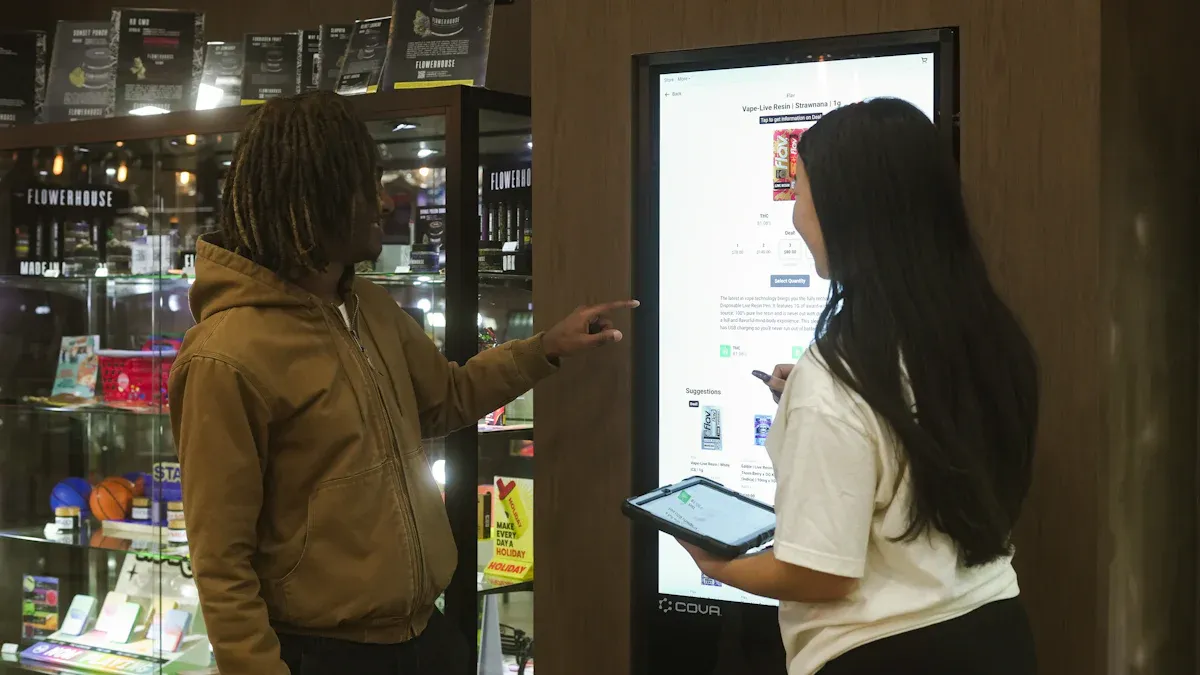
The best digital window displays grab your attention right away. You want something simple, bold, and placed where people can’t miss it. Interactive features and fresh content keep things interesting. In a busy street or mall, you need to stand out. Just look at Rebecca Minkoff’s store—her interactive screens get over 300 touches a day and have boosted sales by 30%. Think about what catches your eye when you walk past stores. Great window display ideas can turn a glance into a customer.
Key Takeaways
Make your digital window displays easy to understand. Show one main message so people notice it fast. Use bright colors that match your brand. Good colors can make people feel things and remember your brand. Add movement and animation to your display. Slow motion can get more people to look without being too much. Put screens where people can see them easily. This helps people walking by see and use your display. Change your content often. New and live information makes your display fun and brings people back.
Simplicity in Digital Window Displays
One Message Focus
When you walk by a store, you probably notice the display first. That’s why you want your digital window displays to send one clear message. People only have a few seconds to look, so you need to make it count. If you try to say too much, shoppers might not remember anything at all.
Pick one thing you want people to know. Maybe it’s a special sale or a new product.
Use big, easy-to-read text and a strong image.
For example, a bakery could show “Freshly Baked Croissants – $2.50” with a mouthwatering photo. That simple message can pull people inside.
This approach works because it helps customers understand your offer right away. You give them a reason to stop and check out your store. That’s the heart of effective window design.
Avoiding Clutter
Clutter can ruin even the best ideas. If your screen is packed with too many words, pictures, or colors, people might just walk by without noticing anything. You want your display to feel open and easy to read.
Tip: Less is more. Leave some empty space so your main message stands out.
Here’s how you can keep things simple:
Stick to one main image or product.
Limit the number of colors and fonts.
Make sure your message is easy to spot from a distance.
When you keep your display clean, you help customers focus on what matters. This is a key part of effective window design and visual merchandising. Simple displays often get more attention and bring more people into your store.
Strategic Color Use
Color Psychology
Color grabs attention before words do. When you design digital window displays, you want to pick colors that spark the right feelings. Red can make people feel excited or even a little urgent. That’s why you see it in big sales or limited-time offers. Blue feels calm and trustworthy, so banks and tech stores use it to build trust.
Did you know that shoppers form opinions about products in just 90 seconds? Most of that first impression comes from color. In fact, color can boost brand recognition by up to 80%. If you use color ads instead of black and white, people read them 42% more often. Here’s a quick look at how color impacts engagement:
Color Scheme | Engagement Impact |
|---|---|
Color Advertisements | Engage customers 42% more than black and white |
Aesthetics | 52% of shoppers won't return based on aesthetics |
So, when you choose colors for your display, think about the mood you want to set. The right color can turn a quick glance into a longer look.
Brand Alignment
You want your window display to feel like it belongs to your brand. Colors help you do that. They act like silent ambassadors, showing off your brand’s personality without saying a word. If your brand uses green and gold, stick with those shades in your display. This helps shoppers recognize you right away.
Research shows that up to 90% of snap judgments about products come from color alone. That’s huge! When you match your display colors to your brand, you build trust and loyalty. You also make your visual merchandising stronger because everything feels connected.
Colors build a unique brand identity.
They create emotional connections with your audience.
Pick colors that match your brand and the message you want to send. Your display will stand out and feel true to your business.
Motion and Animation

Attract with Movement
Moving things catch your eye very quickly. If you add motion to digital window displays, people will notice. Even a little animation can make someone stop and look. The display feels alive, not just like a regular sign.
Look at what some studies found:
Study/Source | Key Findings |
|---|---|
2020 Study in Vision Research | Motion makes the brain want to look at moving things. |
OAAA/Nielsen Study | Digital billboards are remembered by 55% of people. Static ones are only remembered by 28%. |
Arbitron Outdoor Study | People look at digital billboards 63% longer. They also stare at them 47% more. |
Color Research & Application | High-contrast colors help people see and understand messages faster. |
You can use simple animations, like text that slides or a product that turns slowly. These ideas help your display get noticed on a busy street. In visual merchandising, movement can make people more interested.
Prevent Overload
Too much movement can be confusing. You want people to notice, but not feel lost. Keep your animations easy to follow. Make sure your main message is always clear, even if other things move.
Tip: Use gentle motion for background or extra parts. Let your main message stay still and easy to read.
Here are some ways to keep things simple:
Use smooth changes between messages.
Make the animation speed match how long people usually look.
Do not use flashing or fast-moving graphics that can bother people.
If you use motion the right way, your digital window displays will get attention without making people feel dizzy. The right amount of movement keeps your message strong and your store welcoming.
Screen Placement
Eye-Level Positioning
You want your digital window displays to catch people’s eyes right away. The best spot for your screen is at or just below eye level. This makes it easy for shoppers to see your message without straining their necks or squinting. Ergonomic research shows that screens work best when placed between eye level and thirty degrees below the line of sight. If you set your display too high or too low, people might miss it or feel uncomfortable.
Here’s how you can make your display more visible:
Place screens where most people’s eyes naturally land.
Adjust the height if your store attracts kids or taller adults.
Keep the main message centered so it’s easy to read.
When you use eye-level positioning, your display feels welcoming and grabs attention. This simple trick can boost your visual merchandising and help you stand out.
Foot Traffic Flow
You also need to think about how people move past your store. If you want your digital window displays to get noticed, you must study foot traffic flow. Look at where people walk, pause, or turn. Then, place your screens where they will see them.
Follow these steps to make the most of your display:
Check the line of sight. Put your signage where passersby can see it from far away.
Avoid obstructions. Make sure nothing blocks the view, like racks or pillars.
Pick the right location. Analyze busy spots and place your display where your target audience walks.
Tip: Watch how people move outside your store for a week. You’ll spot the best places for your screens.
Smart placement helps your display reach more people and makes your store feel inviting. When you combine eye-level positioning with smart traffic flow, your digital window displays become a powerful tool for attracting customers.
Fresh, Real-Time Content
Live Updates
You want your digital window displays to feel alive. Live updates make that happen. When you show what is happening right now, people pay attention. Imagine a screen that tells shoppers if a hot item is still in stock or if a flash sale just started. You can even show a countdown for a limited-time offer. These features make your store feel exciting and up-to-date.
Here’s a quick look at how real-time content helps your business:
Benefit | Description |
|---|---|
Real-time product availability | 92% of shoppers say they choose stores based on what is in stock right now. |
Adaptation of promotions | You can change promotions fast if you need to move inventory. |
Enhanced customer engagement | Fresh content keeps people interested and coming back. |
Urgency for limited-time offers | Countdown timers make people want to buy before time runs out. |
You can use live updates to show social media posts, weather, or even local news. People love seeing something new each time they walk by. This keeps your window display ideas fresh and makes your store stand out.
Tip: Try showing a “Just Arrived!” alert for new products. Shoppers will feel like they are getting the inside scoop.
Scheduled Changes
You do not have to update your display by hand every hour. Scheduled changes let you plan ahead. You can set your screens to show different messages at different times of day. Maybe you want to promote coffee in the morning and desserts in the afternoon. You can do that with a simple schedule.
Here are some ways to use scheduled changes:
Highlight breakfast deals in the morning.
Switch to lunch specials at noon.
Show evening promotions after work hours.
This approach saves you time and keeps your content relevant. You can plan your week in advance and let your displays do the work. Your customers will always see something that matches their needs.
Note: Regular updates show shoppers that your store is active and cares about their experience.
Interactive Digital Window Displays
QR Codes & Touchscreens
Interactive features make digital window displays exciting. QR codes and touchscreens let people do more than just look. Shoppers can scan QR codes with their phones. They get videos, coupons, or product details right away. This makes your display feel new and interesting.
Touchscreens are even more fun. People like tapping and swiping to see what happens. Shoppers can browse your catalog or check out new arrivals. They can watch demos right from the window. Sensors and motion make things even cooler. These features spark curiosity and invite people to interact. Your display stands out and keeps customers coming back for more window display ideas.
Tip: Use bright colors and gentle motion to help people notice your interactive screens.
Here are some ways interactive displays grab attention:
QR codes give quick access to deals and information.
Touchscreens let shoppers explore products and features.
Sensors and gesture controls create a fun, hands-on experience.
Gamified Engagement
Gamification makes shopping feel like a game. You can add challenges, rewards, or a “trail and win” mechanic. This guides customers through your store. When your display is playful, people stay longer. They feel more connected to your brand.
Check out how gamified features impact your store:
Feature Description | Impact on Dwell Time | Impact on Conversion Rates |
|---|---|---|
QR codes & touchscreens | Customers spend more time interacting | |
Gamification with rewards | Longer engagement | Higher brand loyalty and conversion |
“Trail and win” mechanics | More time spent in store | Exposure to priority products increases sales |
Gamified displays reward shoppers with personalized recommendations or discounts. You can use checkpoints or challenges to keep people interested. This helps them see more products. This turns window shopping into active participation. Your store becomes more memorable.
Note: Interactive and gamified displays help you build loyalty and increase sales by making shopping fun.
Social Proof Elements
User Content Display
You want shoppers to trust your store right away. One good way is to show real customer photos and stories on your digital window displays. When people see others using your products, they feel better about buying from you. User-generated content works because it feels honest and real. People trust other shoppers more than fancy ads.
Here are some facts:
Statistic | Description |
|---|---|
Prefer authenticity of user-created content over ads | |
29% boost in web conversions | Campaigns with UGC see significant increases in effectiveness |
You can use user content in lots of ways. Show photos from social media, short videos, or fun quotes from happy buyers. These window display ideas make your store look friendly and welcoming.
User content builds trust faster and costs less than ads.
Real customer stories matter more than polished campaigns.
User content shows honesty and helps people feel loyal to your brand.
When you use user content, you invite shoppers to join your story. They see themselves in your displays, so they want to be part of it.
Reviews & Testimonials
Reviews and testimonials make your digital window displays even stronger. Shoppers want proof that your products work well. When you show five-star ratings or short quotes from happy customers, people trust you more. You can highlight a review of your best-selling item or share a quick testimonial about your service.
Tip: Use big, bold text for the best reviews so everyone can see them from the street.
Try showing different reviews during the day. This keeps your display new and shows that many people like your store. When you use reviews and user content together, you build strong trust. People feel safe picking your store because they see real proof that others are happy.
Analyze and Adapt
Performance Tracking
You want to know if your digital window displays work. Tracking performance helps you see what grabs attention and what needs a change. Start by looking at a few key numbers. These numbers tell you how many people see your display, how many interact, and how many take action.
Here’s a simple table to help you understand the most important things to track:
KPI | What It Shows |
|---|---|
How many people see your display. This tells you about your display’s reach. | |
Engagement Rate | How many people interact, like tapping a screen or scanning a QR code. |
Conversion Rate | How many people take action, like using a coupon or coming into your store. |
You can use these numbers to spot trends. Maybe more people interact when you show a video or use bright colors. If you see a drop in views, you might need to move your screen or change your message.
Tip: Check your numbers every week. Small changes can make a big difference.
Data-Driven Refinement
You can make your displays better by using the data you collect. Look at what works and what doesn’t. Try new ideas and see how people react. This helps you keep your displays fresh and interesting.
Here are some smart ways to use data for better results:
Strategy | How It Helps You |
|---|---|
Track foot traffic, sales, and feedback to see what draws people in. | |
Digital Integration | Connect your window displays with your website or social media. |
Personalization | Show different messages based on time of day or customer interests. |
Analytics Tools | Use tools to see which content works best and when. |
A/B Testing | Try two versions of a display to see which one people like more. |
AI Content Optimization | Let smart software change your display based on real-time data. |
You don’t have to guess what works. Let the numbers guide you. When you test and tweak your displays, you keep people interested and coming back for more.
Emotional Connection
Resonant Visuals
You want your digital window display to make people feel something. The right pictures can turn a quick look into a memory. Colors, lighting, and stories all work together. Each one can make people feel different things. Warm colors like red and yellow can make people happy or excited. Soft lighting makes your store look cozy and friendly. If you tell a story with your display, people can picture themselves using your products.
Here’s a quick look at how different visual elements create emotional impact:
Visual Element | Emotional Impact |
|---|---|
Color | Evokes joy, nostalgia, or intrigue |
Lighting | Sets the mood and draws attention |
Storytelling | Engages viewers with a clear narrative |
Thematic Coherence | Makes everything feel connected and meaningful |
You can use decorations for holidays or special days. Change your window for each season or event. This keeps your store looking new and helps people remember good times. When your display matches the season, people feel memories from that time of year.
Change displays for holidays or local events.
Use props that fit the season, like snowflakes in winter or flowers in spring.
Create scenes that tell a story and change over time.
Emotional Messaging
Words are important, just like pictures. When you use emotional words, shoppers feel like you understand them. You might share a message about comfort, old memories, or excitement. These feelings help people remember your brand.
Check out how emotional messaging shapes what people remember:
Evidence Type | Description |
|---|---|
Feelings like nostalgia or comfort keep people interested and engaged. | |
Effectiveness | Emotional words make your brand feel authentic and easy to remember. |
Sadverting | Even sad stories can move people and influence their choices. |
Try using simple and kind words in your display. Ask a question that makes people think. Share a short story or a quote that fits your brand’s mood. When you connect with shoppers’ feelings, you build trust and make your store special.
Modular & Layered Design
Making your digital window display in layers helps you manage it. You can split your display into parts like content, workflow, transport, and screens. This way, you stay organized and your display looks neat.
Content Layers
Think of your display as a sandwich. Each layer does something important. Clear entry points help new users know where to begin. If screens are not cluttered, people can see your main message. Using the same navigation makes it easy for shoppers to use your display.
Here’s how you can build good content layers:
Use several screens with different directions to make a gallery wall. This grabs attention and makes your display more fun.
Mix pictures and text with videos. This keeps viewers from feeling confused and makes your display balanced.
Pick strong images and big text to show your brand message. People can see it from far away and understand it fast.
Modular parts let you change your display without starting over. If you want to update a product or switch a promotion, you can do it quickly. This keeps your window display new and useful.
Workflow Organization
Running a digital window display campaign can be tricky. You need a good workflow to keep things working well. Here’s a quick look at ways to stay on track:
Strategy | Description |
|---|---|
Repeatable steps help you focus on creative work. | |
Cross-department visibility | Connect teams for smooth handoffs. |
Resource planning | Balance work and match skills for quality and less stress. |
Data-driven insights | Track approvals and teamwork to improve your workflow. |
Standardized interfaces | Use common formats and approval steps to make communication easier. |
Explicit handoff procedures | Clear rules between departments help things go faster. |
Common language | Shared words for project status make things clearer. |
Coordinated scheduling | Plan for teamwork and finish projects on time. |
When you organize your workflow and use modular design, your digital window displays are easier to manage and update. You can focus on creativity and keep your store looking fresh.
Illuminated & Visual Enhancements
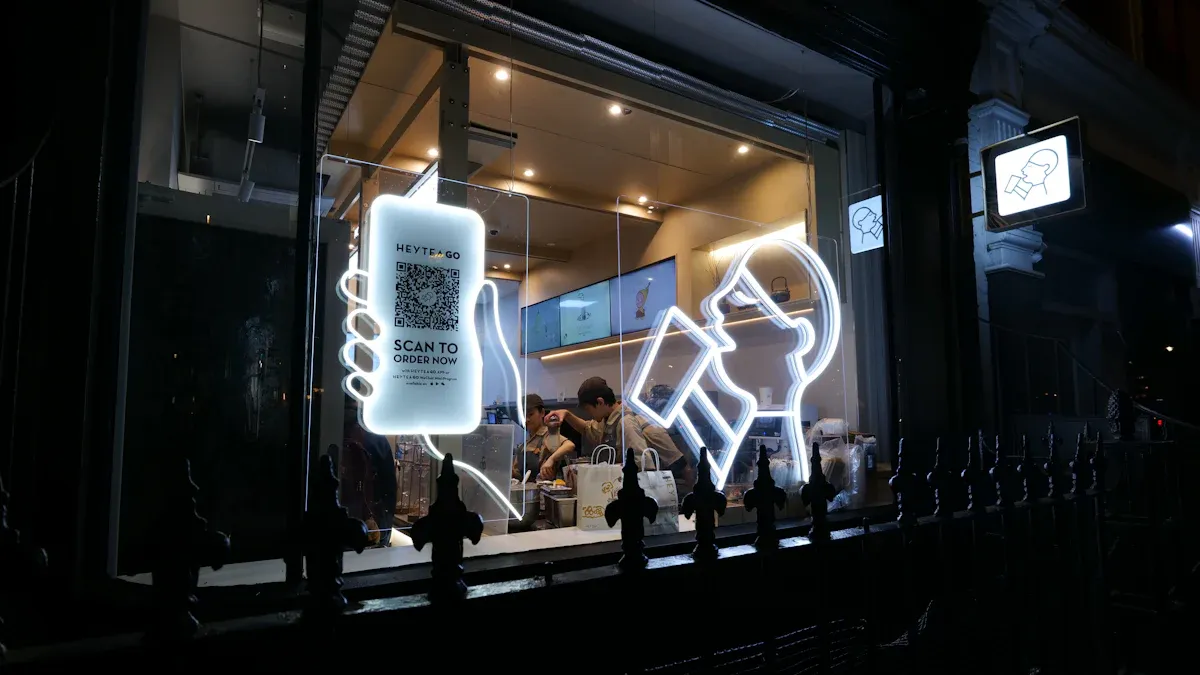
Lighting Effects
Lighting can make a digital window display look amazing. The right lights help your products stand out. They also set a mood that attracts people. Good lighting does more than help people see. It makes shoppers feel something special when they look.
Lighting makes people feel excited or curious. A well-lit display grabs attention.
Spotlights show off your best products. You can highlight new arrivals or top sellers.
Warm lights make your store feel cozy. Cool lights make it feel modern.
Using both ambient lighting and spotlights creates focal points. This guides shoppers’ eyes to important items.
Backlighting and colored lights add drama. They make your display pop.
Tip: Use spotlights on your newest products. Shoppers will notice them quickly.
Modular Visual Elements
Modular visual elements keep your displays fresh and fun. You can change graphics or headers fast. This helps your window match the season or a new sale. It makes your job easier and keeps customers interested.
Swappable graphics let you update displays quickly in all stores.
Magnetized headers and modular hardware make changes easy.
You can reconfigure displays for different events. This saves time and money.
Modular designs help the environment. You reuse parts instead of throwing them away.
Here’s why modular elements are so helpful:
Benefit | Description |
|---|---|
Flexibility | You can update displays for any event or sale with little effort. |
Engagement | Regular updates keep your window interesting for shoppers. |
Sustainability | Reusing parts means less waste and a greener store. |
If you want to follow best practices, use lighting and modular elements together. Your digital window displays will always look bright, fresh, and ready to grab attention.
You can make your digital window displays stand out by keeping things simple, using bold colors, adding movement, and placing screens where people look. Try interactive features and update your content often. These steps help you grab attention and boost sales—stores see up to a 19% jump in impulse buys and 23% more people stopping to look.
Focus on what your customers feel and do.
Tell a story with your display.
Track what works and keep improving.
Ready to try these tips? Share your best window display ideas or ask questions below!
How to Create Engaging Digital Window Displays for Retail Stores
Street-facing digital windows are among the most strategically valuable marketing touchpoints in retail. Looking at the latest case studies from 2025–2026, a well-designed interactive window can turn ordinary glass into a conversation between your brand and passersby.
🚀 Why are smart retailers turning to digital windows?
The results are real. According to 2025 industry data, retailers using digital signage achieved an average sales lift of 29.5% and a 52% increase in ad recall. 70% of shoppers say digital displays influence their purchasing decisions. Customers spend 400% more time looking at digital signage than static displays, and brand messaging is 48% more effective with digital signage than with traditional signs.
💡 Three key elements for a high-impact window display
To build an engaging digital window, you need to consider hardware selection, content strategy, and interactive design together.
1. Hardware selection – choose the right "digital canvas"
The first step is selecting the right screen technology. Each option has unique features and best-use cases.
Display Technology | Core Features | Best Use Cases |
|---|---|---|
Transparent LED displays | High transparency, does not block the view; content appears to float on the glass | Fashion, automotive, showrooms – ideal for showing products while keeping store visibility |
LCD/LED video walls | High brightness, rich colors, high resolution | Visual impact, brand commercials, immersive experiences |
Holographic projection | Glasses-free 3D effects, futuristic and tech-savvy; makes objects "float" | High-end brands (e.g., jewelry, watches); creates memorable, shareable moments |
High-brightness outdoor screens | Extremely bright, remains clear even in direct sunlight | Any storefront with strong daylight – ensures visibility at all times |
E-paper displays | Ultra-low power, paper-like readability, flexible to use | Frequently changed content such as menus, price tags, or temporary promotional materials |
2. Content strategy – tell a story through motion
Hardware is the skeleton; content is the soul. Good digital content is what stops people in their tracks.
Design to grab attention: Bold colors speak without words. Well-placed motion elements (like flowing water or melting ice cream) naturally draw the eye. Keep information minimal – passersby should understand the core message within seconds.
Keep content fresh: The strength of digital signage is real-time updates. You can instantly switch promotions to communicate urgency like "limited time offer" or "today only." Using technologies such as dual-sided screens, you can show different content to people inside and outside the store.
3. Interactivity – turn viewers into players
Interactivity is the killer feature that separates digital windows from static posters.
Touch interaction: Using technologies like holographic nano-touch film, glass surfaces become touchscreens. Customers can browse catalogs and place orders directly, turning your window into a 24/7 self-service shopping station.
Contactless interaction: For health and convenience, customers can scan a QR code to explore product details on their own phones, using them as remote controls for the window display.
AI & AR experiences: AI can recognize customer attributes (e.g., gender, approximate age) and offer personalized recommendations. AR enables immersive experiences like "virtual try-on." Studies show these technologies can boost store entry rates by up to 20%.
Co-created content: Display live user reviews and social media posts on your window. Use authentic word-of-mouth for live, dynamic in-store marketing.
📋 From concept to execution: a four-step framework
Step 1: Define goals and how to measure success
First, decide what you want the window to achieve – increased foot traffic, new product awareness, brand storytelling, or a 24/7 sales channel? At the same time, set clear metrics such as footfall, dwell time, interaction count, and sales lift. Use data to track performance.
Step 2: Plan your content management and technology platform
Implement a Content Management System (CMS) as your backend dashboard. A CMS lets you update content across all stores remotely from the cloud, as easily as posting on social media.
Step 3: Improve operational efficiency
Look at emerging trends: use e-paper for quick poster-style updates; adopt software solutions for 24/7 unattended operation that provide safe, contactless shopping; and deploy modular self-service kiosks that can be flexibly arranged.
Step 4: Launch the performance flywheel
Digital window output is not the end. High-quality data feedback answers critical questions: what content works, who is watching, and when is the best time to show certain messages. Use these insights to continuously optimize content and complete the smart cycle from investment to return.
📈 Successful real-world case studies
Oh Polly (London) – Used transparent LED technology to create a 24 x 13 ft video wall, perfectly combining digital visuals with physical products.
Kiehl‘s (London) – Embedded AR beauty mirrors in the window for real-time skin analysis, achieving a 20% uplift in store entries.
Sky TV (UK) – Installed building-scale transparent LED screens that played dynamic visuals while preserving natural light inside the store.
Kuwait Bank (Portugal) – Installed a giant LED display simulating a swimming whale, using an artistic digital installation to create a welcoming, humanistic atmosphere.
💎 Summary: embrace the future of retail
Digital windows turn retail spaces into dynamic, interactive “brand stages.” With the evolution of 5G, edge computing, and generative AI, digital windows will become even smarter and more personalized. Whether you are a small shop with a limited budget or an international luxury brand, you can find your story on this digital canvas.
Let me know if you'd like a shorter or more sales‑focused version for a pitch or presentation.
FAQ
How often should you update your digital window display?
You should update your display at least once a week. Fresh content keeps people interested. If you have new products or sales, change your display right away.
What makes a digital window display stand out?
Bright colors, clear messages, and movement grab attention. Place your screen where people walk by. Use digital signage solutions to make your display look modern and exciting.
Can you use interactive features in any store?
Yes, you can add touchscreens or QR codes to most stores. These features help shoppers learn more and make your display fun.
Do digital window displays work for small businesses?
Digital window displays work for any size store. You can start with simple screens and grow as your business grows. Even small shops see more customers stop and look.
How do you measure the success of your display?
Track how many people look at your display and how many come inside. You can also check if sales go up after you change your window.
See Also
7 Strategies to Enhance Customer Interaction Using Digital Signage
Essential Tips for Making Your OLED Display Stand Out
The Benefits of Outdoor Digital Signage for Business Visibility
Selecting the Ideal Outdoor Digital Signage for Your Company
