Curved LED Display or Flat LED Display Which Is the Best Choice for You
Shenzhen TopAdkiosk Display Technology Co., Ltd.
Add.: 2F, Bldg 10, Changfeng Industrial Park, Dongkeng, Fenghuang, Guangming, Shenzhen, China 518132
Mobile/WHATSAPP: 86-138 25769658
Email: marketing@topadkiosk.com topadkiosk@gmail.com
Skype: pghenry1
Wechat: adkioskhenry
English Web.: https://www.topkioskdisplay.com/
http://www.ad-kiosk.com/
https://www.toplcddisplay.com/
http://www.multitouchdigitalsignage.com/
https://www.youtube.com/channel/UCYVYNJHxLVEcQD8fuUxXNTA/videos?view_as=subscriber
https://www.facebook.com/TOPADKIOSKSHENZHEN/?ref=bookmarks
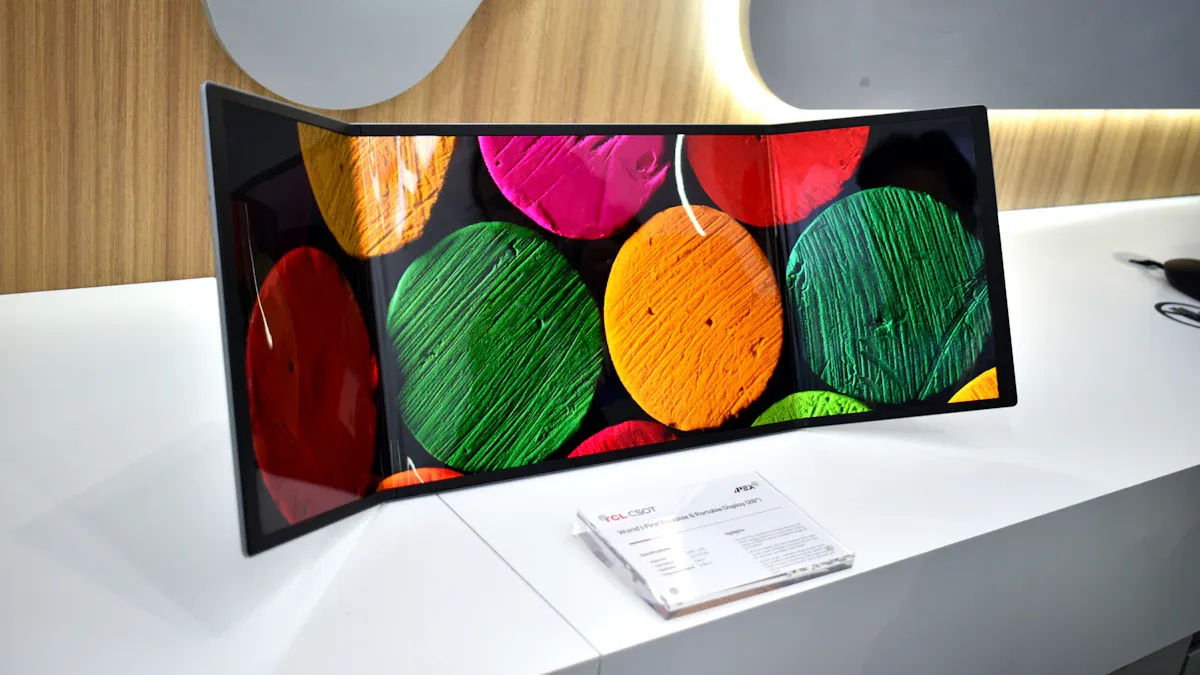
You should pick curved or flat led screens based on what you need. If you want a screen that feels more real for stories or shows, a curved led display gives a special feeling. Flat LED screens are easy to see and work well in many places. They also cost less money. Look at the table below to see the main things to think about:
Factor | Curved LED Displays | Flat LED Displays |
|---|---|---|
High | Moderate | |
Cost | Higher | Lower |
Application | Specialized | Versatile |
For more information, go to https://www.topkioskdisplay.com/.
Key Takeaways
Pick a curved LED display if you want to feel inside the action. It makes movies and games more exciting.
Choose flat LED screens if you want to save money. They work well in many different places.
Think about your eyes. Curved displays help stop glare and eye strain. They are better if you watch for a long time.
Flat screens are easier to put up on a wall. They also need less space than curved displays.
Think about what you might need later. Curved displays are easier to upgrade. They can work with new technology better.
Viewing Experience: Curved vs Flat LED Screens
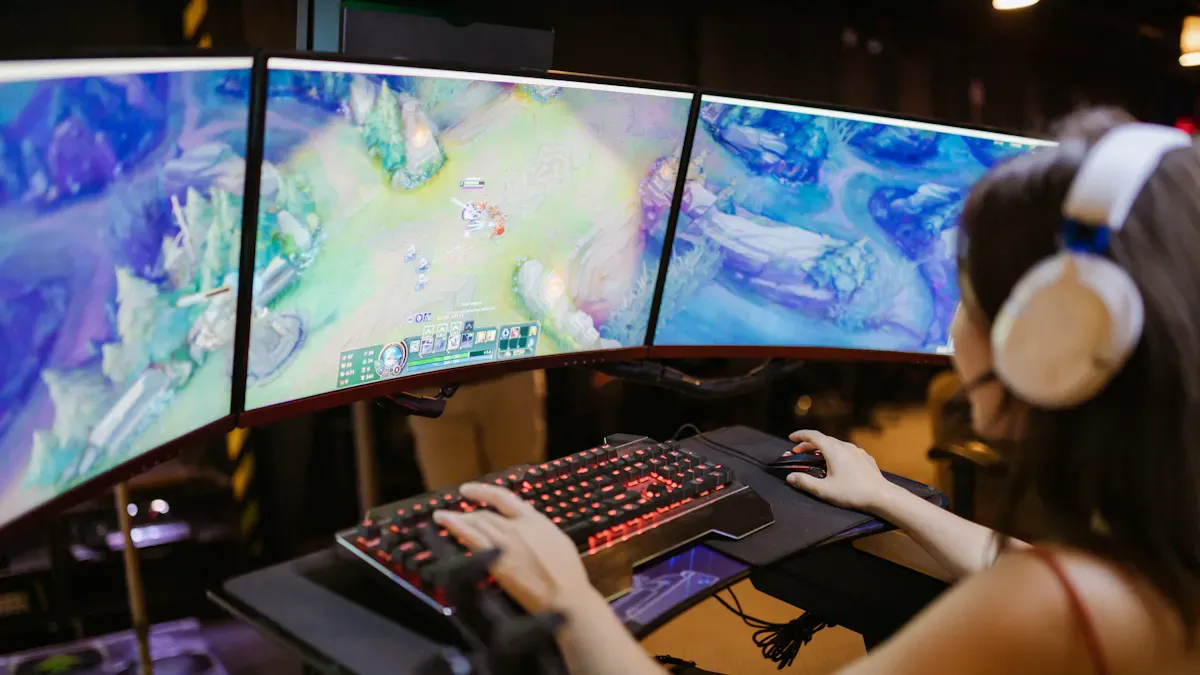
A curved LED display bends gently with special technology. The curve fits the shape of your eyes. This helps the screen cover more of what you see. You can see more without moving your head. The curved screen makes pictures feel close and real. Flat LED screens are straight and flat. They show images in a way most people know. Flat screens are easy to use in many places. They are also simple to set up.
Immersion and Peripheral Vision
You can really notice immersion with a curved LED display. The curved screen pulls you into what you watch. You feel like you are inside the story or scene. The curve fills more of your view, so you see more details. You can look at things from different sides. It feels like you are traveling or exploring old places. Curved screens help your side vision too. They match how your eyes see. You do not need to turn your head as much. This is good for games, art, and virtual tours.
Curved LED screens make watching more fun and exciting.
You feel like you are in history or virtual places.
The curve lets you see objects from many sides.
Curved displays fill more of your view and help side vision.
You get pulled into what you watch and see more depth.
Flat LED screens are good for groups to watch together.
Flat screens work well in big rooms and for many people.
Eye Comfort and Glare
Eye comfort is important if you look at screens a lot. Curved LED displays help your eyes feel better. The curve matches how your eyes see things. You do not have to refocus between the middle and the sides. Your eyes feel less tired and more relaxed. Studies say curved screens make eyes less tired. Flat screens can make your eyes hurt more, especially if they are big. The sides are farther away, so your eyes work harder.
Glare makes it hard to see the screen. Curved LED displays cut down glare better than flat screens. The curve sends light away from your eyes. You can see clearly even in bright rooms. Flat screens can reflect more light and cause glare or blurry edges.
Glare Reduction | Eye Strain | Distortion | |
|---|---|---|---|
Curved | Better | Less | None |
Flat | Worse | More | Edge |
Image Clarity and Consistency
You want clear and steady images when you watch or play. Curved LED screens fit your eyes and cut down on blurry edges. The distance from your eyes stays the same across the screen. You see sharp pictures and bright colors. Watching feels smooth and natural. Flat LED screens are bright and clear everywhere. They are good for offices and classrooms. Flat screens let many people see well from different spots. This makes them great for groups.
Curved screens make watching more real and cut edge blur.
You see steady images and feel part of what you watch.
Flat screens are bright and clear all over.
Flat displays are good for work and school.
Think about how you use your screen. Curved LED displays give you a real and comfy viewing experience. Flat LED screens are good for many uses and are clear for everyone.
Installation and Space Flexibility
Space and Mounting Needs
Think about your space and how you will put up your LED display. Curved LED displays need special tools because of their shape. You must leave extra space, about 60 centimeters, for taking out parts. Each curve puts more pressure on the frame, so you have to check the weight. Curved screens often need frames with holes for air to move. Flat LED displays use simple ways to mount them. You can use back panels that do not need much room. Flat screens do not push hard on the sides, so you can use normal ways to install them.
Aspect | Curved LED Displays | Flat LED Displays |
|---|---|---|
Mounting Hardware | Specialized for curvature | Simple and standard |
Clearance | Needs extra space (60cm) | Rear panels suffice |
Lateral Stress | Higher with each curve | Minimal |
Weight | 50-80kg per m² | Similar |
Airflow Management | Perforated frames for cooling | Standard |
Tip: If your space is small or you want a simple wall, flat LED screens are easier to put up.
Customization and Design Options
Curved LED displays let you make creative designs. You can bend, fold, or stretch them to fit cool spaces. Architects use curved screens to make circles, cubes, horns, or spheres. You can hang or hide these displays in many ways. Flat LED screens keep their shape and stay flat. You usually put them on walls or stands.
Feature | Curved LED Displays | Flat LED Displays |
|---|---|---|
Flexibility | Rigid, fixed shapes | |
Shape Options | Circular, cube, horn, sphere | Limited to flat surfaces |
Installation Methods | Suspended or embedded | Mounted flat |
Adaptability | Complex environments | Standard setups |
Modern buildings use LED displays to look new and fun. Curved screens help buildings get noticed and look cool. You see smooth shapes and exciting designs. Flat screens look classic and are best for simple rooms.
Curved LED displays help you make fun visual effects.
Flexible screens fit creative building ideas.
They help spaces share messages and get people interested.
You can pick a display that fits your space and style. Curved LED screens are great for creative projects and tricky spaces. Flat LED screens are good for normal rooms and easy setups.
Performance of Curved LED Display vs Flat LED Screens
Brightness and Color Accuracy
You want your screen to look bright and colorful. A curved led display gives you high brightness, so images stay clear even in sunny rooms. The quality of the colors stands out. You see deep reds, bright blues, and sharp greens. This makes movies and games look real. Flat LED screens also offer good brightness and color, but a curved led display often shows more even color from edge to edge. You notice fewer dark spots or faded areas. The quality of the picture stays strong, no matter where you sit.
A curved led display keeps colors true and bright.
You get better quality for photos, videos, and games.
Flat screens work well, but curved screens often show richer colors.
Adaptability to Lighting
Lighting changes in every room. Sometimes you have sunlight, other times you use lamps. A curved led display handles these changes well. You see clear images, even when the lights are bright. This is one of the key advantages of curved led displays. The performance stays high in many places, like shopping malls or outdoor events. You do not lose quality when the light changes.
Here is a table that shows how a curved led display adapts to lighting:
Feature | Description |
|---|---|
High Brightness | Curved led display produces bright images, perfect for rooms with lots of light. |
Excellent Contrast | High contrast helps you see details and keeps the quality sharp in any lighting. |
Adaptability | Curved led display works well in outdoor and public spaces, keeping the performance strong. |
Flat LED screens also give good performance, but you may see more glare or faded colors in bright light. A curved led display keeps the quality high and the images easy to see. You get a better viewing experience in many lighting conditions.
Tip: If you want the best quality in any light, choose a curved led display for top performance.
Cost and Value When You Choose Between Curved and Flat LED Screens
Upfront Costs
You need to look at the price before you buy a display. Curved LED displays cost more than flat led screens. The special shape of curved panels adds about 20% to the price. Flat led screens use standard panels, so you pay less. You see this difference when you compare similar sizes. Flat led screens help you save money if you want a big display.
Curved LED displays cost about 20% more than flat led screens.
Flat led screens use standard panels and cost less.
You save money with flat led screens for large projects.
Installation costs also matter. Curved panels need custom designs and careful alignment. This makes the price go up. Flat led screens use simple mounting methods. You pay less for setup.
Display Type | Cost Implication |
|---|---|
Curved Panels | 10–15% higher due to custom designs and alignment |
Flat Panels | Most cost-effective and widely used |
Flat led screens give you the best value for most projects. You spend less on both the display and the installation.
Long-Term Value
You need to think about how much you will spend over time. Flat led screens use less energy and last longer. Curved LED displays may use more power because of their shape. Flat led screens help you save money on your electric bill.
Maintenance costs also affect your budget. Flat led screens have fewer parts to fix. You spend less on repairs. Curved LED displays may need more care because of their special panels.
Cost Factor | Lower-Efficiency Display | Energy-Efficient Display |
|---|---|---|
Purchase price | Lower | Slightly higher |
Annual energy cost | Higher | |
5-year operating cost | Higher total spend | Lower total spend |
Component lifespan | Shorter | Longer |
Flat led screens give you strong value over time. You pay less for energy and repairs. You get a display that lasts longer and works well in many places. Flat led screens help you keep your costs low and your display running smoothly.
Application Suitability for Curved and Flat LED Screens
Indoor vs Outdoor Use
You need to pick the right screen for your space. Curved led screens are best for inside use. They are bright enough for malls or meeting rooms. You see clear pictures and enjoy watching them. Indoor curved led screens have small pixels, so images look sharp up close. They do not need much fixing because inside is safer.
Outdoor curved led screens work well in tough weather. They are very bright, so you can see them in sunlight. Colors and words look strong from far away. Outdoor curved led screens are safe from water and dust. They last a long time and work well for ads or big events.
Factor | Indoor Flexible LED Display | Outdoor Flexible LED Screen |
|---|---|---|
Brightness | Moderate | High |
Protection | Basic | Waterproof & dustproof |
Viewing Distance | Close | Long-distance |
Environment | Controlled | Harsh conditions |
IP Rating | Lower | Higher |
Flat LED screens can be used inside or outside. You see them in offices, schools, and on billboards. Flat screens work well in many places and give good results.
Commercial, Gaming, and Productivity
Curved led screens make business spaces more fun. You see cool images and feel part of the action. These screens help you play games and join in activities. More people get involved at events. Curved led screens can be changed to fit different looks. You can make them match any theme or space. They save space and are easy to move and set up.
Benefit | Description |
|---|---|
Curved led screens provide immersive viewing angles, improving image depth and maintaining brightness. | |
Increased Engagement | Ideal for interactive content, gamification, and audience participation, enhancing overall engagement. |
Versatility and Customization | Flexible design options allow for customization to fit various event themes and environments. |
Operational Advantages | Space-efficient design and modularity simplify logistics and enhance visibility in event settings. |
You see curved led screens in gaming rooms. They wrap around you and make games feel real. You notice more depth and lifelike images. Curved led screens stop edge blur and match how you look at things. Your eyes do not get tired, and you can focus better.
Flat LED screens are great for work and home. You use them for meetings, lights, and daily jobs. Flat screens show clear pictures and are easy to put up. You see them in living rooms, kitchens, and bedrooms.
Setting | |
|---|---|
Commercial | Flat panels, recessed troffers, high bays, strip lights, vapor lights, watertight lights, wraparound lights |
Residential | Living rooms, kitchens, bathrooms (recessed lighting), chandeliers, bedrooms (dimming features), closets, laundry rooms |
You pick curved led screens for fun events, games, and creative shows. Flat LED screens are best for offices, schools, and watching TV at home. Each type is good for different uses.
Maintenance and Durability of Curved LED Screens and Flat LED Screens
Maintenance Needs
You need to keep your LED display clean and working well. Curved LED screens collect more dust than flat screens. You should clean a curved screen every six weeks. Flat screens need cleaning only every three months. Curved displays also need more frequent checks for power and cables. You must inspect cables every quarter and check power distribution 20% more often than with flat screens. Color calibration updates happen 30% more often on curved displays. These extra steps help keep the picture bright and clear.
Here is a table to show the main differences:
Maintenance Aspect | Curved LED Displays | Flat LED Screens |
|---|---|---|
Every 6 weeks | Every 3 months | |
Dust Accumulation | 40% more dust | Less dust |
Power Checks | More frequent | Standard |
Cable Inspections | Quarterly | Less frequent |
Color Calibration | 30% more often | Standard |
Tip: If you want less cleaning and fewer checks, a flat LED screen may suit you better.
Lifespan and Repairs
You want your display to last a long time. Curved LED screens often have a longer lifespan. Their modular design lets you replace parts easily. This means you spend less time waiting for repairs. You can fix one section without taking down the whole screen. Flat LED screens may need more repairs, especially if you use a large setup. You might see more downtime with flat screens.
Curved LED screens last longer and need fewer repairs.
You can swap out broken parts quickly.
Flat screens may break more often in big displays.
When you look at durability, traditional flat LED screens have a rigid structure. They resist bumps and work well outdoors. Flexible curved screens need careful handling. They can bend, but too much force can damage them.
Display Type | Durability Characteristics |
|---|---|
Traditional LED | Strong, impact-resistant, good for outdoor use |
Flexible LED | Can bend, needs gentle handling, not for rough conditions |
You should choose the display that matches your space and how much care you want to give it.
Integration and Compatibility
System Compatibility
You want your display to work with your other devices. Both curved and flat LED displays connect to most new gadgets. You can hook them up to computers, media players, or control panels. This lets you show videos, slides, or live streams. Most displays use common ports like HDMI or USB. You usually do not need special cables.
Curved LED displays often have extra features. You can use them with smart controls or interactive programs. This helps you change settings and manage content fast. Flat LED displays also work well with many systems. You can use them in schools, offices, or public places. They fit into most setups without much trouble.
Tip: Look at the ports and software your display uses before buying. This helps you avoid problems when setting it up.
Future Upgrades
You should think about how your display will handle new tech. Curved LED displays give you more ways to upgrade later. They use the newest image and performance features. You get better contrast, deeper colors, and a more real feel. These displays keep up with trends in gaming and work. Your display stays up-to-date for longer.
Flat LED displays are not as easy to upgrade. Their design does not change much over time. You might see limits in brightness or sharpness as tech gets better. Flat displays work well now, but may not meet future needs.
Here is a table to help you compare upgrade options:
Feature | Curved LED Displays | Flat LED Displays |
|---|---|---|
Future Upgrade Potential | High because of new technology | Not much change or flexibility |
Design and Functionality | Better contrast and more immersive viewing | Can have trouble with even brightness |
Market Trends | More popular for gaming and work | Might be used less in the future |
You should also think about looks and style when planning upgrades. Curved displays let you change the look of your space. You can update the style to match new trends. Flat displays look classic, but do not change as easily.
When you pick a display, think about your future needs. Curved LED displays give you more ways to grow. Flat LED displays are steady, but do not change much. Your choice will affect how your space looks and works for years.
You want the best choice for your needs. If you want a deep experience, pick a curved LED display. For a flexible experience, use a flat LED screen. If you care about your budget, flat screens help you save money. Choosing the right option means thinking about your space and how you want to experience your screen. Review each factor before you decide. > For complex needs, talk to a display expert to get the best experience.
What Is a Curved LED Display and How Does It Work?
A curved LED display is not simply a flat screen that has been "bent". It is a display that achieves a specific curvature through technical means, delivering a more immersive experience and greater creative freedom.
🧐 What Is a Curved LED Display?
As the name suggests, it is an LED display whose surface has a certain curvature. The core idea is to break away from the traditional flat screen, using curvature to match the natural field of view of the human eye, creating a more enveloping, immersive experience. This technology is becoming increasingly popular in commercial exhibitions, stage performances, landmark architecture, and virtual production.
⚙️ How Does It Work?
There are two main ways to create a curved LED display, each with different cost and performance characteristics.
Method 1: Flexible Modules – For a Perfect Curve
This approach uses flexible LED modules, whose core components are made of flexible printed circuit boards (FPCB) and rubber-based materials.
How it works: These soft modules are mounted directly onto a custom‑shaped curved frame, easily conforming to a smooth curve.
Capabilities: Can achieve very small bending radii – for example, some products can wrap around a pillar with a diameter as small as 1.5 meters, creating an almost seamless curve.
Ultimate form: Flexible modules can also be assembled into wave‑shaped, S‑shaped, cylindrical, and even spherical screens.
Method 2: Wedge Splicing – A "Faceted" Curve
This is a more economical solution. Multiple rigid LED cabinets are arranged at small angles to each other, approximating an arc.
Key parameter: To ensure visual smoothness, the angle between adjacent cabinets is critical. The industry recommendation is that the optimal angle should be less than 3 degrees. If the angle exceeds 6 degrees, the "faceted" look becomes quite noticeable, and flexible modules are recommended instead.
✨ Types of Curved Displays – From Basic to Advanced
The world of curved LED displays goes far beyond simple "concave" or "convex". Here are the main types:
Type | Visual Description | Typical Applications |
|---|---|---|
Concave curve | The screen curves inward, focusing the image toward the viewer. | Stage backdrops, large broadcast studios, control rooms. |
Convex curve | The screen bulges outward, expanding the viewing angle. | Shopping mall atriums, outdoor advertising, building facades. |
Wave / Creative curve | Continuous concave and convex arcs, flowing like a ribbon or S‑shape. | Technology exhibition halls, art installations, spaces seeking strong visual impact. |
Cylindrical curve | The screen wraps around a pillar, offering 360° horizontal viewing. | Mall atrium columns, landmark media towers. |
Spherical curve | The ultimate visual statement – a full sphere or hemisphere. | Science museums, planetariums, large events or exhibitions as a centrepiece. |
📈 Key Advantages & Trade‑offs
Choosing a curved LED display brings unique visual benefits, but it also involves some trade‑offs compared to traditional flat solutions.
✅ Core Advantages
Greater immersion – The curvature better fills your peripheral vision, wrapping the viewer in the image and creating an IMAX‑like immersive experience.
Wider effective viewing range – Curved screens provide more uniform viewing. Convex screens, in particular, allow content to be seen clearly from wider side angles – ideal for high‑traffic areas.
Stronger visual appeal – The unique curved shape itself attracts attention. Studies show that curved displays can increase customer dwell time by up to 40%.
Creative freedom – They allow designers to seamlessly integrate screens with architectural curves, product shapes, and artistic concepts, enabling bold, creative visions.
⚖️ Trade‑offs Compared to Flat Screens
Content adaptation – A straight line on a flat screen may appear distorted on a curved screen. Custom content creation typically requires more design work.
"Sweet spot" consideration – For concave screens, the central position is usually the optimal viewing spot. Viewing from too far to the side may show distortion.
Cost differences – "True curved" solutions using flexible modules are generally more expensive than economical "spliced" solutions and traditional flat screens.
🚀 Main Applications & Market Outlook
Curved LED displays can be seen around the world in landmark installations.
Commercial landmarks & advertising – The 440‑metre‑long outdoor curved giant screen at the Dubai Mall; the 3,000 m² "J"‑shaped curved screen in Gwanghwamun, Seoul.
Immersive experiences & exhibitions – In Germany, a medical experience centre uses seamless curved LED walls to create a fully immersive environment showcasing future healthcare scenarios. Tech expos and brand launches often use curved screens to attract attention.
Virtual production & entertainment – In XR (extended reality) virtual production, huge curved LED walls serve as real‑time, immersive backgrounds, replacing green screens.
📈 Market Outlook
The curved LED display market is growing rapidly. According to market research, the global market size is expected to grow from $5.325 billion in 2025 to $11.818 billion by 2031, representing a CAGR of 14.2%. Another report projects growth from $1.236 billion in 2024 to $1.594 billion by 2031. This significant growth clearly indicates its huge potential.
💎 Summary
The curved LED display represents an important evolution in display technology, freeing our vision from the rectangular frame. It is more than just a screen – it is a powerful visual medium that helps brands and content connect with audiences by creating a sense of immersion that goes beyond reality, delivering messages with greater impact.
Let me know if you would like a list of manufacturers, technical specifications, or examples of real‑world curved LED installations!please contact Shenzhen TopAdkiosk Display Technology Co.
FAQ
What makes a curved led display different from a flat led screen?
You see a curved led display bend toward you. This shape matches your eyes. A flat led screen stays straight. You get more immersion with curved led screens. Flat led screens work well for groups and wide rooms.
Is a curved led screen better for gaming or movies?
You enjoy games and movies more with a curved led screen. The curve pulls you into the action. You notice less glare and more depth. Flat led screens show clear images but do not wrap around your view.
Can I use a flat led screen outdoors?
You can use a flat led screen outside. Flat led screens handle sunlight and weather. You see them on billboards and signs. Curved led screens also work outdoors, but flat led screens are easier to install.
Which led display is preferred for events and concerts?
You find curved led screens preferred for events and concerts. The curve helps everyone see the stage. Flat led screens also work well, but curved led screens create a more exciting experience.
How often should I clean my curved led display compared to a flat led screen?
You clean a curved led display every six weeks. Flat led screens need cleaning every three months. Curved led screens collect more dust because of their shape. Flat led screens stay cleaner longer.
See Also
Selecting The Ideal LED Or LCD Display For Malls
Finding The Perfect LCD Round Display For 2025 Projects
Comparing Digital Signage And LED Signs For Businesses In 2026
Selecting The Best LCD Video Wall For Your 2026 Space
Exploring The Main Differences Between LED And LCD Video Walls
