10 Real-World Airport Digital Signage Examples Transforming Travel
Shenzhen TopAdkiosk Display Technology Co., Ltd.
Add.: 2F, Bldg 10, Changfeng Industrial Park, Dongkeng, Fenghuang, Guangming, Shenzhen, China 518132
Mobile/WHATSAPP: 86-138 25769658
Email: marketing@topadkiosk.com topadkiosk@gmail.com
Skype: pghenry1
Wechat: adkioskhenry
English Web.: https://www.topkioskdisplay.com/
http://www.ad-kiosk.com/
https://www.toplcddisplay.com/
http://www.multitouchdigitalsignage.com/
https://www.youtube.com/channel/UCYVYNJHxLVEcQD8fuUxXNTA/videos?view_as=subscriber
https://www.facebook.com/TOPADKIOSKSHENZHEN/?ref=bookmarks
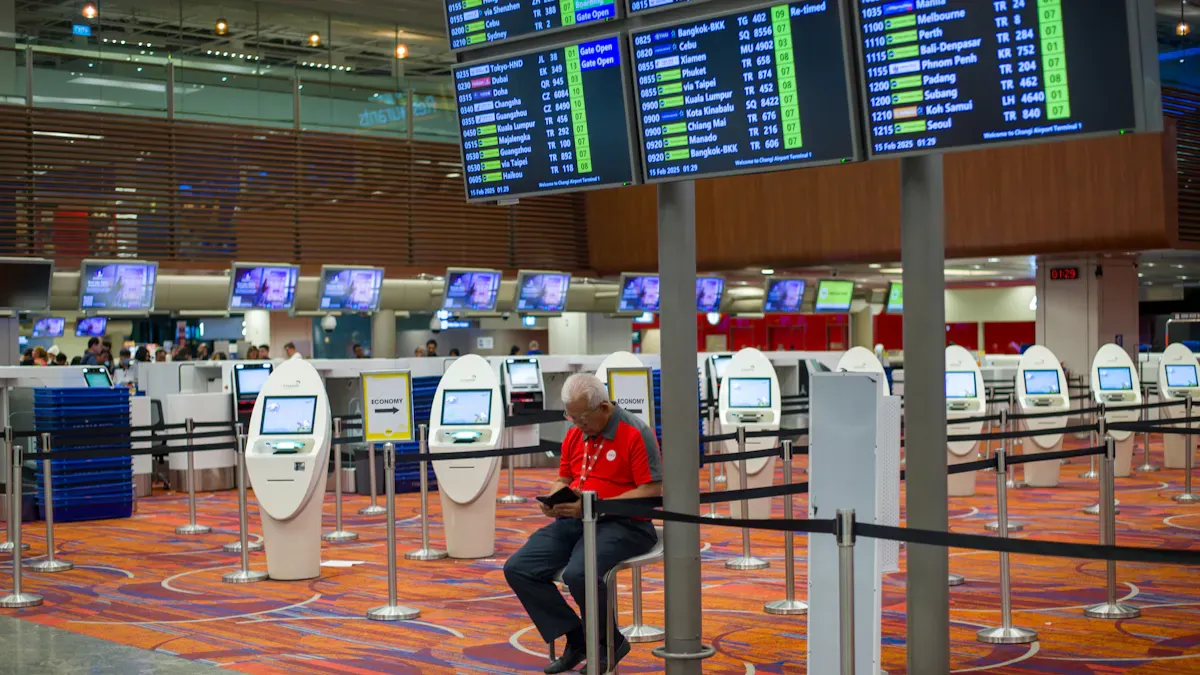
You see airport digital signage in many places now. These are not only bright screens. These digital signs help you find your way. They show flight updates right away. They keep you interested while you travel. Airports use digital signage to work better. They help manage lines and give clear information. This helps you feel less stressed. It also makes your trip smoother. When you walk in an airport, interactive maps help you. Fun displays make it easy to get around. They also make waiting feel shorter.
Airport digital signage changes how you travel. It makes your trip more fun and helps airports work better.
Key Takeaways
Airport digital signage makes travel better by giving real-time flight updates and directions.
Interactive kiosks help you find your way fast. They cut down wait times and make passengers happier.
Multilingual signage helps all travelers feel welcome and know what to do. It is easier to follow important instructions.
Digital displays show fun things and promotions. This makes waiting more enjoyable.
Real-time alerts during emergencies keep you safe and informed. They help you react quickly to any situation.
Interactive Wayfinding in Airports
Changi Airport’s Digital Kiosks
When you walk into Changi Airport, you see digital kiosks all around. These kiosks help you find your gate, stores, and places to eat. You touch the screen to look at a map of the terminal. You can search for your flight or where to check in. The kiosks connect to flight databases and know where you are right now. This helps you move through the airport faster and easier.
Let’s see how Changi’s kiosks made things better:
Metric | Pre-Kiosk | Post-Kiosk | Improvement |
|---|---|---|---|
4.2 min | 1.8 min | -57% | |
Queue Reduction | N/A | 52–68% | N/A |
Passenger Satisfaction (NPS) | N/A | +38 points | N/A |
You do not wait as long in lines. You feel sure about where to go next. The airport workers can do their jobs better because fewer people get lost or need help.
Tip: If you want to shop, the kiosks show a list of stores and deals. You can plan your path and save time.
Improving Passenger Experience with Navigation
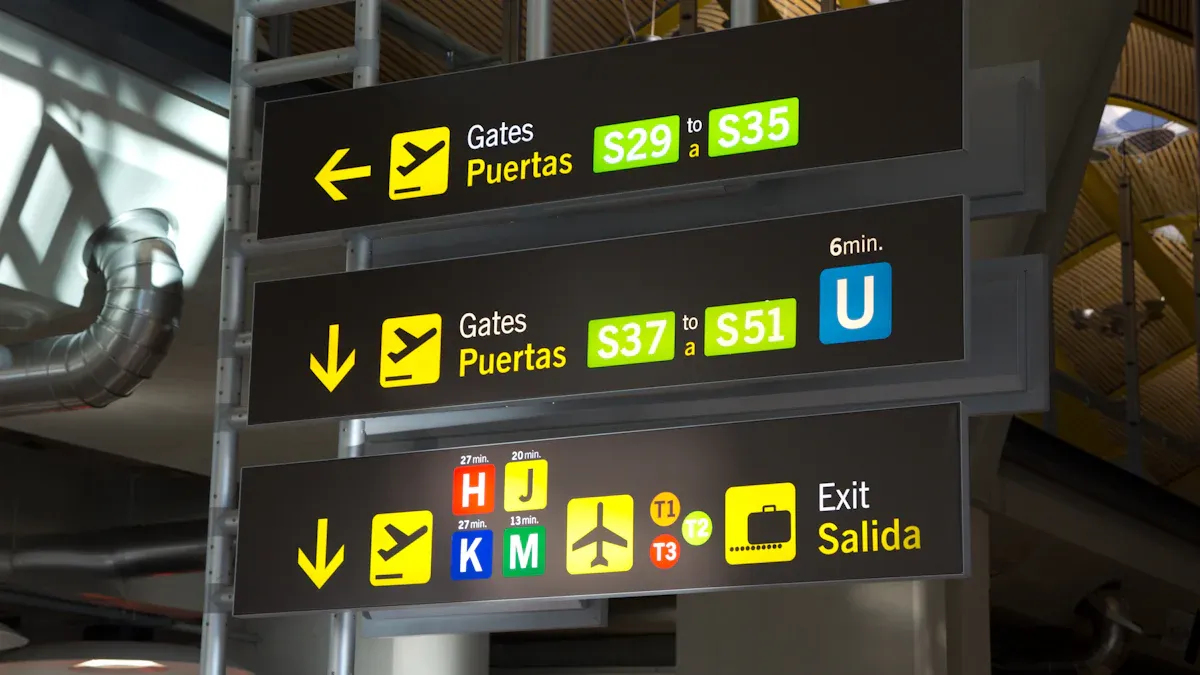
Digital wayfinding and navigation screens make airports less confusing. You see clear signs and maps that change right away. These screens use indoor mapping software and positioning technology. You get directions that match where you are. You can use mobile apps or interactive kiosks if you need help.
Here are some common wayfinding solutions you might see:
Indoor mapping software turns airport maps into interactive maps.
Digital signage gives you directions and updates right away.
Interactive kiosks let you search for flights and find your way.
Mobile apps help you plan your trip and track your flight.
Many airports, like Heathrow and LAX, use digital wayfinding and navigation screens to help travelers. You trust the information because it changes in real time. You use more airport services. It is easier for everyone, even people who speak other languages or need extra help.
Improvement Type | Description |
|---|---|
Real-time updates help you trust the information and feel less confused. | |
Increased Engagement | Navigation links to shopping and food, so you explore more and have fun. |
Better Accessibility | Multi-channel navigation helps all travelers, making airports easier to use. |
Airport digital signage makes your trip easier and helps airports work better. You get the information you need, and staff can do other jobs.
Real-Time Flight Information Displays
Haneda Airport’s Live Data Screens
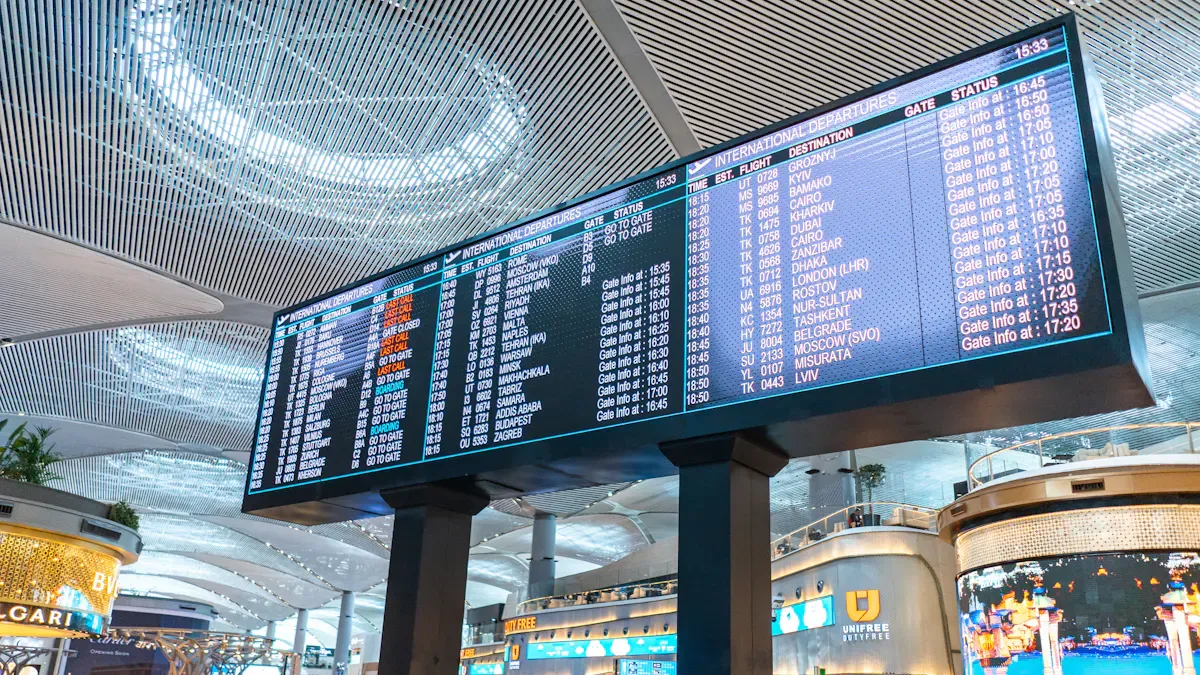
When you walk through Haneda Airport, you notice big screens everywhere. These are not just for decoration. They show you the latest flight information right when you need it. You see your flight status, gate number, and even last-minute changes. The screens update instantly, so you never miss important news.
Here’s why these live data screens stand out:
You get real-time updates about your flight, including delays or gate changes.
The screens show emergency alerts if something happens.
You can trust the information because it comes straight from the airport’s system.
Traditional boards can’t keep up with fast changes. They stay the same even when flights move or get delayed. With flight information display systems, you always know what’s happening. You don’t have to run around asking staff or checking your phone every minute.
Tip: Look for these screens near check-in, security, and boarding gates. They help you plan your next steps and avoid surprises.
Reducing Stress with Real Time Data Integration
Travel can feel stressful, especially when you worry about missing your flight. Haneda Airport uses real time data integration to make things easier for you. The flight information display systems connect to live data feeds. This means you see updates as soon as they happen.
Researchers have found that real-time data helps lower stress. When you see clear updates, you feel more in control. You know if weather or delays might affect your trip. The screens capture both how you feel and how your body reacts to travel stress. You can relax because you know what to expect.
Airport digital signage does more than just inform you. It helps airport staff work better, too. They can manage crowds and respond to changes quickly. This keeps everything running smoothly and makes your passenger experience better.
You get reliable updates.
Staff can focus on helping you instead of answering the same questions.
The airport runs more efficiently.
Flight information display systems make travel less confusing and more enjoyable for everyone.
Immersive Digital Signage Walls
Changi Airport’s Social Media Wall
When you walk in Changi Airport, you see a huge screen. It shows photos, videos, and posts from travelers. This is called the Social Media Wall. It grabs your attention fast. You see updates, travel moments, and your own posts if you use the airport’s hashtag. The wall is very big, so you can’t miss it.
You feel close to other travelers. You might smile at a funny selfie or a cool tip. The Social Media Wall does more than entertain you. It helps you feel part of a big group. Airport staff use it to share news or show special events. This makes waiting more fun and keeps you updated.
Enhancing Engagement and Visual Appeal
Big digital signage screens like airport video walls change your airport visit. These screens are much bigger than normal signs. They show content that moves across the whole wall. You get lost in the pictures, like nature scenes or animations.
Let’s see how big digital signage walls compare to regular screens:
Feature | Immersive Digital Signage Walls | Standard Displays |
|---|---|---|
Larger-than-life visuals | Yes | No |
Seamless content | Yes | No |
Yes | Limited | |
Engaging environments | Yes | No |
Dynamic wayfinding | Yes | Limited |
You notice that airport video walls make the airport more fun. They help you find your way with moving maps and directions. You also enjoy the bright pictures, which make the airport look cool and new. For airport staff, these screens let them share news fast and reach lots of people.
Tip: When you visit an airport, look for these big screens. They might show art, travel tips, or live weather. You’ll see how they make your trip easier and more fun.
Gate Change and Boarding Alerts
Atlanta’s Dynamic Digital Signage
When you walk in Atlanta’s airport, you see many screens. These screens show gate changes and boarding alerts right away. You always know where to go next. The airport uses LED and LCD screens and big video walls. You see updates fast because the screens connect to smart systems. The technology comes from top brands like Leyard and Planar. These displays update information in real time.
Charles Pettis, the airport’s director of customer experience, says, “Knowledge eases anxiety for people; it makes navigating the airport a little more pleasant.” He thinks digital signage puts messages in the right spot. This helps make your trip smoother.
The airport uses smart gate management. IoT devices send updates about gate changes right away. Boarding gates have smart scanners to check you in faster. You can also get alerts on your phone if your gate moves.
Instant updates on screens stop crowds at information desks.
Automation means fewer mistakes, so you get the right info.
Staff can help you board instead of just answering questions.
Keeping Passengers Informed Instantly
You want to know about changes as soon as they happen. Atlanta’s system does this for you. MagicINFO DataLink automates updates, so staff can do other jobs. During busy times, this keeps lines moving and stops confusion.
Metric | Reduction |
|---|---|
Missed Flights | 34% |
You see fewer people running to the wrong gate. Missed flights drop by a third. This means less stress for you and a better flow for everyone. The airport works better, and you feel more sure about your trip.
Pettis says, “Digital signage does what we want it to do: make a positive impact on the passenger experience.”
Multilingual Digital Signage Airport Solutions
Dubai International’s Language Support
When you arrive at Dubai International Airport, you see screens everywhere. These screens say hello in many languages. You feel welcome, even if you do not know English. The airport uses digital signage airport solutions to show flight times, safety tips, and directions in different languages. This helps you find your way and feel calm.
You might wonder how many languages these screens use. In big airports like Dubai, digital signage airport solutions can show lots of languages. Here are some ways these screens help you:
You see flight times, emergency news, and deals in your language.
Multilingual screens make sure everyone gets the same news.
People who do not speak English understand safety and baggage rules better.
If you do not know English, you might worry about missing your flight or not knowing the rules. Dubai’s digital signage airport solutions help you relax. You hear and see messages in your language. This makes your trip safer and more comfortable. You also find it easier to follow signs and get to your gate on time.
Tip: Look for the language button on touch screens. You can pick your language and get help right away.
Making Airports Accessible for All
Digital signage airport solutions do more than just translate words. They help everyone use the airport. You see clear icons, big letters, and bright colors. These things help you read signs fast, even if you have trouble seeing or reading.
Here’s how digital signage airport solutions make things easier for everyone:
Improvement Aspect | Description |
|---|---|
Multilingual Design | Uses many languages, easy icons, and smart color choices. |
Font Size and Contrast Standards | Makes words bigger and easier to see for all people. |
Inclusive Wayfinding | Shows clear paths and routes, so you never feel lost. |
You notice that digital signage airport solutions help airport staff, too. They answer fewer questions and spend more time helping people who need extra help. The airport works better, and you feel more sure about where to go.
Digital signage airport solutions make travel better for everyone. You get the information you need, no matter where you are from or what language you speak.
Digital Baggage Claim Signage
Changi’s Automated Carousel Displays
When you arrive at Changi Airport, you see bright screens above the carousels. These screens are not just decorations. They connect to the baggage system and show your flight number when your bags are ready. If there is a delay, the screen tells you right away.
Changi’s baggage process is fully automated from drop-off to pick-up. This makes everything faster and easier. Here’s how the automated displays help you:
You get updates about where your luggage will arrive.
The screens show which carousel to use, so you don’t wander.
If something changes, you see the news instantly.
You wait less and enjoy your trip more. The airport team works better because they do not answer the same questions again and again.
Streamlining Baggage Collection
Digital signage does more than look cool. It helps you find your bags quickly and keeps you calm, even if there is a delay. You get real-time information, so you always know what is happening. This makes baggage claim less stressful.
Let’s see how digital signage improves baggage collection for everyone:
Evidence Description | Impact on Baggage Collection |
|---|---|
Digital signage improves wayfinding and reduces staff load in airports. | Makes baggage collection easier for passengers. |
Provides real-time, interactive, and customizable information for passengers. | Helps share news about baggage status fast. |
Digital self-service kiosks reduce baggage mishandling rates. | Gives passengers a better experience. |
Tailored integration of kiosks enhances baggage handling processes. | Makes baggage collection smoother for everyone. |
You get clear directions and updates, so you do not feel lost. The airport saves time and money because staff can focus on other jobs. Everyone wins—your bags arrive faster, and the airport runs more smoothly.
Tip: Watch the screens near the carousels. They show your flight, carousel number, and any important news. This helps you grab your bags and go without worry.
Retail and Promotion Displays
LAX’s Targeted Advertising Screens
When you walk through LAX, you see commercial digital signage everywhere. These screens pop up in busy spots like security, baggage claim, and even near charging stations. You notice bright ads for new gadgets, travel deals, and local restaurants. The airport uses commercial digital signage to show you messages that match your interests and travel plans.
LAX uses different types of commercial digital signage to grab your attention. Here’s a quick look at how they do it:
Advertising Method | Description |
|---|---|
You see these in busy areas. They show ads many times, so you remember them. | |
Video Walls | These giant screens make a big impact and stick in your mind. |
Baggage Claim Digital Screens | You spot these while waiting for your bags. They reach you at the perfect moment. |
Flight Information Screens | These screens mix ads with flight info, so you see them while you wait. |
Digital Charging Network Screens | You find these near charging stations. They connect with you while you power up your devices. |
You can’t miss these commercial digital signage displays. They make your wait feel shorter and sometimes even help you find a new favorite snack or shop.
Boosting Revenue and Passenger Engagement
Commercial digital signage does more than just show ads. It helps airports make more money and keeps you interested while you travel. When you see digital signage displays, you might decide to try a new restaurant or buy a last-minute gift. Airports know that you spend a lot of time waiting, so they use commercial digital signage to turn that time into shopping and dining.
Let’s see how commercial digital signage helps both you and the airport:
Evidence Type | Description |
|---|---|
Increased Dwell Time | You spend over a third of your airport time shopping or eating because of these displays. |
Targeted Advertising | 77% of travelers take action after seeing an airport ad. That means you might buy or explore. |
Shorter Wait Times | 64% of people say short waits make travel better. Digital signage displays help you feel less bored. |
Tip: Next time you wait at LAX, look around. You might spot a deal or discover a new store, all thanks to commercial digital signage.
Commercial digital signage makes your trip more fun and helps the airport earn more. You get real-time deals and info, and the airport boosts its revenue. Everyone wins!
Emergency and Safety Messaging
Tokyo Haneda’s Crisis Communication
When you walk through Tokyo Haneda Airport, you see screens everywhere. These screens do more than show flight times. They help keep you safe if there is an emergency. If something bad happens, the airport sends alerts right away. You see bright messages that are easy to notice. The screens can stop normal messages so you do not miss important news.
You might wonder how this helps you. Here is what happens during a crisis at Haneda:
Digital signs flash emergency alerts and tell you what to do.
The screens show you where to go and give safety tips in many languages.
Airport staff can send one message to all screens with one command.
The bright colors make sure you see the alert, even when it is busy.
You feel safer because you know what to do next. The airport team can guide everyone quickly. This keeps people calm and helps you get to safety faster. The system also helps staff do their jobs better. They do not need to yell or run around with signs. They can help people who need extra care.
Real-Time Alerts for Passenger Safety
Real-time digital alerts help keep you safe. These alerts show up as soon as something happens. You see them on every screen, so you do not miss a warning. The airport uses smart technology to spot danger and send alerts right away.
Here is a quick look at how real-time alerts help you and the airport:
Evidence Type | Description |
|---|---|
Accident Prevention | You see warnings that help stop accidents before they happen. |
Automated Protocol Verification | The system checks if safety steps are followed, so you stay protected. |
Faster Emergency Response | Staff know where to go and who needs help, so you get help faster. |
Historical Insight & Accountability | The airport can review what happened and improve safety for next time. |
Audit Readiness & Compliance | The system keeps records for safety checks and inspections. |
You also get alerts if something strange happens or if someone goes where they should not. The system uses AI to find problems and warn you right away. This keeps you and others safe. The airport works better because staff can act fast and follow the right steps.
Tip: If you see an alert on a screen, follow the instructions right away. These messages help keep you safe and make sure everyone knows what to do.
Digital signage at airports like Haneda makes safety easy to understand. You feel more sure of yourself, and the airport team can handle emergencies quickly and with care.
Queue Management with Digital Signage
Schiphol’s Wait Time Displays
When you enter Schiphol Airport, you see screens above you. These screens show how long you might wait at security and check-in. The displays use smart technology to get this information. The system collects data from thirteen different places. One of these is Deep Turnaround, which tracks your bags from the plane to the belt. The system uses special math to guess wait times by looking at past patterns. It learns and gets better every day. You can trust the numbers because the system updates itself often.
At security, you see screens over each lane. They show how long you will wait in each line. You can pick the shortest line and move faster. The screens also help you decide when to check in or get a snack. You feel less worried because you know what to expect.
Wait time screens use learning models to guess times well.
Data comes from many places, like baggage tracking.
You get updates right away to help you plan your next steps.
Tip: To skip crowds, look at the screens and pick the lane with the shortest wait.
Smoother Flow and Less Congestion
Digital signage does more than just show numbers. It changes how you move through the airport. You see live updates on screens and on your phone. You can join a virtual line, so you do not have to stand in place. This makes the airport feel less crowded and gives you more freedom.
Staff do not spend as much time answering simple questions. They can help people who need extra care or fix bigger problems. The airport uses heatmaps to see where crowds are. Managers send more staff to busy spots and open more lanes if needed. This keeps things running well.
Here is how digital queue management helps you and the airport:
Improvement Type | Description |
|---|---|
Reduced Wait Times | Virtual lines mean less crowding and more choices for you. |
Enhanced Passenger Experience | Digital signs show you shorter lines and help you feel calm. |
Optimized Staffing and Resource Use | Heatmaps help staff balance crowds and open more lanes. |
Support for Special Needs Passengers | Systems show when special lanes are needed for families or people who need help. |
Increased Commercial Revenue | Faster security means you have more time to shop or eat, which helps the airport make money. |
Improved Customer Satisfaction | Shorter lines make travelers happier and lead to fewer complaints. |
You see fewer crowds and less confusion. You spend more time having fun and less time waiting. Staff work better, and the airport makes more money. Digital signage helps your trip go smoothly and gets everyone where they need to be.
Feedback and Service Kiosks
Munich Airport’s Interactive Surveys
You walk through Munich Airport and spot bright kiosks near gates and lounges. These kiosks invite you to share your thoughts about your trip. You tap the screen and answer quick questions about check-in, security, or even the food. The process feels easy and fast. You do not need to wait for staff or fill out paper forms. The airport uses interactive self service kiosks to collect feedback right away.
You see simple smiley faces or sliders. You touch the screen and rate your experience. Sometimes, you leave a comment or suggestion. The airport team reads your answers and uses them to fix problems. You help make the airport better for everyone.
Tip: If you want to share your opinion, look for these kiosks after security or near baggage claim. Your feedback matters and helps improve the airport.
Improving Service with Passenger Input
Feedback kiosks do more than collect opinions. They help the airport work smarter. Staff see real-time reports and spot issues fast. If many travelers complain about long lines, managers send more staff to help. When you praise a service, the team knows what works well.
Here’s how feedback kiosks help both you and the airport:
Benefit for Passengers | Benefit for Airport Operations |
|---|---|
You share your thoughts | Staff get instant feedback |
You see changes happen | Managers fix problems quickly |
You feel valued | Airport improves service quality |
You notice that your input leads to real changes. The airport becomes more comfortable and efficient. Staff spend less time guessing what you need. They focus on making your trip smoother.
Note: Airports use feedback kiosks to track trends and measure satisfaction. This helps them plan new services and keep travelers happy.
Feedback kiosks make airports more responsive. You get a better experience, and the airport runs more smoothly.
Trends in Airport Digital Signage
Adoption Drivers and Future Outlook
You see digital signage in airports almost everywhere now. These screens help you find your way and get updates. They also make your time at the airport more fun. The technology is changing quickly. New trends are making travel easier and safer for everyone.
Here’s a simple look at what is causing these changes:
Trend | Driver |
|---|---|
Better passenger happiness and smoother airport work | |
Rise of interactive displays | More money from ads that match what you like |
Use in retail environments | Safer and clearer messages for everyone |
Flexibility of digital infrastructure | Signs can change fast for new ads or emergencies |
AI and analytics help airports know what travelers want. Interactive screens let you touch and get answers right away. Retail screens show deals and give safety tips with clear words. Flexible systems let airports change signs fast for new events or problems.
Tip: Soon, you will see even smarter screens. They will react to what you do and show updates right away.
Impact on Passenger Experience
Airport digital signage makes your trip easier and more fun. You get flight updates, directions, and safety alerts in real time. These screens help you feel calm and sure of yourself. You wait less and have more time to shop or relax.
Here are some ways digital signage helps you on your trip:
Clear signs and maps help you find your gate fast.
Real-time alerts keep you safe and tell you what’s happening.
Interactive screens let you pick your language and get help.
Retail screens show deals that fit what you like.
You see staff spend less time answering the same questions. They can help people who need extra care. Airports work better and make more money because you use more shops and services.
Note: Digital signage is growing fast. You will see even more smart ideas and cool designs soon.
You see how airport digital signage changes your journey. It gives you real-time updates, helps you find your way, and keeps you safe. You enjoy a better passenger experience and airports run smoother. Real-world examples show you the power of these solutions. You can expect even more smart screens and new ideas soon. Get ready for airports that work faster and feel friendlier.
How Airport Digital Signage Improves Passenger Experience and Airport Operations
Digital signage has become indispensable infrastructure in modern airports, enhancing passenger experience and operational efficiency simultaneously across multiple dimensions. Below is a detailed analysis.
1. Improvements to Passenger Experience
1. Real‑Time Information Transparency – Reducing Anxiety
Flight status displays: Arrival/departure screens (FIDS) update gate changes, delays, cancellations in real time – passengers don’t have to repeatedly ask staff.
Walking time estimates: Some airports show “Approximately 8 minutes to gate B23” after security, helping passengers manage their time.
Baggage carousel status: Display estimated arrival time, carousel number, and current batch status.
2. Smart Wayfinding and Navigation
Interactive maps: Touchscreens to locate shops, restrooms, lounges, gates – show optimal route and send directions to phone via QR code.
Dynamic directional signs: Hallway screens with arrows that change based on time and flight status, directing passengers to less crowded security lanes or gates.
3. Personalised Services & Commercial Engagement
Welcome screens: Using facial recognition (opt‑in) or boarding pass scan, show “Welcome Mr. Li, your flight is on time” along with lounge location.
Targeted promotions: Based on passenger’s destination, recommend weather‑appropriate items (e.g., coats, umbrellas) or duty‑free limited‑time offers.
Entertainment while waiting: Screens near gates play short videos, destination introductions, or interactive games – easing wait fatigue.
4. Multilingual & Accessibility Support
Screens can switch languages (English, Chinese, Arabic, Japanese, etc.) at a tap – serving international travellers.
Visual impairment support: some touchscreens offer voice output.
2. Improvements to Airport Operations
1. Optimising Passenger Flow & Resource Allocation
Security queue management: Screens show estimated wait time for each lane, guiding passengers to shorter lines – balancing load.
Dynamic gate assignment: Ground staff change gates in the back end; screens update instantly – reducing broadcast confusion.
Connecting passenger guidance: Late‑connecting passengers (names or boarding pass numbers) appear on specific screens directing them to fast lanes.
2. Reducing Labour Costs & Human Error
Self‑service information: Most common queries (gate, baggage claim) handled via interactive screens – reducing help desk queues.
Automatic updates: When flight information changes, all screens (check‑in island, gate, arrivals) update simultaneously – no manual paper replacements.
3. Emergency Response & Safety Management
Emergency alert override: In a fire, security incident, etc., all screens automatically switch to evacuation routes and shelter instructions – more intuitive than audio alone.
Audio backup: For hearing‑impaired or noisy environments, screens supplement announcements with text (e.g., “Final boarding call”).
4. Commercial Operations & Revenue Management
Programmatic advertising: Airports sell screen time to advertisers, with dynamic pricing based on passenger density.
Campaign measurement: Sensors near screens track dwell time and QR scan rates to optimise ad content and placement.
5. Back‑of‑House Operational Efficiency
Centralised management platform: All screens managed via cloud CMS – remote power on/off, content updates, fault diagnosis.
Energy management: Screen brightness automatically adjusts based on passenger traffic (dimming during low traffic) – saving energy.
3. Typical Deployment Locations & Functions
Location | Passenger Experience Feature | Operational Optimisation |
|---|---|---|
Check‑in hall entrance | Welcome message, flight overview, weather | Counter open status, diversion guidance |
Security queue area | Estimated wait time, safety animations | Real‑time queue length per lane |
Departure concourse | Interactive maps, shop promotions, walking time | Gate change alerts, connection guidance |
Gate area | Flight status, boarding group order | Final call, special assistance passenger alerts |
Baggage claim hall | Carousel number, estimated arrival time | Location of mishandled baggage desk |
Arrivals hall | Transport directions (taxi, metro), hotel recommendations | Shuttle bus schedule, lost & found notices |
4. Quantifiable Benefits (Industry Data)
Passenger satisfaction: Airports with dynamic wayfinding and real‑time information see a 25‑35% increase in “information clarity” scores.
Help desk pressure: Self‑service kiosks reduce common inquiries by 30‑50%.
Security throughput: Wait time displays combined with dynamic channelling can handle 10‑15% more passengers per hour.
Non‑aeronautical revenue: Targeted promotions boost duty‑free sales by 8‑12%.
Summary
Airport digital signage transforms the passenger journey from “passive waiting” to “active awareness” through real‑time, visual, and intelligent information. At the same time, it shifts airport management from “experience‑driven” to “data‑driven”. It serves both as a “showcase” of service quality and as an “invisible system” optimising operational efficiency.
FAQ
What is airport digital signage?
Airport digital signage means screens and kiosks that show real-time info, directions, and alerts. You see flight updates, maps, and deals. These signs help you travel with less stress and help airports run smoothly.
How does digital signage help you find your way?
You use interactive maps and wayfinding screens to see where to go. These signs show you the fastest route to your gate, shops, or restaurants. You feel more confident and waste less time wandering.
Can digital signage improve airport safety?
Yes! Digital signs show emergency alerts and safety tips right away. You see clear instructions during a crisis. This keeps you safe and helps airport staff manage emergencies faster.
Does digital signage make airport lines shorter?
You see wait times on screens and can pick the shortest line. Some airports use virtual queues. This helps you move faster and lets staff send help where it’s needed most.
How do airports benefit from digital signage?
Airports use digital signage to share info quickly, manage crowds, and boost sales with ads. Staff answer fewer questions and focus on helping you. The airport works better and earns more revenue.
See Also
Innovative Outdoor Signage Trends Shaping Urban Environments
Enhancing Guest Experiences Through Digital Signage in Hotels
Explore 10 Innovative Menu Board Designs for 2026
Best 10 Video Wall Solutions for Digital Signage in 2026
Discover 10 Unique Applications for Touch Screen Kiosks in 2026
