What Cars Feature OLED Displays in 2026
Add.: 2F, Bldg 10, Changfeng Industrial Park, Dongkeng, Fenghuang, Guangming, Shenzhen, China 518132
Mobile/WHATSAPP: 86-138 25769658
Email: marketing@topadkiosk.com topadkiosk@gmail.com
Skype: pghenry1
Wechat: adkioskhenry
English Web.: https://www.topkioskdisplay.com/
http://www.ad-kiosk.com/
https://www.toplcddisplay.com/
http://www.multitouchdigitalsignage.com/
https://www.youtube.com/channel/UCYVYNJHxLVEcQD8fuUxXNTA/videos?view_as=subscriber
https://www.facebook.com/TOPADKIOSKSHENZHEN/?ref=bookmarks
As long as we have the blueprints, Shenzhen TopAdkiosk Display Technology Co., Ltd no worse than anyone else.
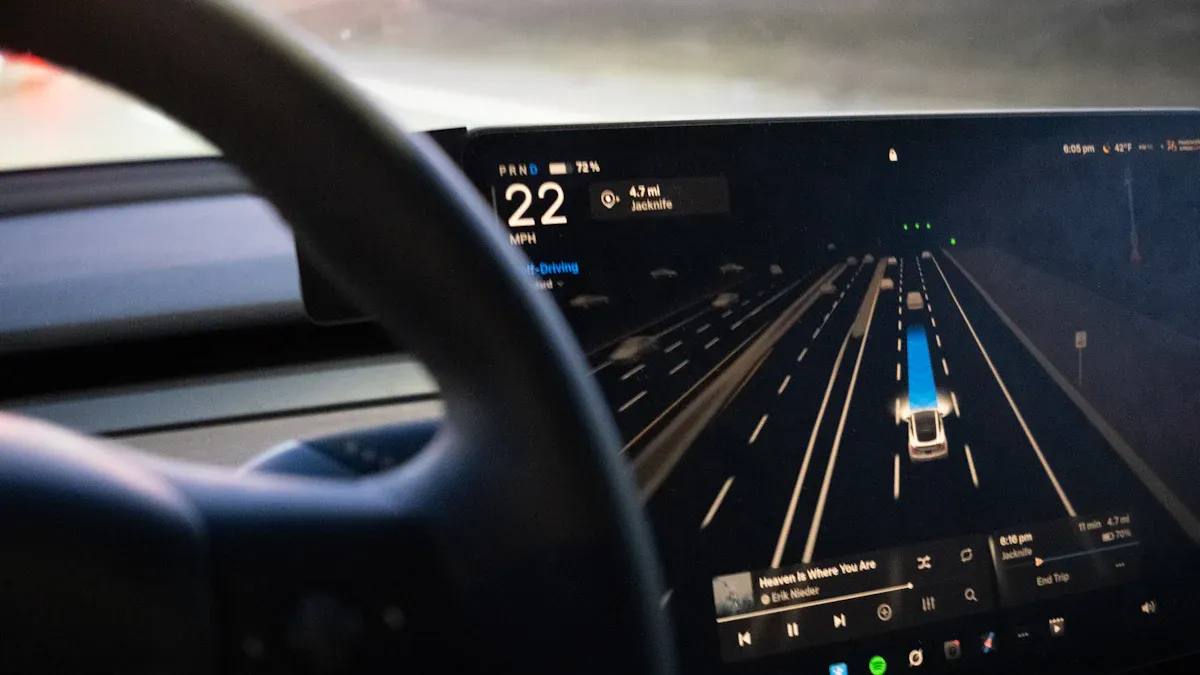
You will see OLED displays in top 2026 cars like the MINI Round, Mercedes-Benz EQE SUV, and Genesis GV70 and G80. People like car with OLED display because it looks better, can bend, and is made in new ways. These displays show very dark blacks and bright colors. This makes driving more fun. Many car brands use OLED for smart screens and to follow rules. You can learn more about these new ideas at https://www.topkioskdisplay.com/.
Key Takeaways
Many cars in 2026, like the MINI Round and Mercedes-Benz EQE SUV, have advanced OLED displays. These displays make driving better with bright colors and dark blacks. The MINI Round has a special round OLED display. It lets you change the screen to fit your style. This makes the inside of the car look cool and fun. The Genesis GV70 and G80 have a big 27-inch OLED display. It shows maps, safety alerts, and user profiles. This helps make driving feel more personal. The Porsche Cayenne Electric has a fast OLED touchscreen. This shows that OLED works in both fancy and sporty cars. Picking a car with an OLED display makes the car look better. It also makes it easier and safer to use. This makes driving simpler and more fun.
2026 Auto con Display OLED Models
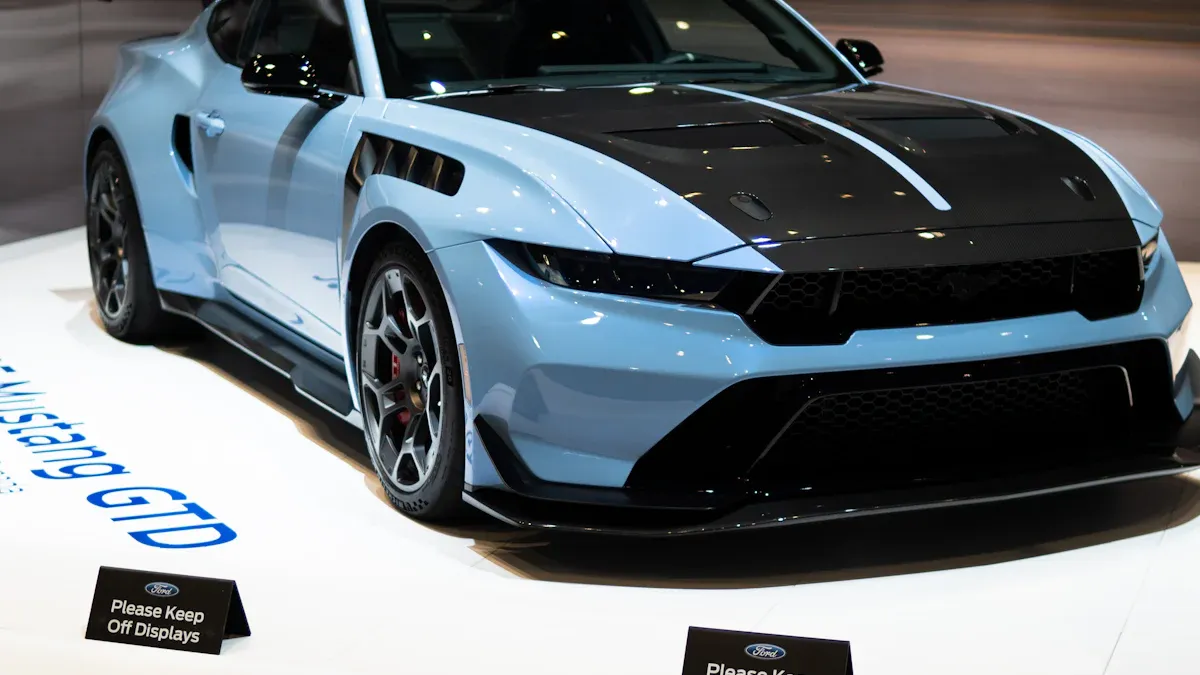
If you want to know which cars use car with OLED display in 2026, you have lots of cool choices. These cars use advanced oled screens to make driving better. Each car uses this technology in its own way.
MINI Round OLED Center Display
You will see the MINI Round OLED Center Display right away. MINI uses a round oled screen that is different from other cars. This display is the first one like it in any car. It fits into the car’s inside and keeps the classic MINI look. The design makes the inside of your car look new and fun. The display works with lights inside the car, so you see cool effects as you drive. You can pick different modes to make it your own. MINI shows how car with OLED display can change car design and give the brand a special look.
Only MINI has this round shape.
The display makes the cabin look and feel better.
You can set up the screen how you like.
Mercedes-Benz EQE SUV OLED Screen
The Mercedes-Benz EQE SUV uses car with OLED display for a high-tech feel. The oled screen shows dark blacks and bright colors, so it is easy to read. You can use the display for maps, music, and car settings. The screen reacts fast when you touch it. Mercedes-Benz uses this tech to make driving safer and more fun. The oled screen matches the fancy style of the EQE SUV.
The display lets you control many car things.
The screen is clear in all kinds of light.
You get a cool and modern dashboard.
Genesis GV70 and G80 27-Inch OLED
Genesis uses car with OLED display in the GV70 and 2026 genesis g80. Both cars have a big 27-inch oled display across the dashboard. This screen puts maps and car info together in one place. You can see live data and map tips right in front of you. The display also shows safety alerts, like Forward Collision-Avoidance Assist and Blind-Spot View. You can make user profiles, so each driver gets their own setup. The graphics stay bright and clear, even in sunlight.
Feature | Description |
|---|---|
Display Size | 27-inch oled display |
Usability | Customizable navigation and instrument cluster integrated into one display. |
Driver Engagement | Provides real-time data and navigation cues at the driver's fingertips. |
Safety Features | Displays safety alerts like Forward Collision-Avoidance Assist and Blind-Spot View directly on the screen. |
Customization | User profiles allow for tailored layouts and information for different drivers. |
Visual Clarity | Clear, vibrant graphics designed for readability in various lighting conditions. |
You will see the 2026 genesis g80 use this tech to make driving safer and easier. The 27-inch oled display gives you all the info you need in one spot. The 2026 genesis g80 is a leader in car display ideas.
Porsche Cayenne Electric OLED Touchscreen
You can also find car with OLED display in the 2026 Porsche Cayenne Electric. This car comes with a 12.3-inch oled touchscreen for the driver. If you want, you can get a bigger 14.9-inch oled display for the passenger. These screens show sharp images and react fast. The Porsche Cayenne Electric proves car with OLED display works in both fancy and sporty cars.
Standard 12.3-inch oled touchscreen for the driver.
Optional 14.9-inch oled display for the passenger.
Supplier Innovations in OLED
You might wonder how these cool screens are made. Top suppliers like Continental, LG Display, and Samsung Display have made big changes in car display tech. Their work helps car brands put car with OLED display in more cars.
Company | Contribution to OLED Adoption in 2026 Car Models |
|---|---|
Continental AG | Provides integrated digital cockpit solutions with high-resolution displays, enhancing user experience in premium and electric vehicles. |
LG Display | Manufactures high-quality oled displays that improve color, contrast, and efficiency for advanced digital cockpits and infotainment systems. |
Samsung Display | Focuses on flexible display technologies that support innovative designs and functionalities in modern vehicles. |
These suppliers help you get the newest car with OLED display features. Their ideas make screens brighter, bendy, and use less power. Because of this, you get better pictures and more choices in your next car.
Note: Picking a car with car with OLED display might cost more. The price is high because making oled panels is hard and only a few factories can do it. You may pay extra for these features, but you get a top-quality car display that makes driving better.
OLED Display Features
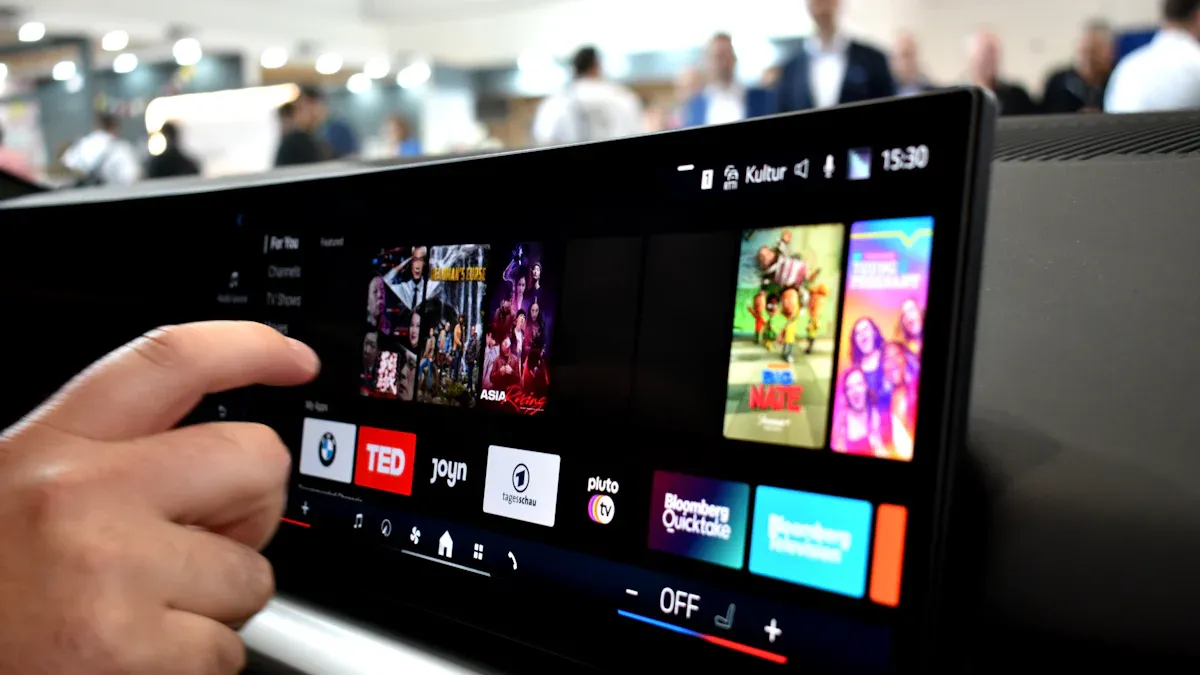
Size and Placement
The size and spot of each display can change how you use it. Many 2026 cars have big screens across the dashboard or inside the smart cockpit. Some cars use curved or see-through displays that fit the windshield’s shape. This lets you see key info without blocking your view. The table below shows some sizes and where they go:
Display Type | Size | Placement/Integration Description |
|---|---|---|
ACRUS Curved Display | Built into the smart cockpit, lines up with the windshield to reduce blind spots. | |
Ultra-wide IRIS HUD | 43.7 inches | Curved to match the windshield’s path, gives you better visibility. |
IRIS HUD | 11.98 inches | Fits smaller vehicles, works well in the smart cockpit with low heat output. |
These spots help drivers feel safer and more comfortable. Some brands use see-through windshields or hidden screens that only show up when needed. This keeps the smart cockpit neat and simple.
User Interface and Customization
You can set up your display to fit your style and needs. Many smart cockpits let you change the layout, colors, and even the shape of the screen. Curved touch screens make controls easy to reach. Some screens hide when you do not need them, so your car stays tidy. The table below lists some choices you might see:
Customization Option | Description |
|---|---|
Lets you use flexible screens for a better touch experience. | |
Personalized UI | Lets you pick your own layout and colors for the automotive display. |
Immersive Entertainment | Gives you rich media and games for passengers in the smart cockpit. |
Hidden Displays | Keeps the interior clean by hiding screens when you do not need them. |
Ambient Interfaces | Blends displays into surfaces like wood or metal for a seamless smart cockpit look. |
These features give each driver a special way to drive. Every person can have their own profile and settings.
Connectivity and Integration
The smart cockpit links all your car systems together. The display can show maps, music, and car settings on one big screen. You can use wireless Apple CarPlay and Android Auto for your phone. The screen reacts fast, so you can change music or check maps quickly. It also shows driver-assist alerts to help you stay safe. With everything in one place, the smart cockpit helps you focus and enjoy your drive.
Tip: OLED displays use less energy than other types, especially with dark images. This helps your car save power and stay cool.
You can count on the automotive oled display to last many years. Most are made to work well for at least 15 years, even in tough weather or bright sunlight.
Usability and Safety Benefits
Driver Experience
You will see a big difference when you use an OLED display in your car. The 2026 Genesis GV70 has a 27-inch OLED display. This screen is the main place for maps, car info, and music. You can change between features fast and without trouble. The display listens to your touch and voice. This means you do not need to look away from the road much. You can pick what you want to see on the screen. This helps you pay attention while driving. The digital instrument cluster shows your speed and safety info right in front of you. This makes driving easier and more fun.
Tip: You can save your favorite screen setup. Every time you get in, the display shows your own layout and choices.
Safety Enhancements
OLED displays are not just nice to look at. They help keep you safe too. You get clear tips for turns and lane changes, even if you look quickly. OLED screens have strong contrast, so you can read maps and alerts in sunlight or at night. Here are some ways car with OLED display makes driving safer:
You can see maps and car info fast, so you do not waste time searching.
Turn-by-turn tips and maps are easy to read, so you can decide quickly.
Controls for important things are simple, so you do not get lost in menus.
Safety alerts show up with pictures and sounds, so you get reminders that are not annoying.
When you back up or park, the display gives you clear help and tips.
You will also see lights and signs for Lane Following Assist 2 or Blind-Spot View Monitor. These work with sounds and steering, so you always know what your car is doing. OLED technology makes all this info easy to see and understand. You get better map and safety info, so you can drive with more confidence every day.
You get many benefits when you choose a car with an OLED display in 2026. OLED screens give you higher contrast, vivid colors, and fast response times. Each pixel lights up on its own, so you see deep blacks and clear images. You enjoy a thinner, flexible design that fits modern car interiors.
You find it easy to read maps and car info.
The display keeps your dashboard simple and organized.
More luxury cars now use car with OLED display for a better driving experience.
Car buyers say these displays make driving easier and more fun. As more brands use OLED, you will see even more smart features in future cars. Consider an OLED-equipped model for your next vehicle to enjoy these new advantages.
How OLED Display Technology Is Used in Modern Vehicles
From safety-enhancing instrument clusters to intelligent rear lights that communicate with the outside world, OLED technology is quietly transforming how humans interact with cars. It is more than just a screen – it is a core enabler of the future smart cockpit experience. The automotive OLED market is moving from feasibility validation to practical deployment, driven increasingly by real-world application value rather than just technological superiority.
💡 Four Core Applications of OLED in Vehicles
OLED technology is used in modern vehicles primarily in four areas, leveraging its high contrast, flexibility, and thinness.
1. Smart Cockpit Displays
This is the most important application. Instrument clusters, centre consoles, and passenger entertainment screens are the main battlegrounds. OLED enables curved, foldable, and other unconventional shapes, significantly enhancing the interior's technological appeal and design freedom.
2. Intelligent Interactive Lighting
Audi's digital OLED tail lights are a prime example. They consist of a "digital canvas" made of hundreds of light-emitting segments. These can display warning symbols, communicate with the environment (e.g., signalling a hazard), and significantly improve safety.
3. Transparent Displays & AR‑HUD
Transparent OLED can turn side windows or the windscreen into information panels, showing vehicle status, navigation prompts, or points of interest. When combined with augmented reality, AR head‑up displays (HUD) can overlay navigation arrows, lane departure warnings, and following distance alerts directly onto the road, reducing driver distraction and enhancing safety.
4. Innovative Form‑Factor Displays
Thanks to OLED's flexibility, screens can be embedded into unconventional surfaces such as door panels, armrests, or the steering wheel. This enables "hidden display" technology – the screen is invisible when off, seamlessly blending with the interior trim – satisfying both functional needs and aesthetic design.
⚙️ Core Advantages & Technical Challenges
The adoption of OLED in vehicles is a trade‑off between its unique strengths and the demanding automotive environment.
✅ Core Advantages
Superior image quality & design flexibility – Each pixel is self‑emissive, delivering true black, infinite contrast, and vivid colours. The ultra‑thin, flexible nature allows seamless integration into curved surfaces, enabling wrap‑around screens, sliding displays, and more – giving designers immense creative freedom.
Lower power consumption & better viewing angles – No backlight means OLED consumes very little power when displaying dark content, which is beneficial for electric vehicle range. Self‑emissive pixels also provide near‑perfect wide viewing angles, so all passengers can see the screen clearly.
❌ Technical Challenges
High cost – OLED panels are roughly 3–4 times more expensive than comparable LCD panels. This is the single biggest barrier to mass adoption in mainstream vehicles.
Lifespan & reliability – Automotive environments require displays to operate reliably from -40°C to +90°C and have a service life of over 10 years. This is demanding for the organic materials in OLEDs. Additionally, long‑term display of static images (e.g., speedometer dials) carries a burn‑in risk.
Brightness requirements – Automotive displays need brightness levels of 900–1000 nits to remain clearly visible in direct sunlight. Achieving this with OLED while managing heat and power is challenging.
🚀 Latest Technical Advances (2025–2026)
The industry is actively developing and mass‑producing new technologies to overcome these challenges:
Tandem OLED – By stacking two or more light‑emitting layers, tandem OLED can achieve up to 200% higher brightness and 5× longer lifespan compared to single‑layer OLED, making it much more suitable for demanding automotive requirements.
Flexible form factors – Flexible OLED has moved from concept to production. Examples include Visionox's rollable centre console screen (deployed in Hongqi models) and Tianma's dynamic cold‑bent display, demonstrating the vitality of flexible screens.
Smart privacy & integration – Samsung's "Flex Magic Pixel" technology can limit visibility from the passenger seat to reduce driver distraction. LG and OMWay have demonstrated under‑panel camera technology, hiding cameras beneath the display for a clean, bezel‑less design.
📈 Market Status & Future Outlook
The global automotive OLED market is growing steadily. The market size was estimated at $16.12 billion in 2025 and is projected to reach $17.98 billion in 2026. Despite strong adoption in premium vehicles, OLED still accounts for less than 5% of total automotive display shipments – LCD remains the absolute mainstream. By revenue, OLED is expected to account for approximately 9% in 2025.
Market leader: Samsung Display held over 70% of the automotive OLED panel market in 2025, leveraging its cost and technological advantages.
Chinese competitors: BOE, Visionox, and Tianma are actively expanding their presence and may challenge Korean dominance in the coming years.
Relationship with Mini‑LED: OLED and Mini‑LED are both competing and complementary, driving the entire industry toward more efficient and reliable display solutions.
💎 Summary
OLED technology, with its outstanding image quality and design flexibility, is becoming a key differentiator for high‑end smart cockpits. While cost and reliability remain barriers to mass adoption, the trend towards OLED penetration from luxury brands to mid‑to‑high‑end vehicles is irreversible, especially as tandem and flexible technologies mature and costs decline.
In the future, as autonomous driving becomes more prevalent, OLED will serve as the core interaction interface for the "car as a third living space," unlocking even greater innovation potential.
FAQ
What is an auto con display OLED?
An auto con display OLED is a special car screen. It uses organic light-emitting diodes. You see brighter colors and deeper blacks. This display helps you read maps and car info easily.
Why do car makers use OLED displays in 2026 models?
You get OLED displays because they look better and use less power. Car makers want you to have clear screens and a modern feel. OLED also lets them create new shapes and designs.
Do OLED displays last a long time in cars?
Yes, you can expect your OLED display to last many years. Most auto con display OLED screens work well for at least 15 years, even in hot or cold weather.
Can you customize the OLED display in your car?
You can change the layout, colors, and features on many OLED screens. Some cars let you save your favorite setup. This makes your driving experience more personal.
Are OLED displays safe for drivers?
Yes, OLED displays help you stay safe. You see important alerts and maps clearly. The screen reacts fast, so you do not get distracted. This helps you focus on the road.
See Also
Key Transparent OLED Display Trends to Monitor for 2026
Influential Transparent OLED Trends Impacting Displays in 2025
Evaluating Top Transparent OLED Display Models for 2025
LCD Display Kiosks with Touch Screen Features to Explore in 2026
